top of page
Glass-Ceramic Glazes for Molten-Salt Resistant Thermal Energy Storage Materials
This project investigates the application of glass-ceramic enamels on different thermal energy storage substrates, including Portland cement, alkali-activated slag (SLAG), and hybrid (HSLAG) mortars incorporating blast-furnace slag and fly ash. The work evaluates enamel processing, sintering, adhesion, and compatibility with each substrate, aiming to develop an integrated ceramic barrier capable of replacing conventional steel interfaces while combining improved thermal performance with reduced environmental impact.
Project type
Master Research Project
Location
University Carlos III of Madrid (UC3M)
Date
2024

01
Glass-Ceramic Glazes for Molten-Salt Resistant Thermal Energy Storage Materials
01
Manufacturing of Concrete and Glass-Ceramic Glaze for Solar Thermal Energy Storage
Video showing the complete manufacturing process, from the preparation and controlled curing of different cementitious materials to glass-ceramic glaze formulation, deposition, drying, and sintering. The process integrates the cementitious substrate and protective glass-ceramic layer to obtain the final material for thermal energy storage applications.

02
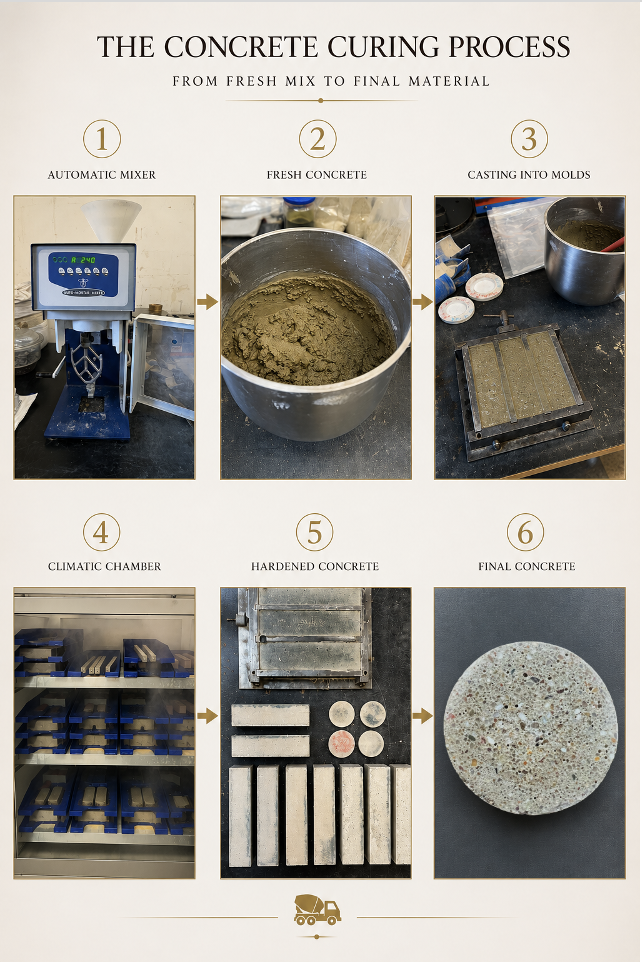
Manufacturing and Curing of Cementitious Materials
Image sequence showing the complete manufacturing process of the different cementitious substrates, from automated mixing and fresh material preparation to mold casting and controlled curing for 28 days under regulated temperature and humidity conditions, resulting in fully hardened specimens ready for glass-ceramic glaze application.

03
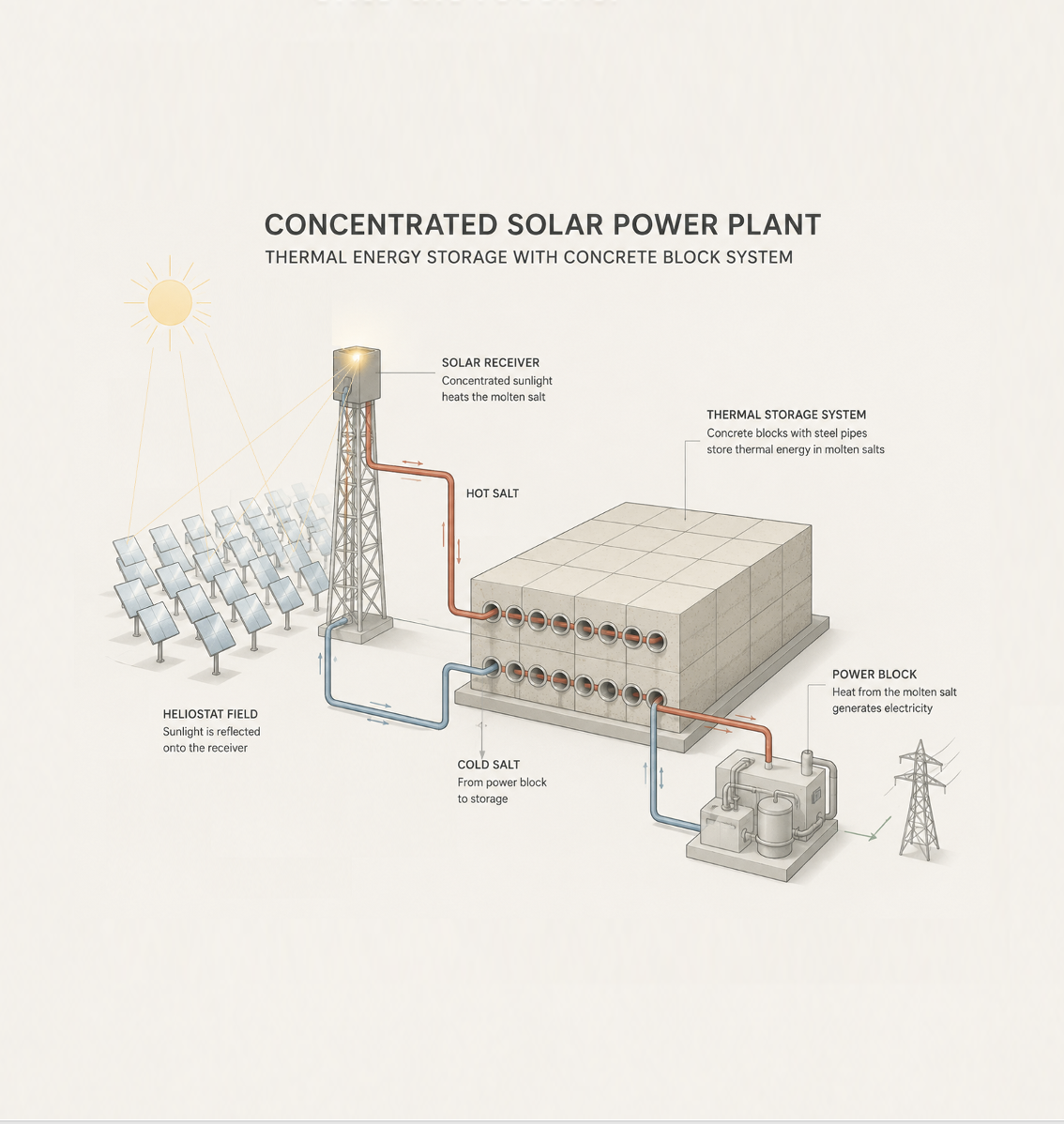
Concrete-Based Thermal Energy Storage in Concentrated Solar Power
Schematic of a Concentrated Solar Power plant showing concrete-based materials for thermal energy storage. Heat is transferred from molten salts, typically a mixture of sodium nitrate (NaNO₃) and potassium nitrate (KNO₃) operating at approximately 290–565 °C, to the concrete storage medium. Their high operating temperature and corrosive nature motivate the development of glass-ceramic glazes as protective barriers.

04
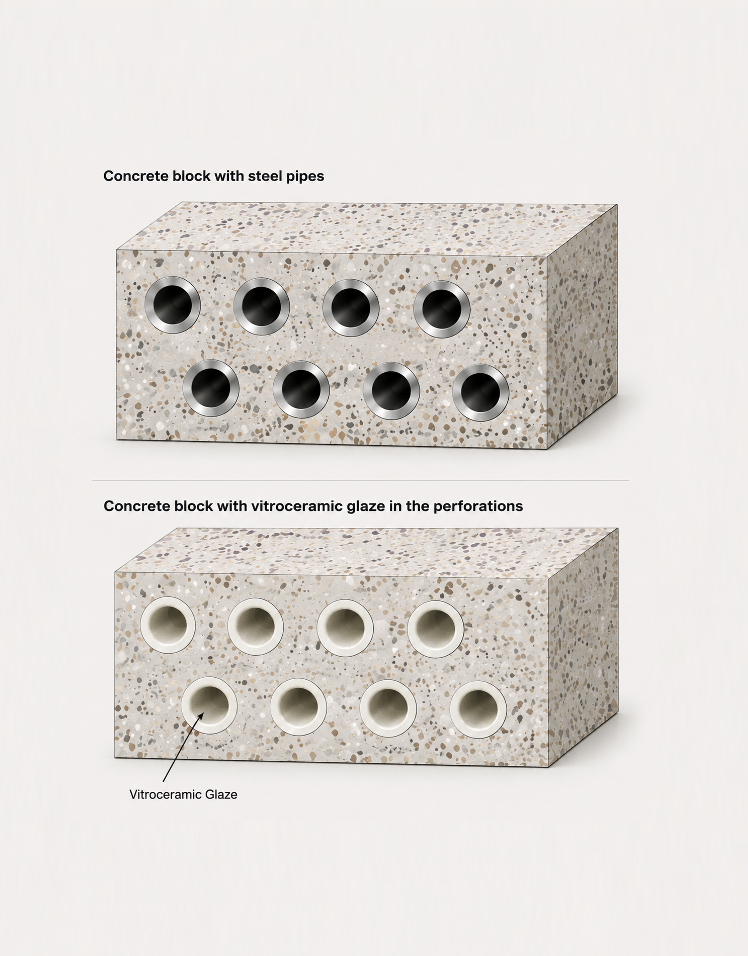
Glass-Ceramic Glazes vs. Steel Pipes for Thermal Energy Storage
Comparison between conventional steel-pipe systems and concrete directly protected with glass-ceramic glazes for molten-salt thermal energy storage. The glazed solution reduces the number of interfaces and thermal resistance, promoting more efficient heat transfer while taking advantage of the thermal conductivity and heat capacity of the cementitious storage material. Replacing high-performance steel components with a durable glass-ceramic barrier also offers the potential to reduce costs, improve corrosion resistance, and extend system lifetime.

05
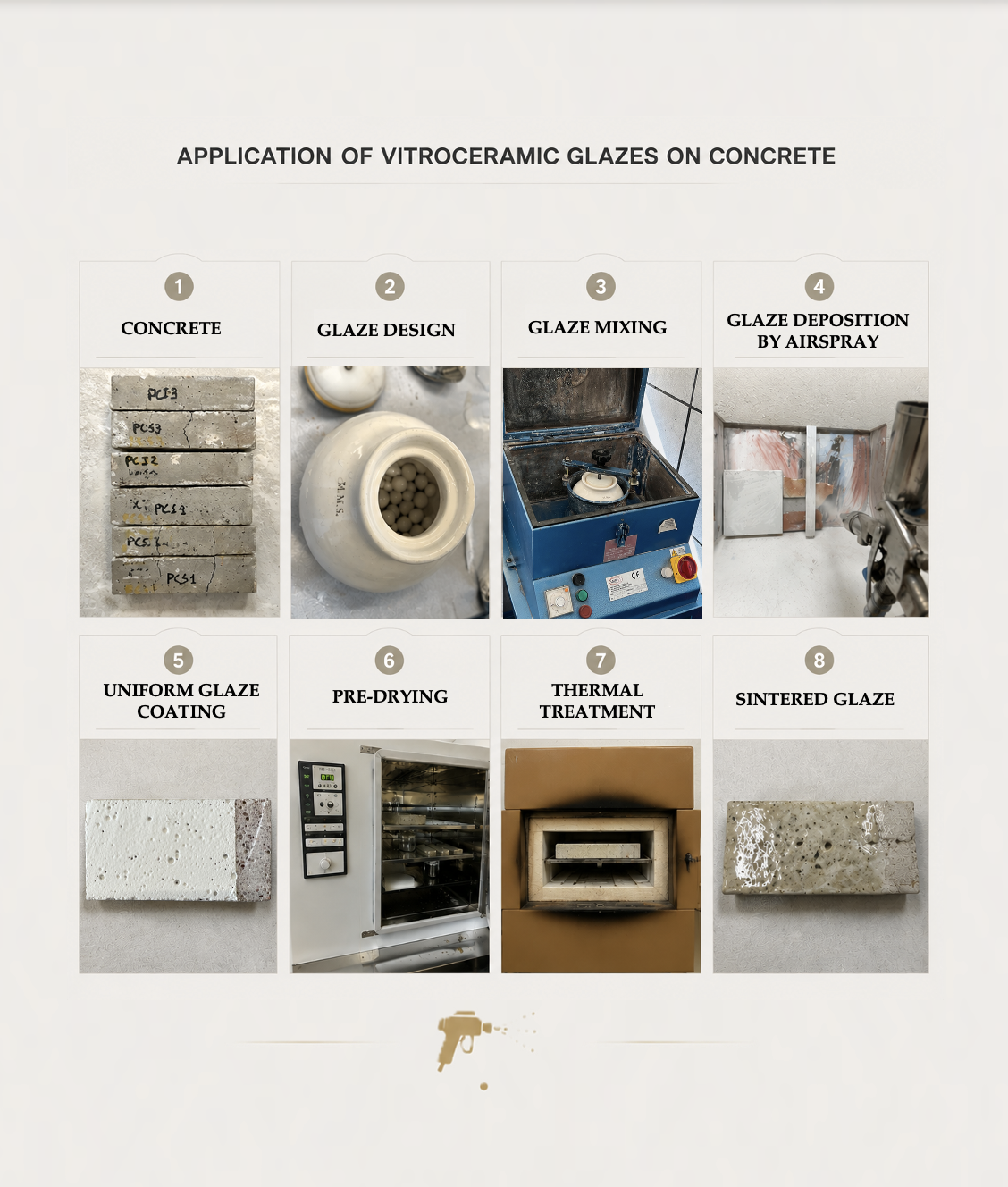
Glass-Ceramic Glaze Preparation and Application Process
Image sequence showing the complete preparation and application of glass-ceramic glazes on cementitious substrates, from glaze formulation and mixing to air-spray deposition, moisture removal, and thermal sintering. The process produces a continuous glass-ceramic protective layer directly integrated with the concrete surface.

06
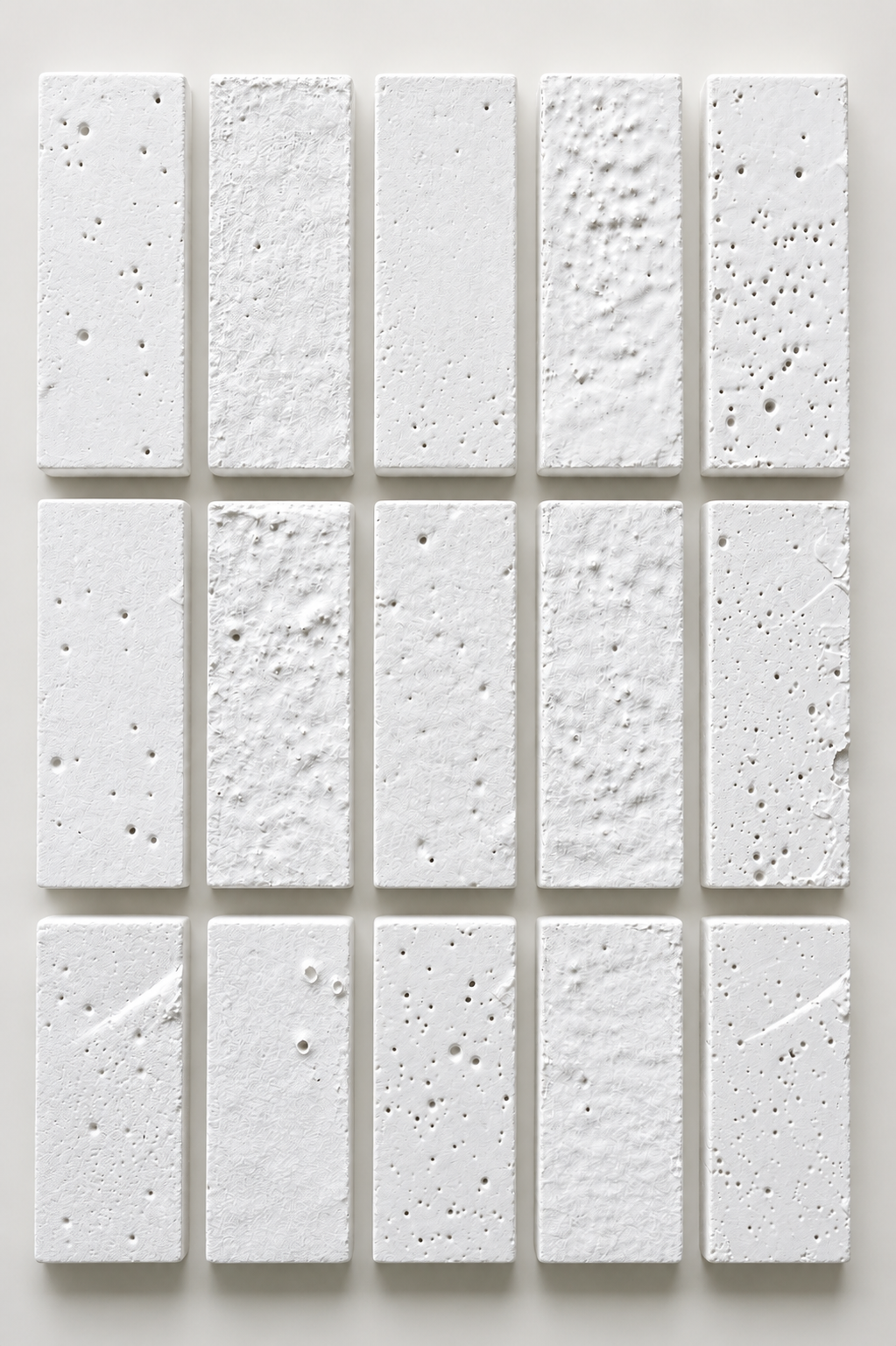
Freshly Applied Glass-Ceramic Glaze on Concrete
Concrete specimens after glass-ceramic glaze application and prior to sintering. The uniform white layer covers the cementitious surface, ready for the subsequent thermal treatment that will consolidate and vitrify the protective coating.

07
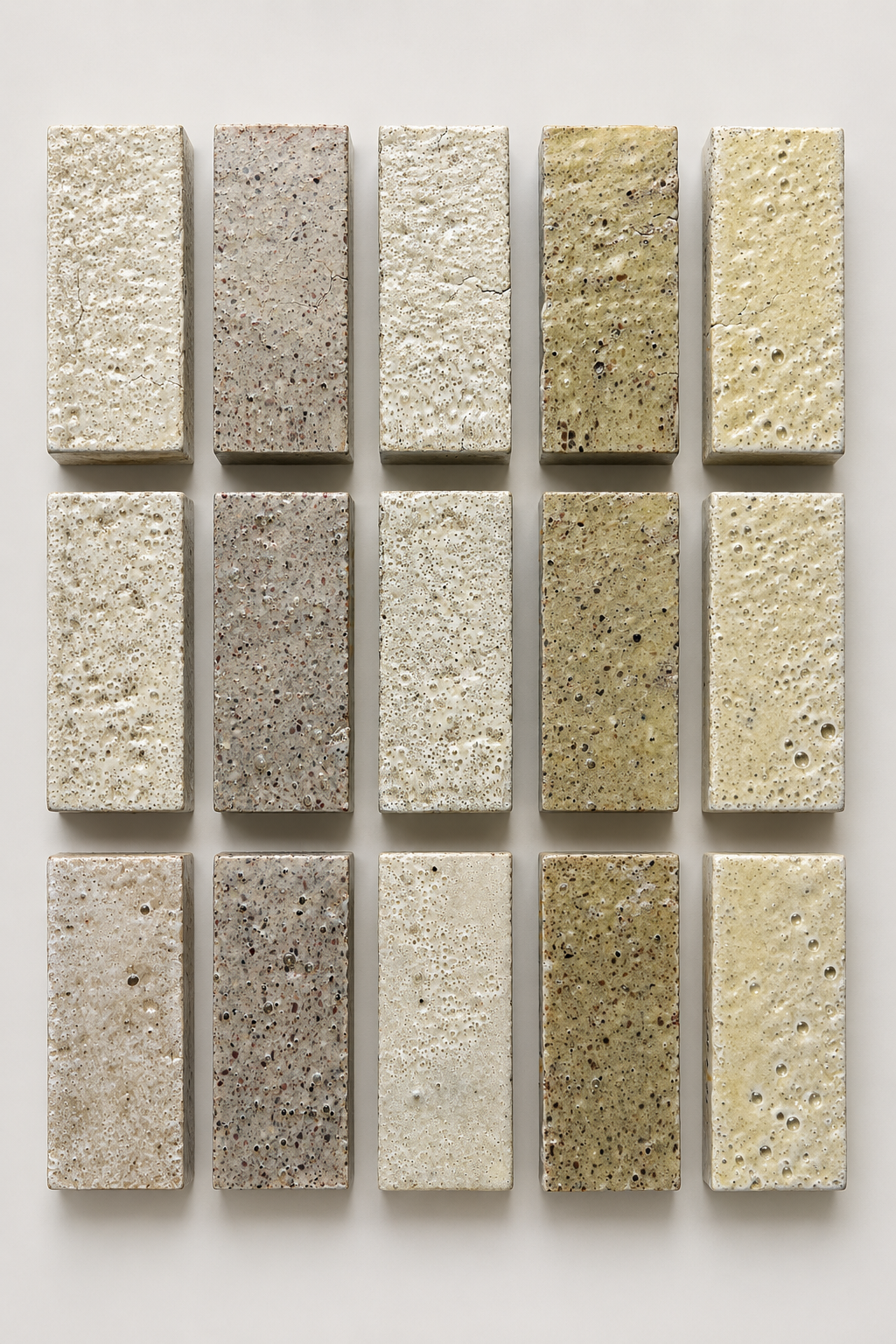
Influence of Concrete Substrate on Sintered Glass-Ceramic Glazes
Sintered glass-ceramic glazes applied to different concrete formulations, showing the influence of the substrate on glaze behavior, densification, and bonding. The results demonstrate the potential to obtain dense, continuous, and strongly bonded protective layers on different cement-based materials.

08
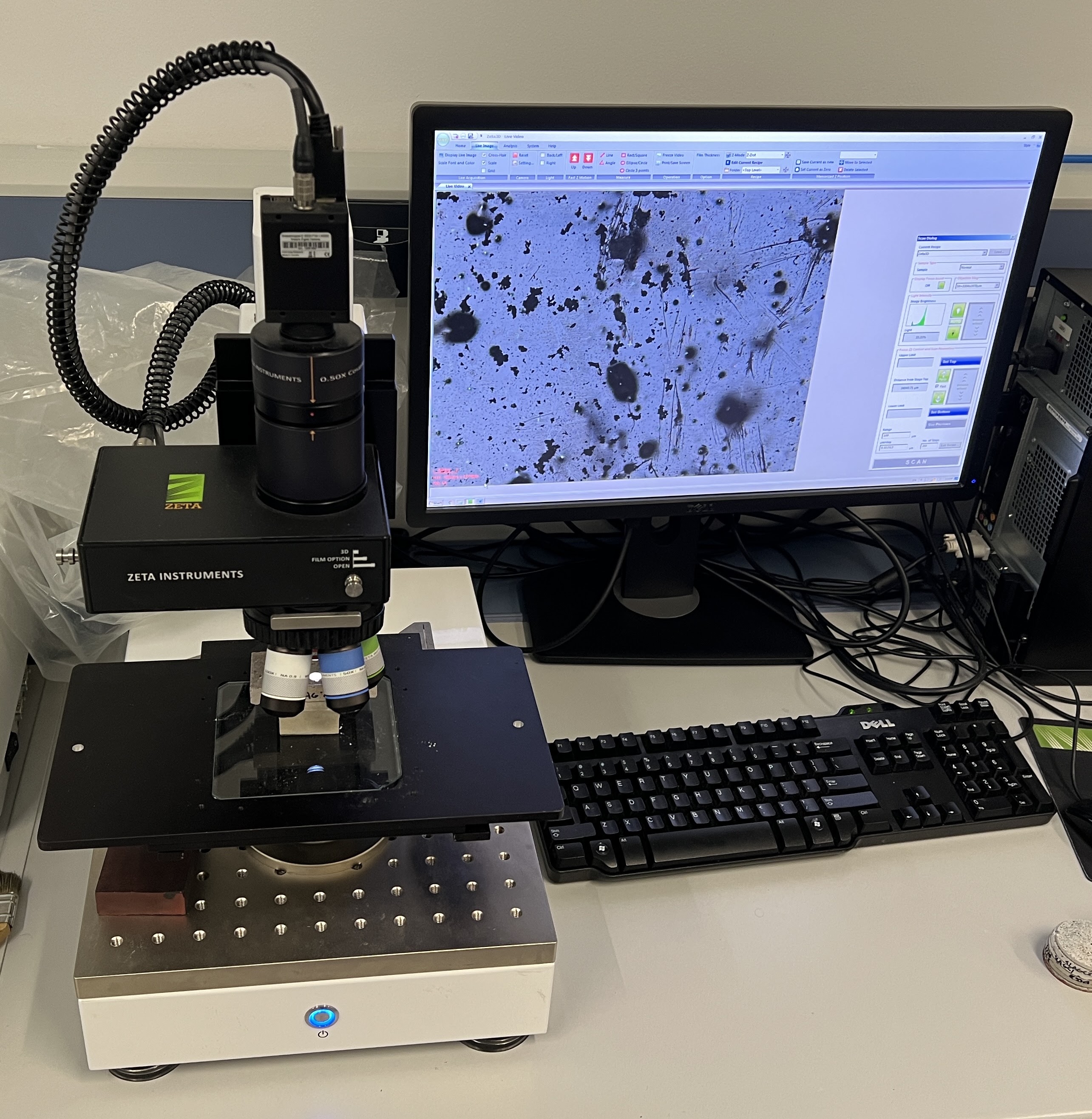
Microscopic Analysis of Glass-Ceramic Glazes
Microscopic characterization of glass-ceramic glazes applied to concrete substrates, used to evaluate surface morphology, defects, porosity, homogeneity, and the degree of densification achieved after sintering.

09
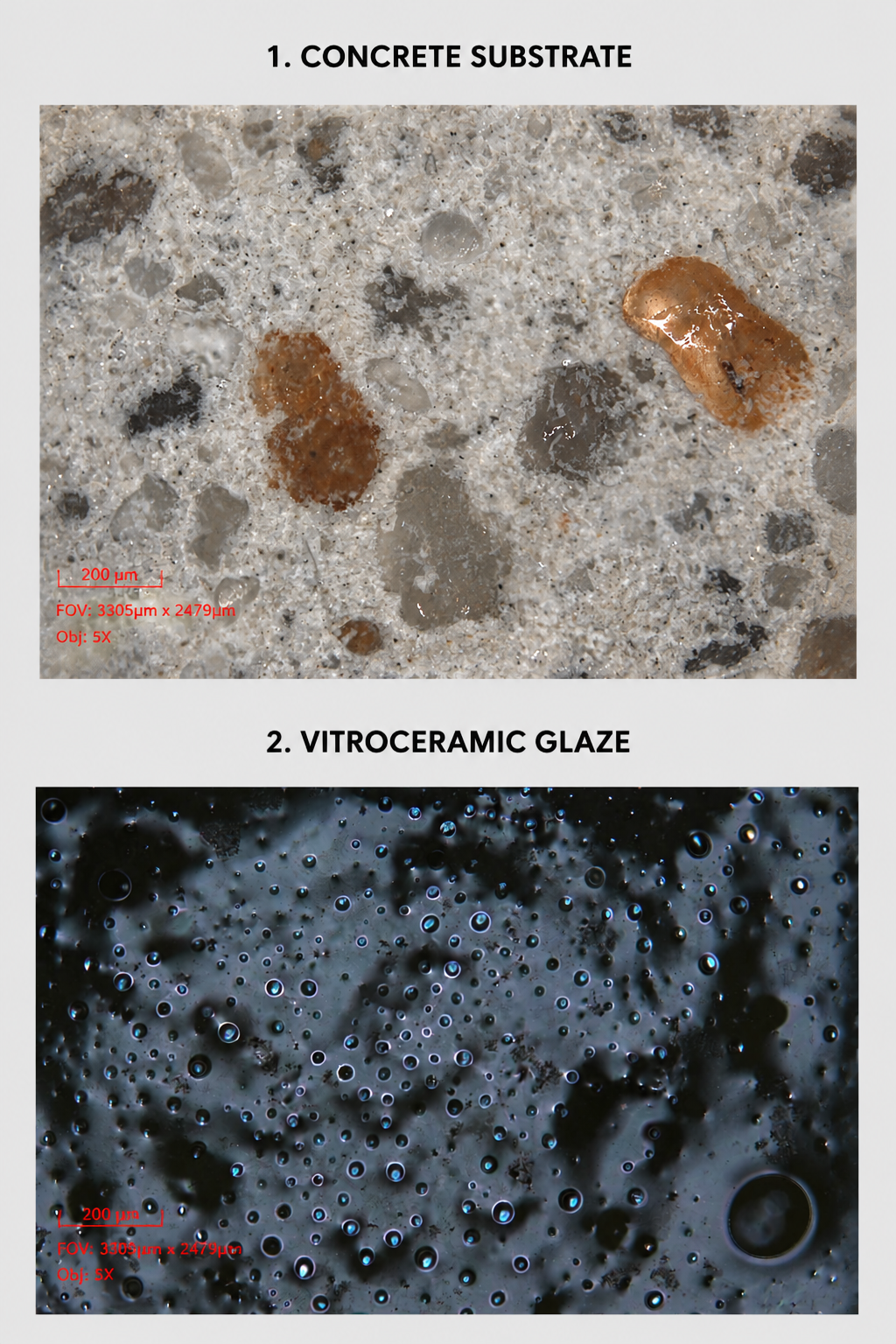
Microscopic Comparison of Concrete Substrate and Glass-Ceramic Glaze
Microscopic comparison between the uncoated concrete substrate and the sintered glass-ceramic glaze, highlighting the differences in surface morphology, porosity, homogeneity, and densification produced by the protective coating.

10
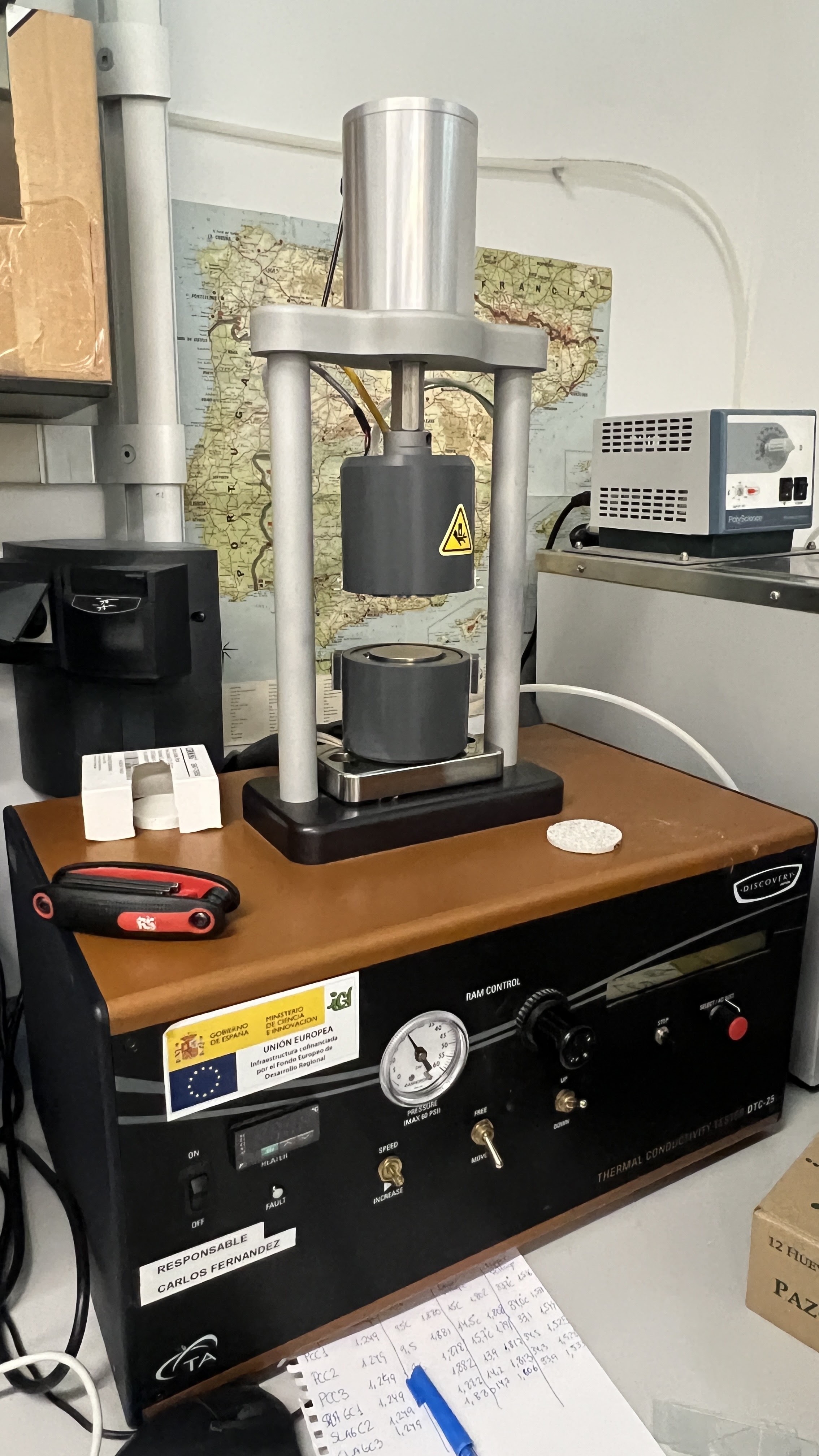
Thermal Conductivity Measurement of Glazed Concrete Materials
Thermal conductivity measurement of the developed glazed concrete materials. This parameter is particularly relevant for thermal energy storage applications, as it directly influences heat transfer efficiency between the molten salts and the storage material.

11
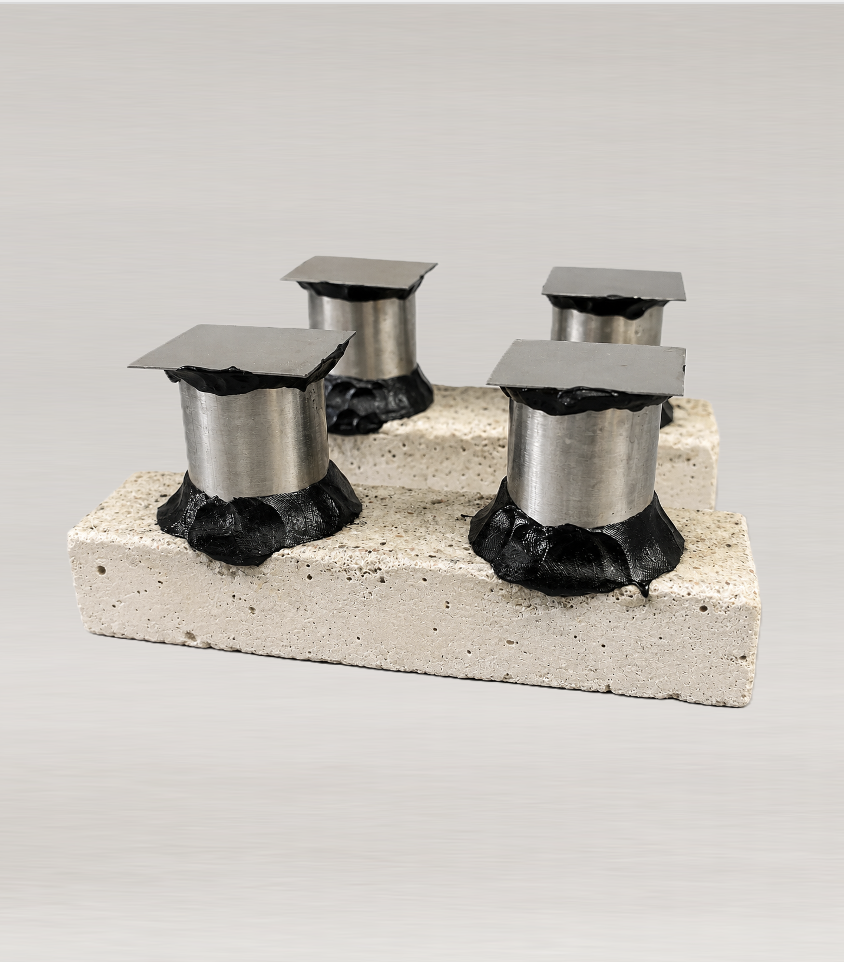
Molten-Salt Durability Testing of Glass-Ceramic Glazes
Experimental method developed to evaluate the durability of glass-ceramic glazes under prolonged exposure to molten salts at high temperature. The salts are contained inside a sealed tube in contact with the glazed surface, while a high-temperature silicone seal provides hermetic closure during furnace exposure, enabling assessment of the coating resistance to aggressive molten-salt environments.
- Image sequence showing the preparation, casting, and 28-day controlled curing process of cementitious materials prior to glass-ceramic glaze application.
- Concentrated Solar Power plant with concrete thermal energy storage using high-temperature sodium and potassium nitrate molten salts for heat transfer.
- Comparison of steel-pipe and glass-ceramic glazed concrete systems, highlighting fewer interfaces, improved heat transfer, lower cost, and increased durability of the glazed solution.
- Image sequence showing glass-ceramic glaze formulation, mixing, air-spray application on concrete, drying, and thermal sintering to obtain the final protective coating.
- Concrete specimens covered with a uniform white glass-ceramic glaze layer before sintering.
- Sintered glass-ceramic glazes on different concrete substrates, showing dense and well-bonded protective layers and the influence of concrete composition on glaze densification and adhesion.
- Microscope used to analyze sintered glass-ceramic glazes on concrete substrates and evaluate their surface morphology, porosity, homogeneity, and densification.
- Comparison of microscope images of the concrete substrate and sintered glass-ceramic glaze, showing the morphological changes and increased surface densification after glaze application and sintering.
- Thermal conductivity measurement equipment used to characterize glazed concrete materials and evaluate their heat transfer performance for thermal energy storage applications.
- Experimental setup for evaluating the durability of glass-ceramic glazes against high-temperature molten salts using a hermetically sealed tube exposed inside a furnace.
bottom of page