top of page
Conventional MEX-PDS Processing
This research focuses on the development and optimization of conventional MEX-PDS routes for advanced metallic materials, including Inconel 718, Al 6061, copper, Ti-6Al-4V, and multimaterial systems. The process enables the fabrication of complex geometries through Material Extrusion followed by thermal debinding and solid-state sintering, consolidating the material without reaching the melting point.
Particular attention is given to the relationship between processing parameters, densification, microstructure, and final material performance, with the aim of extending MEX-PDS to a broad range of high-performance materials for aerospace and advanced engineering applications.
Project type
JCCM Scientific Research & Technology Transfer Project
Date
2024-2027
Location
Institute of Applied Research for the Aeronautical Industry (INAIA), University of Castilla-La Mancha (UCLM)

01
Conventional MEX-PDS Processing

01
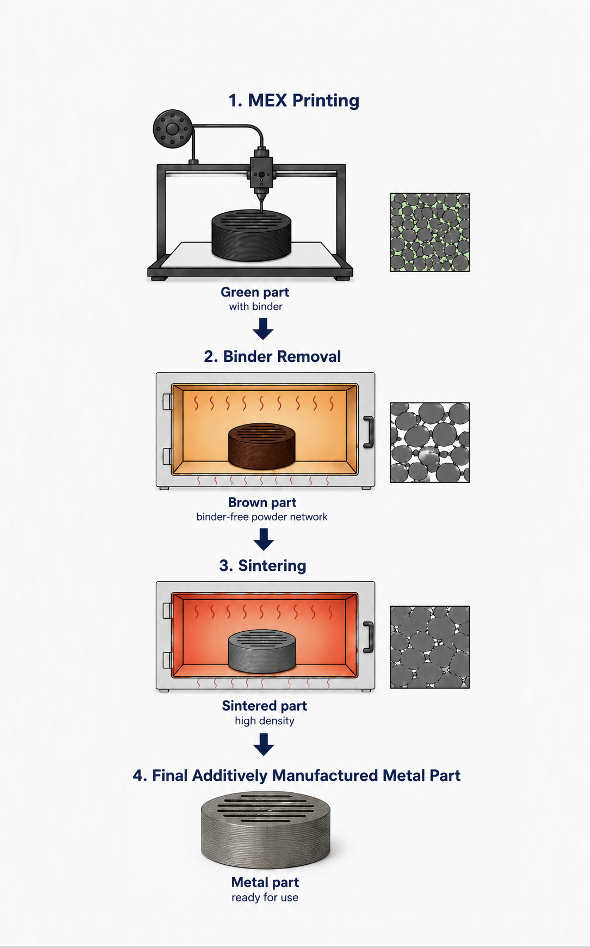
Conventional Metal MEX-PDS Process Route
Schematic representation of the conventional MEX-PDS route for metal additive manufacturing. The process comprises four main stages: material extrusion (MEX) to produce the green part, thermal binder removal, solid-state sintering in a conventional electric furnace, and the resulting dense metallic component. This fully thermal route enables metal parts to be manufactured without melting and without solvent-based debinding.

02
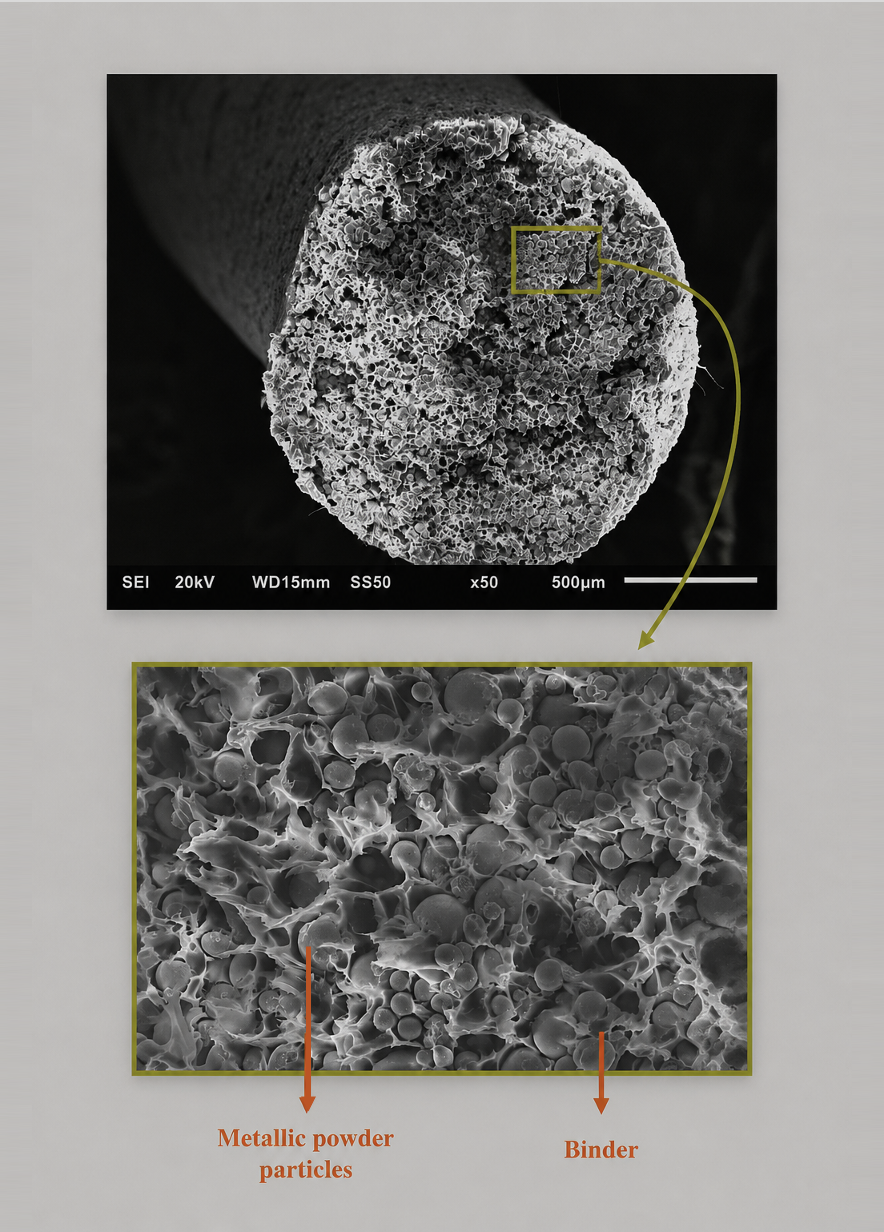
Microstructure of Metal-Filled Filament
SEM image of the metal-filled filament used in the MEX-PDS process, showing spherical metallic powder particles dispersed within a polymeric binder matrix. During extrusion, only the polymeric phase needs to be melted to provide the flow required for shaping and deposition, while the metallic particles remain in the solid state. This enables processing at relatively low temperatures and with conventional low-cost extrusion equipment, contributing to the accessibility and viability of the process.

03
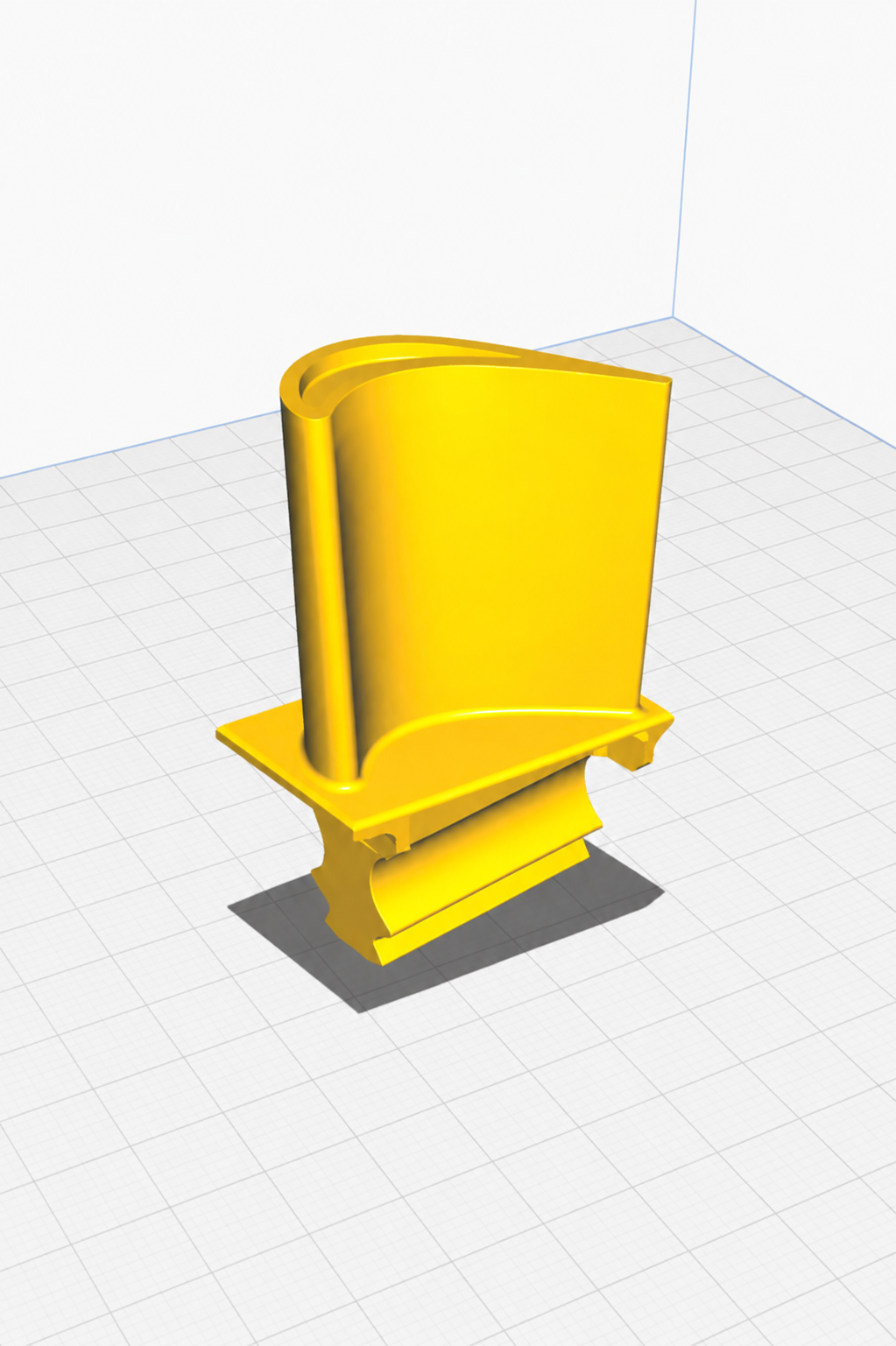
3D Blade Model into Slicing software for MEX
3D model of a blade imported into slicing software, where the component geometry is converted into layers, toolpaths, and machine instructions for the MEX equipment. This digital step defines the deposition strategy and key printing parameters required to transform the CAD geometry into a physical green part.

04
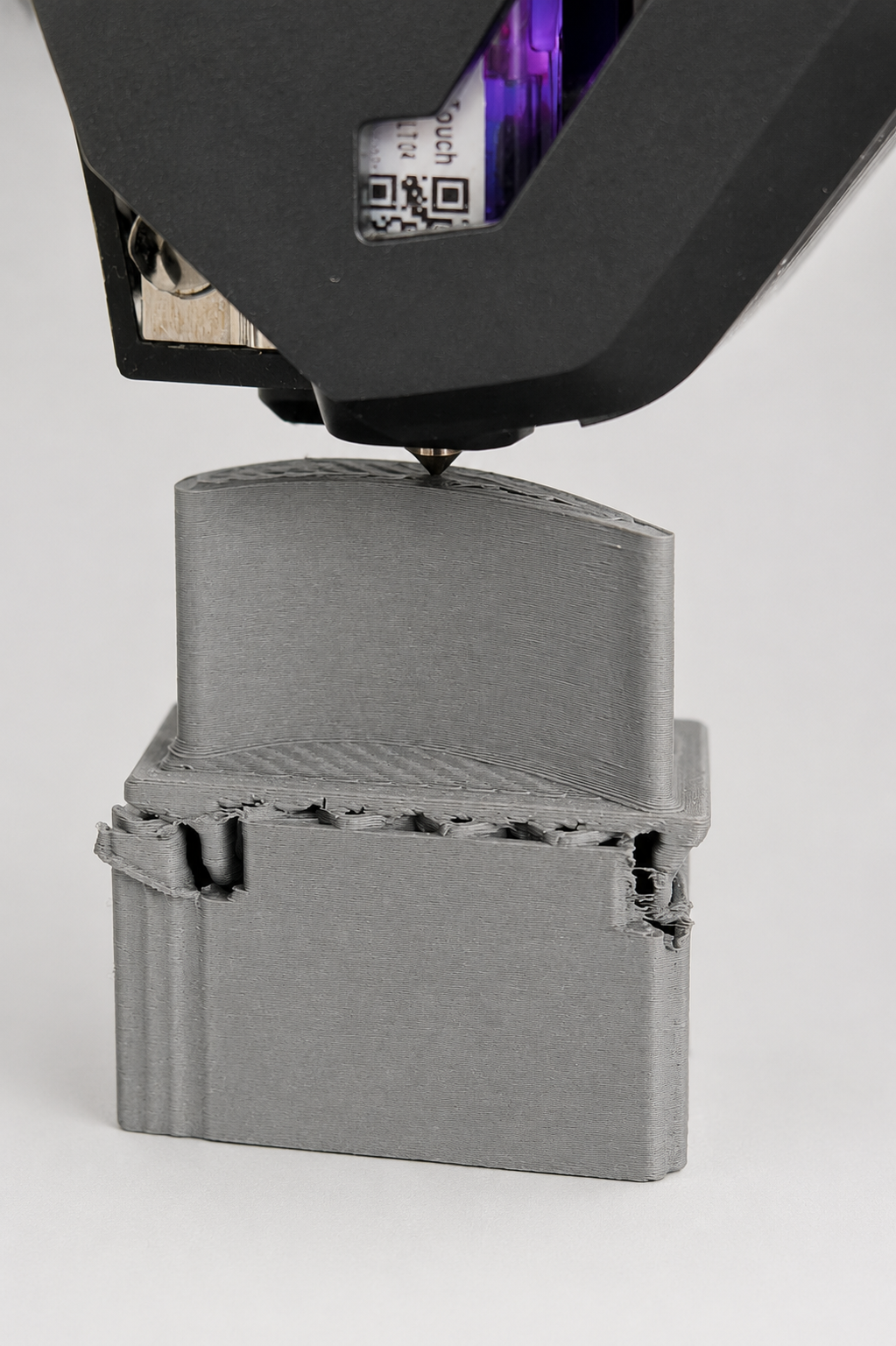
MEX Printing of an Inconel 718 Blade
Inconel 718 blade during MEX printing, using support structures to enable the fabrication of overhangs and complex geometric features. The printed green part shows high surface definition and accurate reproduction of the blade geometry, demonstrating the capability of low-cost MEX equipment to manufacture geometrically demanding metallic components.

05
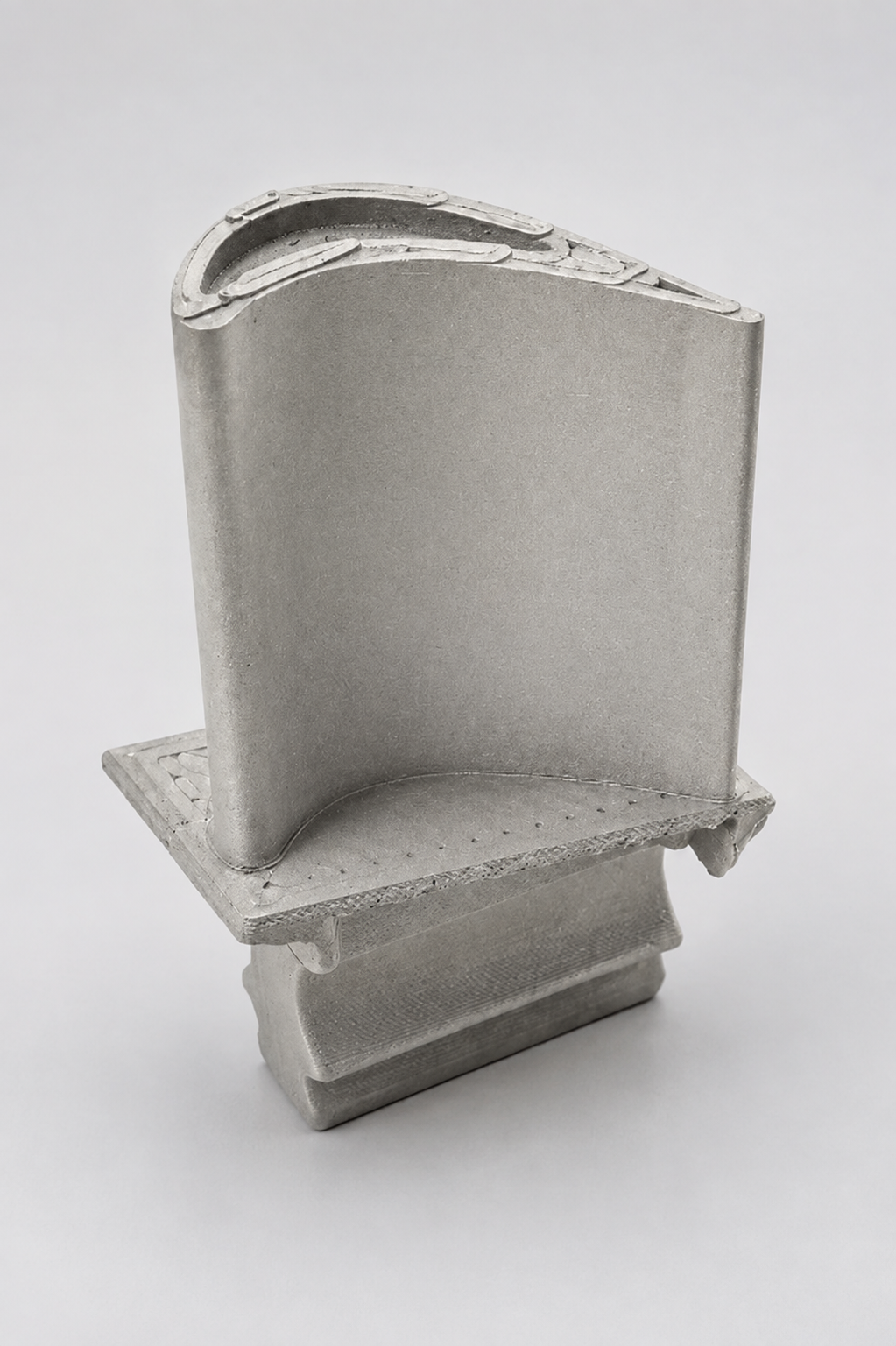
MEX 3D Printed Inconel 718 Green Blade
Inconel 718 blade after MEX printing and prior to debinding and sintering. The green component demonstrates the ability of the process to reproduce complex geometries with high surface definition and good dimensional integrity before thermal post-processing.

06
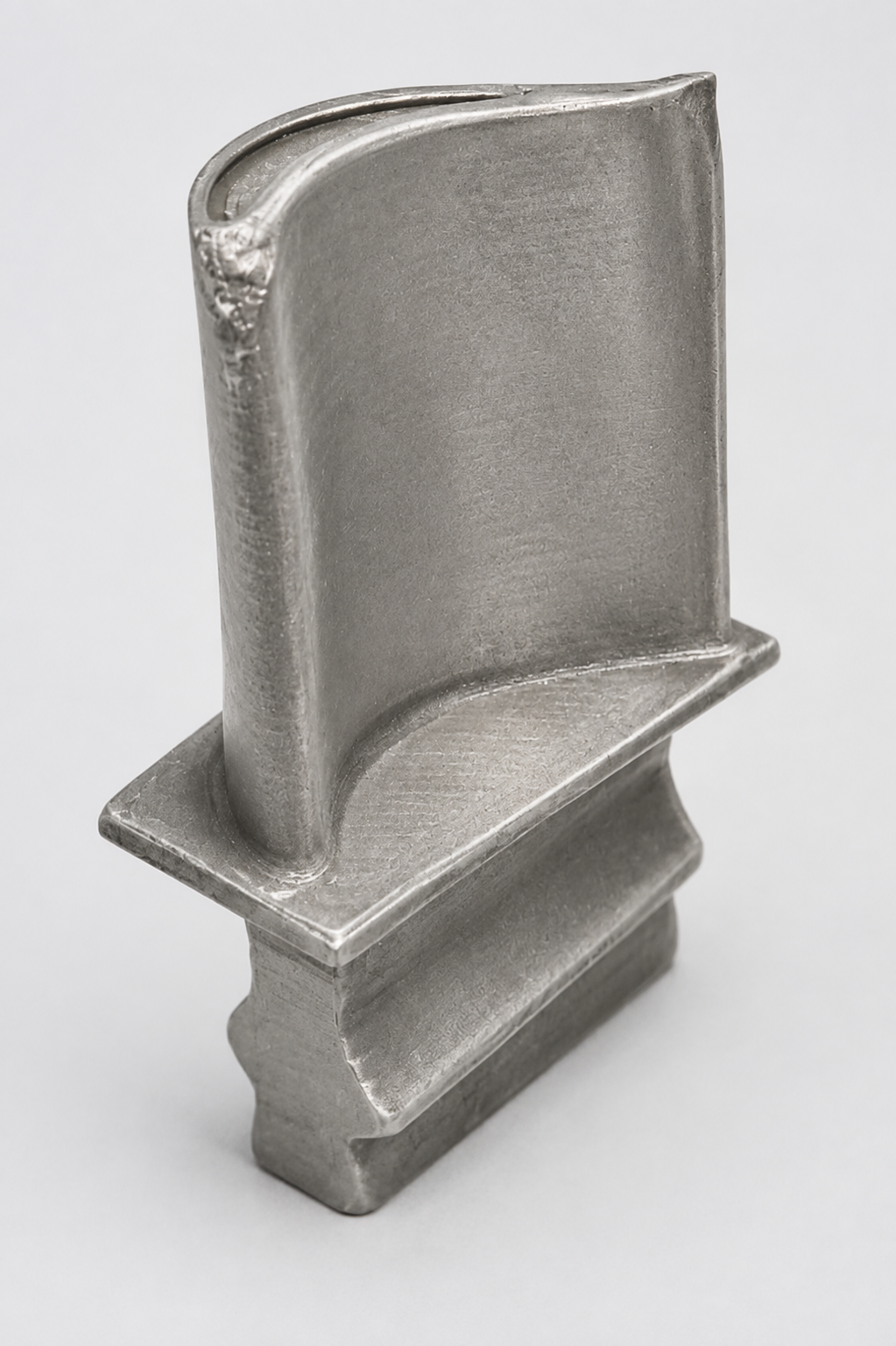
Sintered Inconel 718 Blade Processed by MEX-PDS
Inconel 718 blade processed by MEX-PDS after thermal debinding and solid-state sintering in a conventional electric furnace. The consolidated component exhibits a pronounced metallic appearance while preserving its complex geometry and overall shape, demonstrating good shape retention and limited distortion throughout the thermal processing route.

07
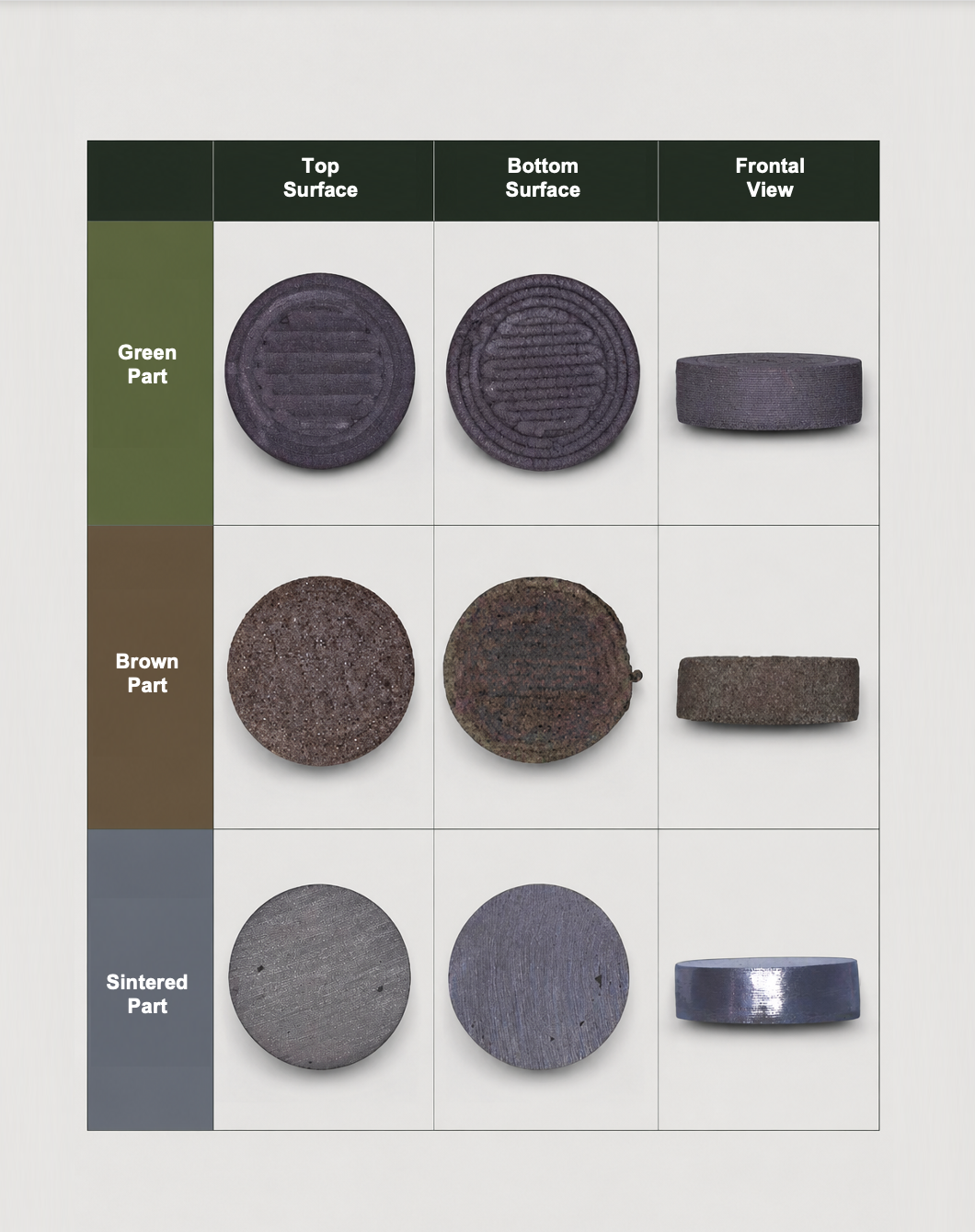
Evolution from Green to Sintered Inconel 718 Components processed by MEX-PDS
Comparison of Inconel 718 samples in the green, brown, and sintered states throughout the MEX-PDS route. The samples show well-defined printed layers and good preservation of the original geometry after thermal processing, while some residual printing defects remain visible. Following solid-state sintering, the components achieve a relative density of approximately 98%, demonstrating effective densification while retaining the characteristic features of the printed geometry.

08
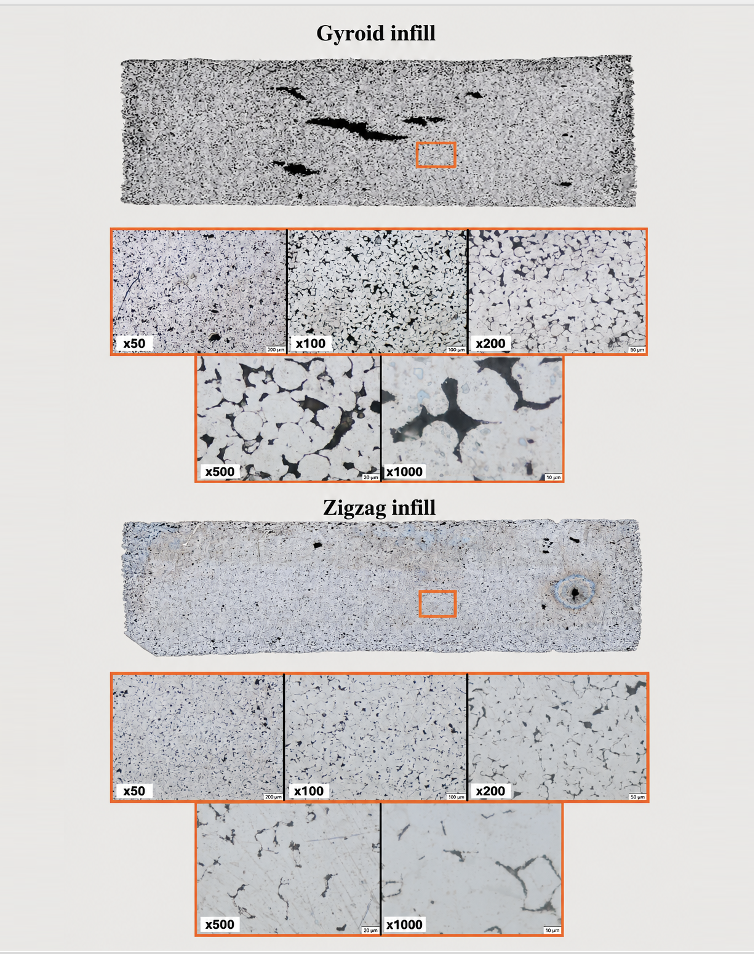
Microstructural Analysis of MEX-PDS Inconel 718
Comparison of Inconel 718 microstructures after MEX-PDS processing, showing the high degree of densification achieved after sintering and the influence of the printing infill strategy on residual defect distribution. Differences between infill patterns affect the distribution of pores and printing-related defects, highlighting the role of deposition strategy in the final microstructural quality of the component.

09
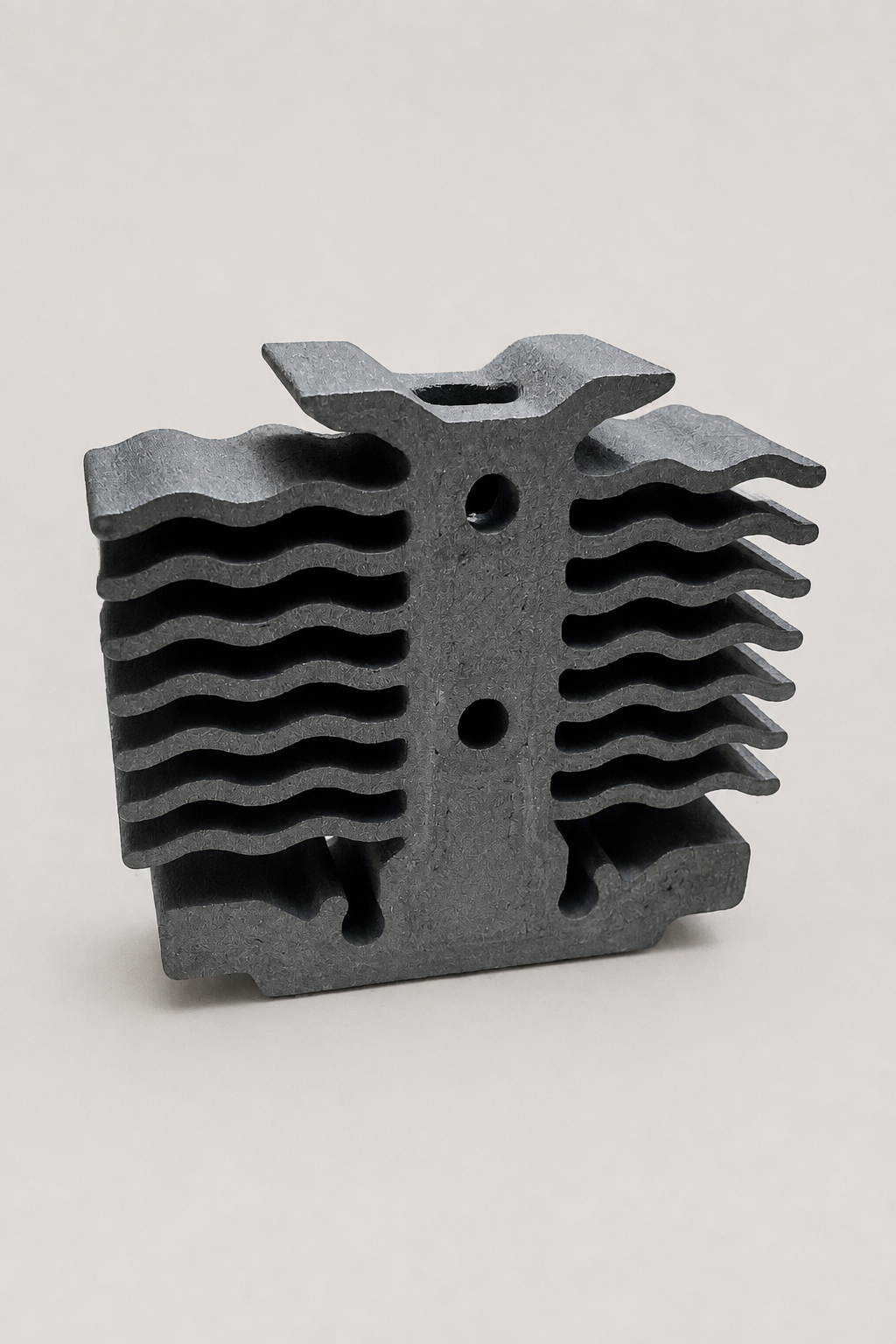
MEX 3D Printed Al 6061 Heat Sink, Green State
Al 6061 heat sink in the green state after MEX printing, demonstrating the capability of the process to reproduce complex geometries with multiple thin fins and internal features. The component shows good geometric definition and shape integrity prior to thermal debinding and sintering.

10
Title:
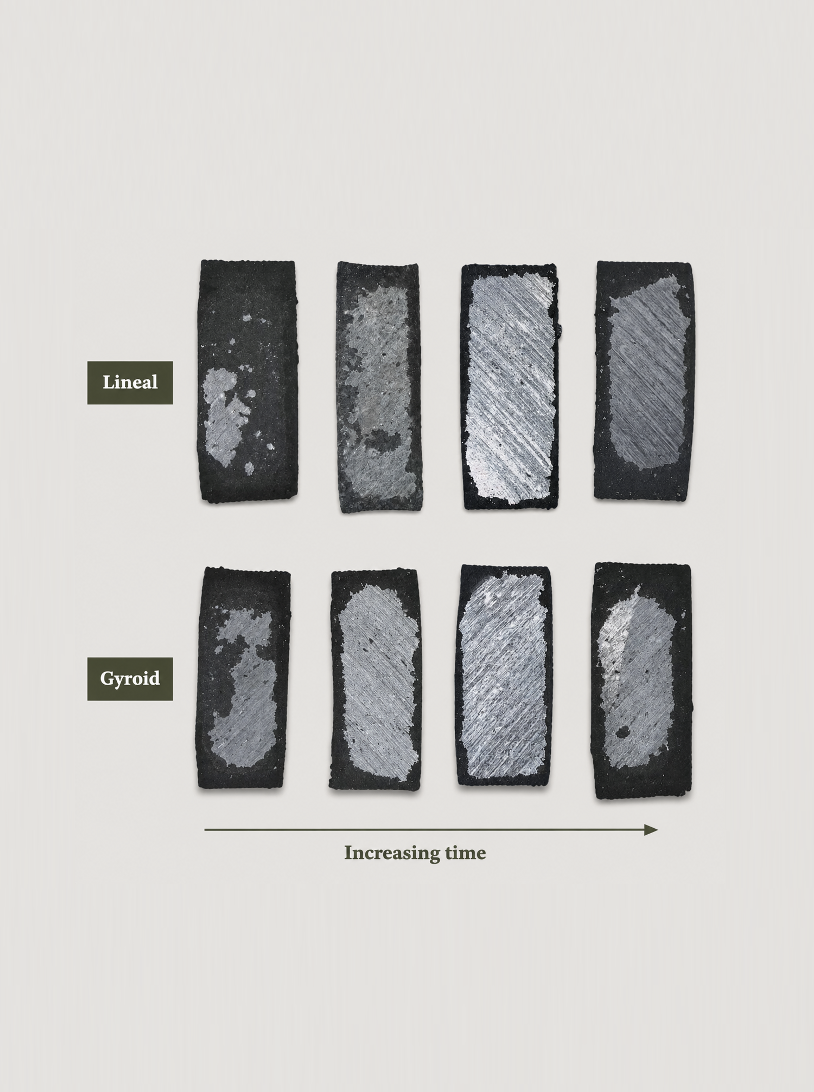
Effect of Sintering Time on MEX-PDS Al 6061
Comparison of Al 6061 samples processed by MEX-PDS at different sintering times, showing the critical influence of thermal exposure on final consolidation. Increasing the sintering time promotes particle bonding and densification, while excessive exposure favors oxidation, highlighting the need to optimize the sintering cycle to balance densification and material degradation.

11
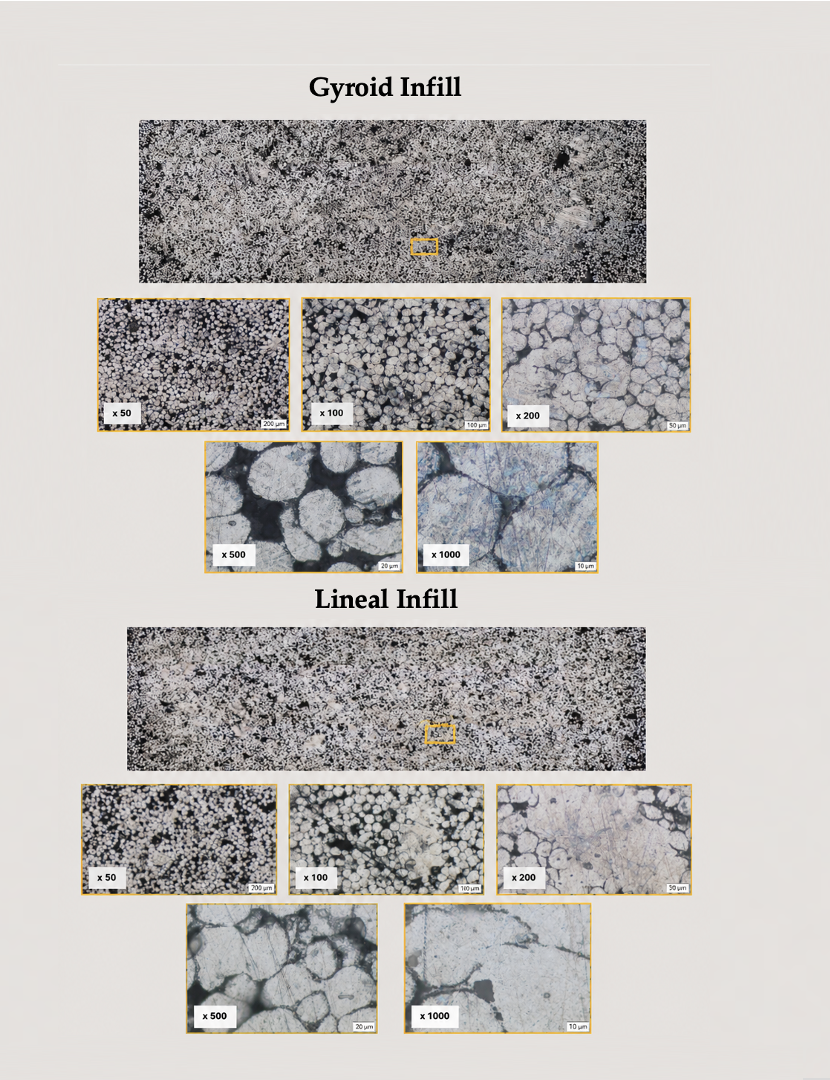
Effect of Infill Strategy on MEX-PDS Al 6061 Microstructure
Comparison of Al 6061 microstructures obtained using two different MEX infill strategies. Both configurations exhibit a high degree of densification after sintering, demonstrating effective consolidation regardless of the deposition pattern while enabling assessment of the influence of infill strategy on residual porosity and microstructural homogeneity.
12
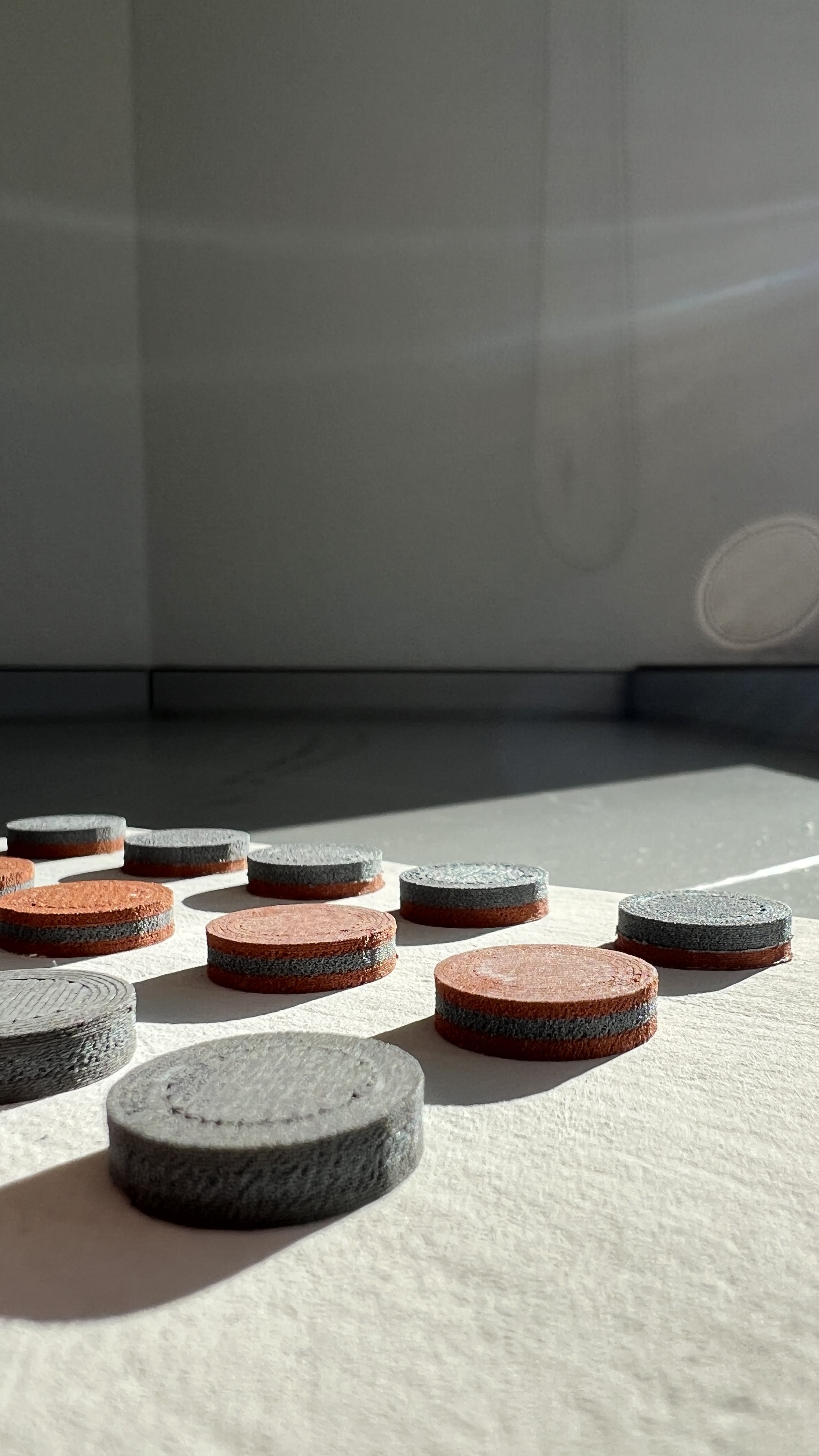
Multimaterial MEX Printing of Sandwich Structures
Multimaterial MEX printing of multilayer samples with a sandwich architecture consisting of copper outer layers and an aluminum core. The process demonstrates the capability of MEX to integrate different metallic feedstocks within a single component, enabling the design of multimaterial architectures with tailored composition and functionality prior to debinding and sintering.

13
Multimaterial Metallic Systems Processed by MEX-PDS
Different multimaterial architectures manufactured by MEX-PDS, combining metallic materials within a single component. Multimaterial processing is particularly relevant for demanding engineering applications, where a single material often cannot simultaneously meet all in-service requirements. These systems enable different properties and functionalities to be integrated while providing a platform to investigate material compatibility, interfacial reactions, diffusion, and the evolution of the resulting interfaces during sintering.

14
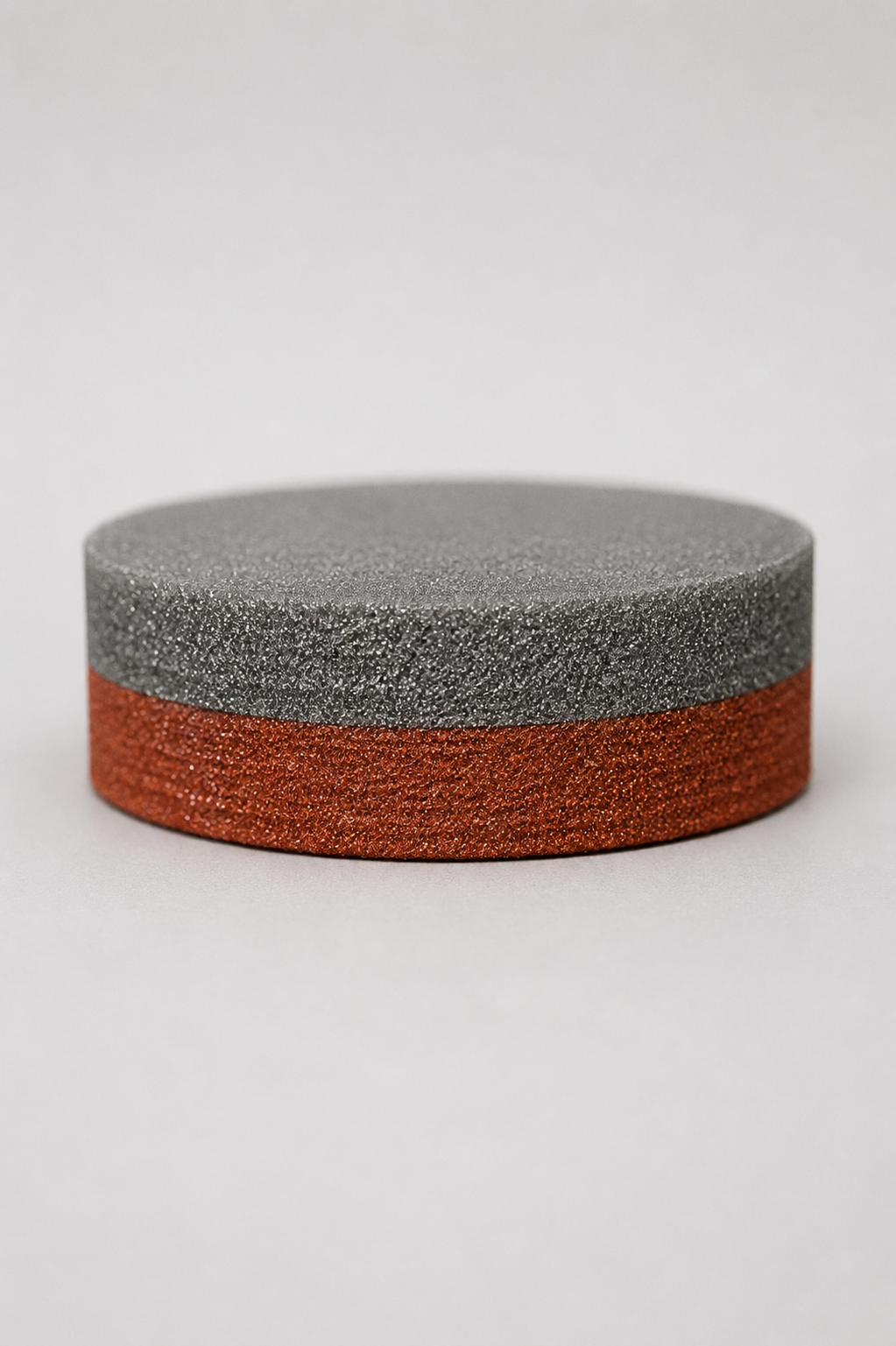
Bilayer Multimaterial Sample Processed by MEX-PDS
Bilayer multimaterial sample manufactured by MEX-PDS, combining two different metallic materials within a single component. This configuration enables direct evaluation of material compatibility and provides a simple architecture for studying interfacial bonding, diffusion, chemical reactions, and microstructural evolution during thermal debinding and sintering.

15
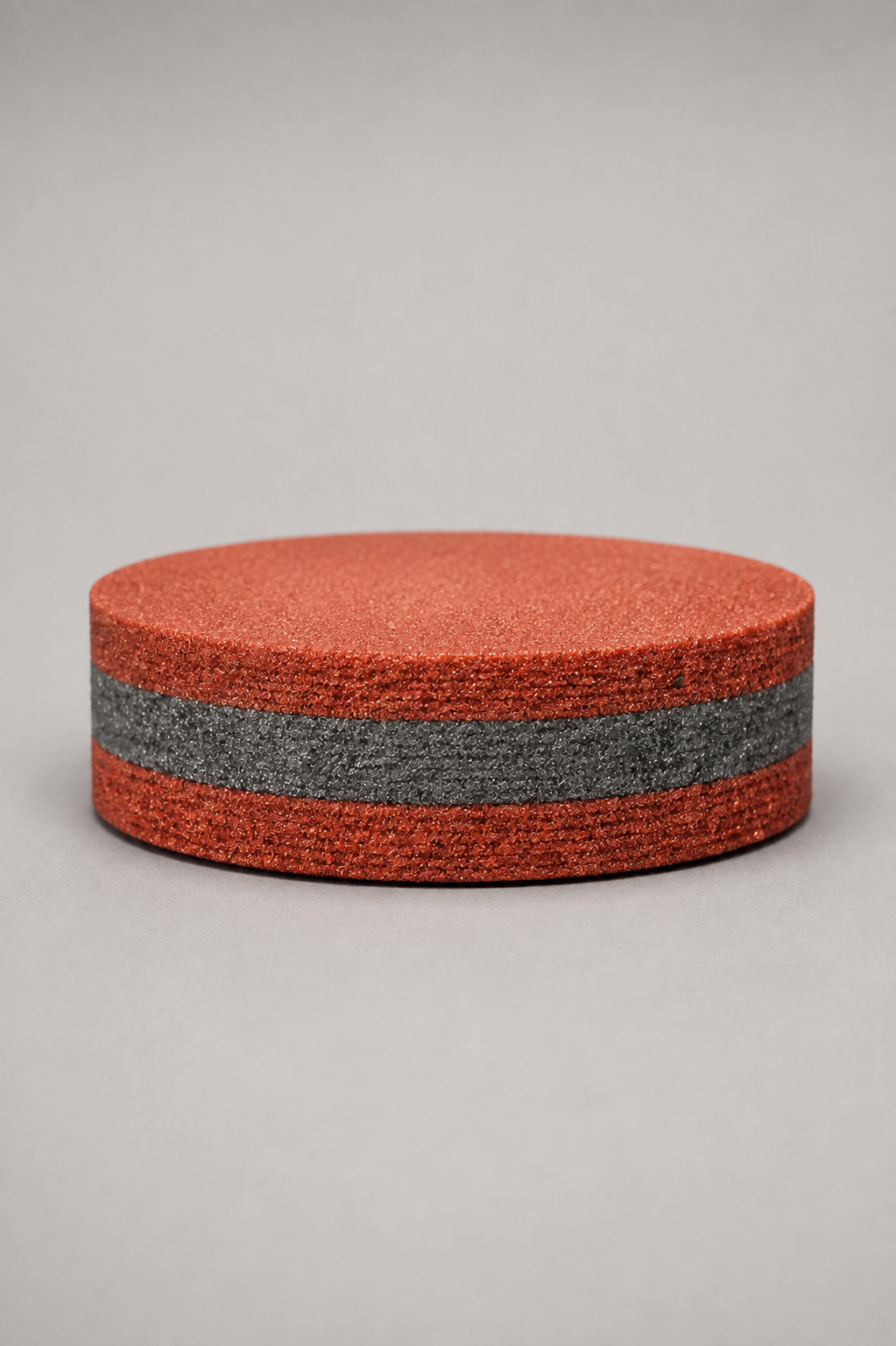
Three-Layer Multimaterial Sandwich Structure Processed by MEX-PDS
Three-layer multimaterial sandwich sample processed by MEX-PDS, showing high-quality bonding between the different metallic layers after thermal processing. The well-defined and continuous interfaces demonstrate effective consolidation and material integration, enabling the development of multimaterial components that combine different properties within a single structure.
- Schematic of the conventional MEX-PDS process showing material extrusion, thermal binder removal, sintering in an electric furnace, and the final metallic component.
- SEM image of metal-filled filament showing spherical metallic powder particles dispersed within a polymeric binder matrix used to enable low-temperature material extrusion.
- 3D blade model in slicing software used to convert the component geometry into layers, toolpaths, and machine instructions for MEX printing.
- Inconel 718 blade during MEX printing with support structures for complex overhangs, showing high surface definition and geometric accuracy.
- MEX-printed Inconel 718 green blade showing complex geometry, high surface definition, and good shape retention before debinding and sintering.
- Sintered Inconel 718 blade processed by MEX-PDS, showing a pronounced metallic appearance and good preservation of its complex geometry after thermal processing.
- Green, brown, and sintered Inconel 718 samples processed by MEX-PDS, showing well-defined printed layers, residual printing defects, good shape retention, and approximately 98% relative density after sintering.
- Micrographs of MEX-PDS Inconel 718 showing high densification and the influence of printing infill strategy on the distribution of residual defects.
- MEX-printed Al 6061 heat sink in the green state, showing thin fins, complex geometry, and high feature definition before thermal debinding and sintering.
- Al 6061 samples processed by MEX-PDS at increasing sintering times, showing improved consolidation with time and increased oxidation after excessive thermal exposure.
- Micrographs of MEX-PDS Al 6061 produced with two different infill strategies, both showing high densification after sintering.
- Multimaterial metallic samples processed by MEX-PDS, combining different materials to investigate their compatibility, interfacial reactions, and behavior during sintering.
- Bilayer multimaterial sample processed by MEX-PDS, combining two metallic materials to study interfacial bonding, diffusion, and reactions during sintering.
- Three-layer multimaterial sandwich sample processed by MEX-PDS, showing high-quality bonding and continuous interfaces between the metallic layers.
bottom of page