top of page
Solar Additive Manufacturing of Lunar Regolith
Space exploration requires reducing dependence on materials transported from Earth. This project combines Concentrated Solar Energy (CSE) and lunar regolith within an In-Situ Resource Utilization (ISRU) approach to manufacture directly on the Moon.
Lunar regolith varies from iron-rich basaltic compositions in the maria to aluminum-rich anorthositic materials in the highlands, affecting its response to solar processing. The project investigates the selective consolidation of these materials to develop adaptable manufacturing strategies for landing pads, dust-protection surfaces, and future lunar infrastructure.
Project type
SOL-AM, European RISEnergy Project, Horizon 2020
Location
PROMES-CNRS, Odeillo, France
Date
2025-2026

01
Solar Additive Manufacturing of Lunar Regolith
01
Solar Processing of Lunar Regolith in a Powder Bed
Solar heating of lunar regolith in a powder-bed configuration using Concentrated Solar Energy (CSE). Solar radiation represents an abundant in-situ energy resource on the lunar surface, making it particularly attractive for space manufacturing. The concentrated solar flux is focused directly onto the powder to achieve rapid, localized heating and promote material consolidation, while evaluating the response of lunar regolith for future solar-driven additive manufacturing and ISRU applications.
02
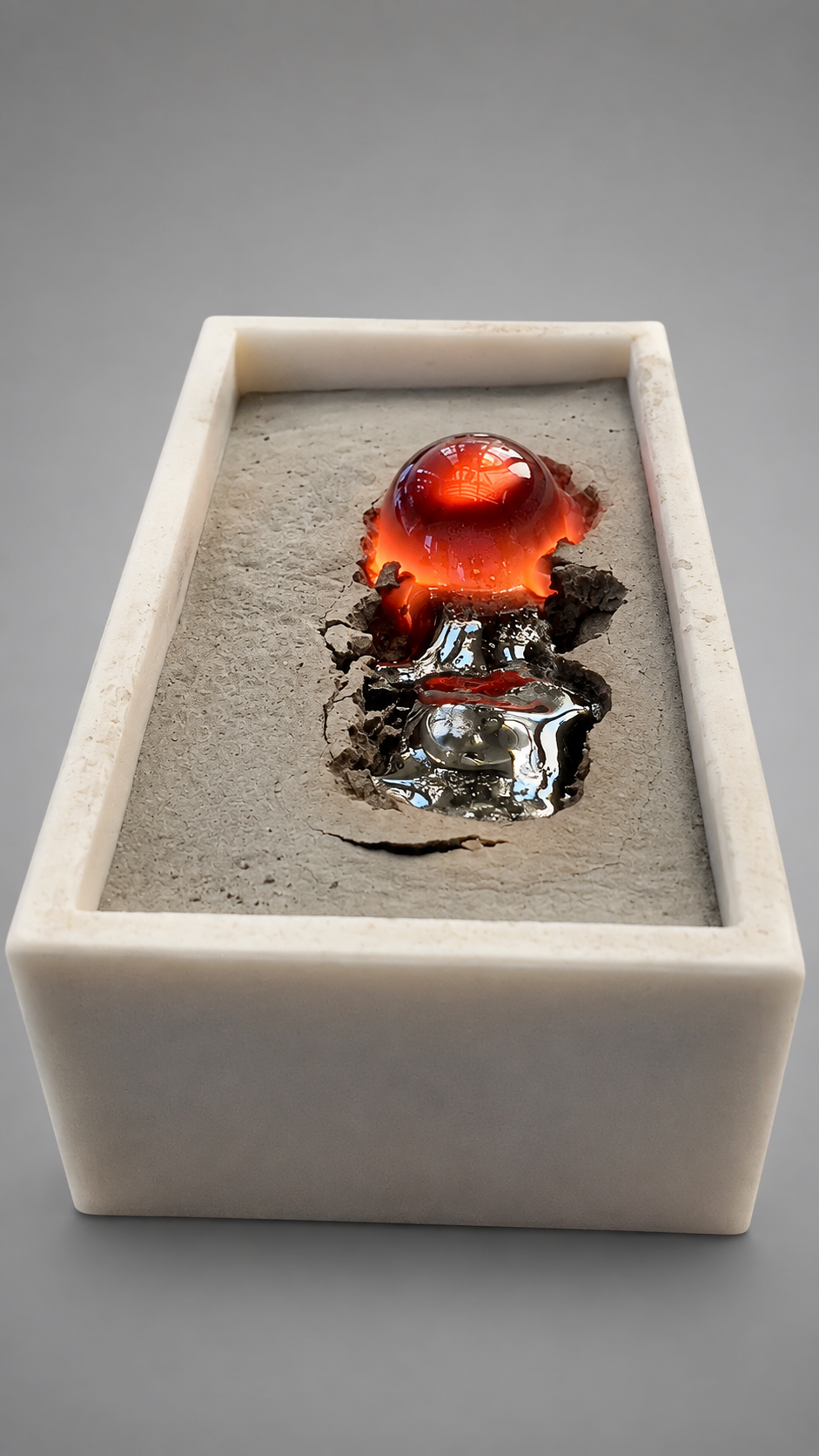
Selective Solar Melting of Basalt under Vacuum
Selective melting of basalt in a powder-bed configuration under vacuum using Concentrated Solar Energy (CSE). During melting, air and moisture initially trapped between the powder particles are released as the material consolidates, producing visible gas bubbles within the molten region. The experiment enables the behavior of basaltic materials under high-flux solar irradiation and vacuum conditions to be evaluated, supporting the development of solar-driven powder-bed processing for space manufacturing applications.

03
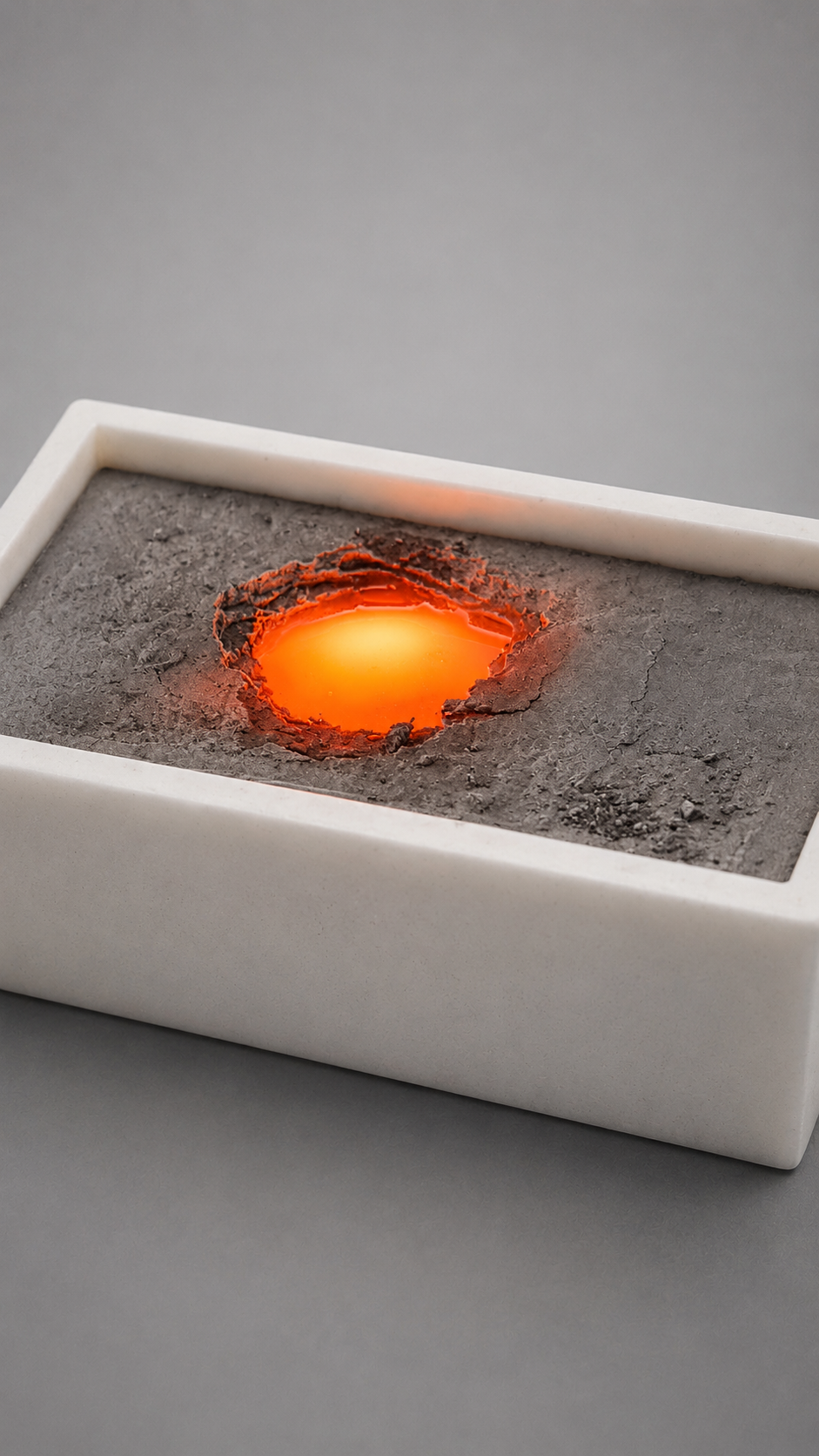
Fixed-Spot Selective Melting of Basalt Using Concentrated Solar Energy
Fixed-spot selective melting of basalt in a powder bed using Concentrated Solar Energy (CSE). The concentrated solar flux rapidly heats the irradiated region above the melting temperature, producing a localized red-hot ceramic melt. Despite basalt’s high melting temperature, complete localized melting can be achieved within only a few minutes of solar exposure.

04
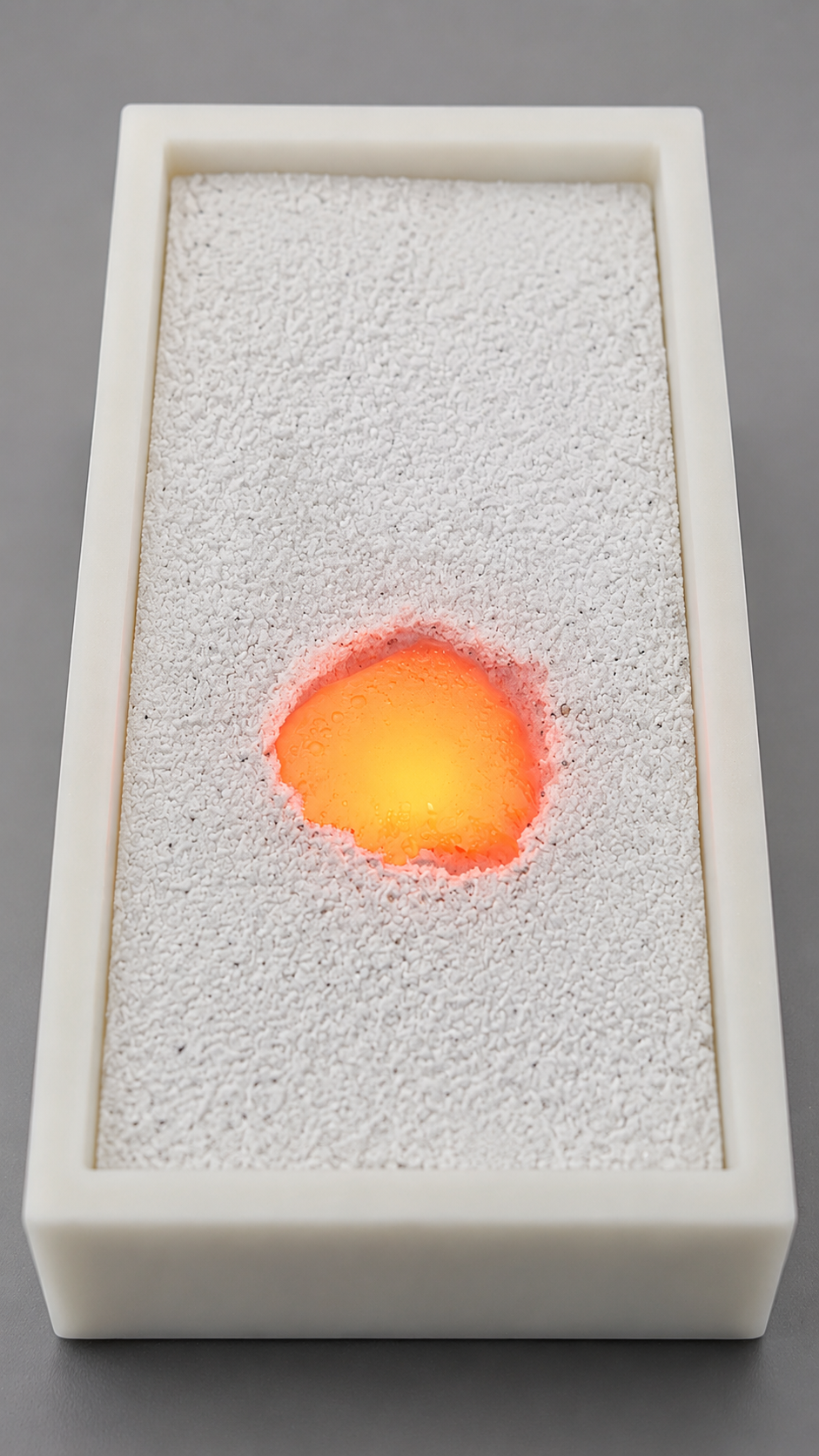
Fixed-Spot Selective Melting of Anorthosite Using Concentrated Solar Energy
Fixed-spot selective melting of anorthosite, representative of the aluminum-rich material found in the lunar highlands, using Concentrated Solar Energy (CSE). Due to its light color and higher solar reflectivity, anorthosite absorbs less incident radiation and requires higher solar power to reach the melting temperature. Despite this, localized melting can be achieved within only a few minutes of concentrated solar exposure.

05
Three-Point Selective Melting of Basalt Using Concentrated Solar Energy
Three adjacent points selectively melted in a basalt powder layer using Concentrated Solar Energy (CSE). The concentrated solar flux enables rapid localized melting and effective bonding between consecutive points, producing a continuous consolidated region with clean interfaces and no visible cracking.

06
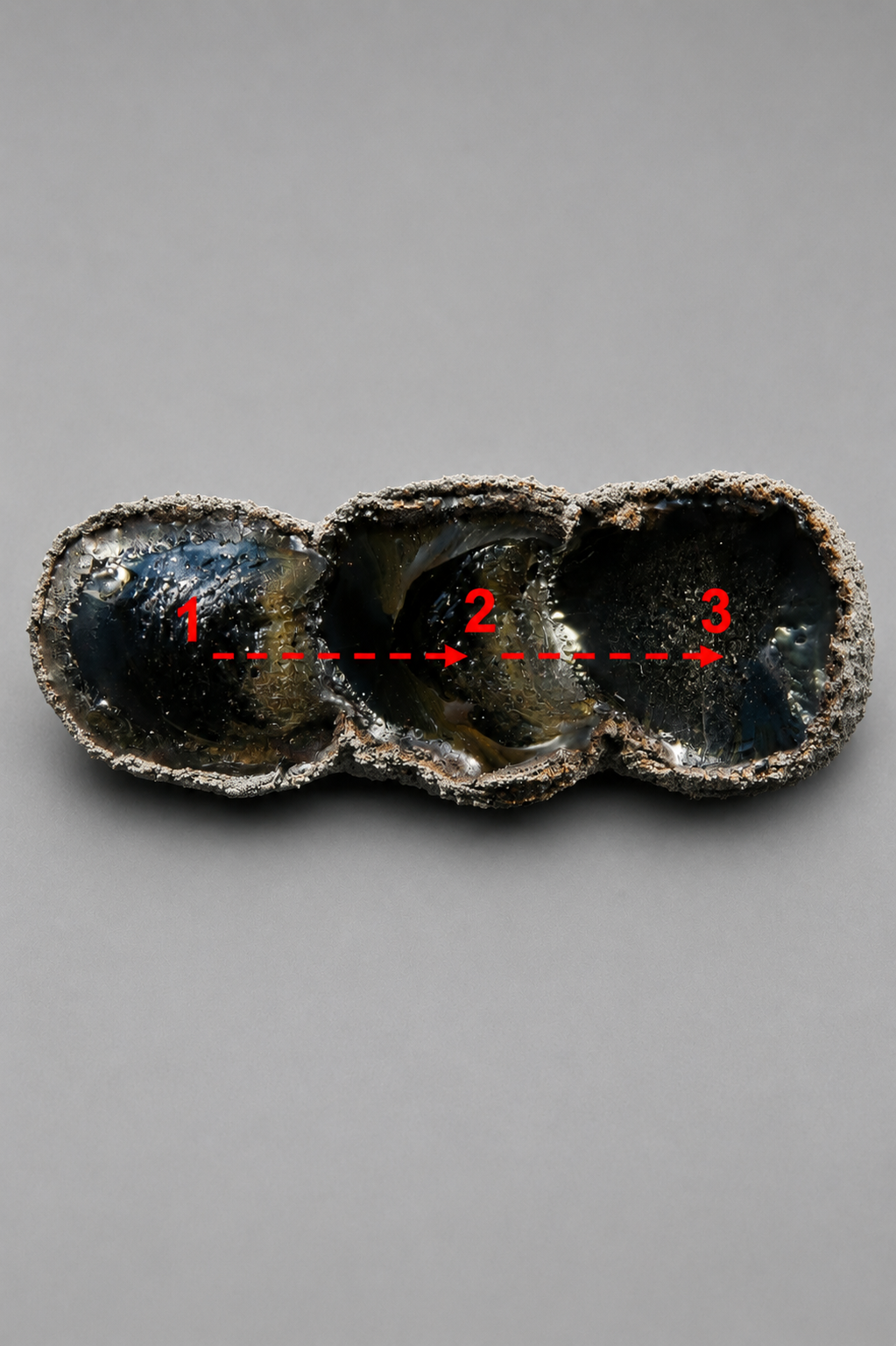
Three-Point Solar-Melted Basalt Sample
Three-point basalt sample after removal from the powder bed, with each selectively melted point individually identified. The sample shows high-quality bonding between adjacent points, with no visible cracking or separation. A clear distinction can also be observed between the amorphous region formed by rapid solidification of the melt and the surrounding sintered material.

07
Two-Track Selective Melting of Basalt Using Concentrated Solar Energy
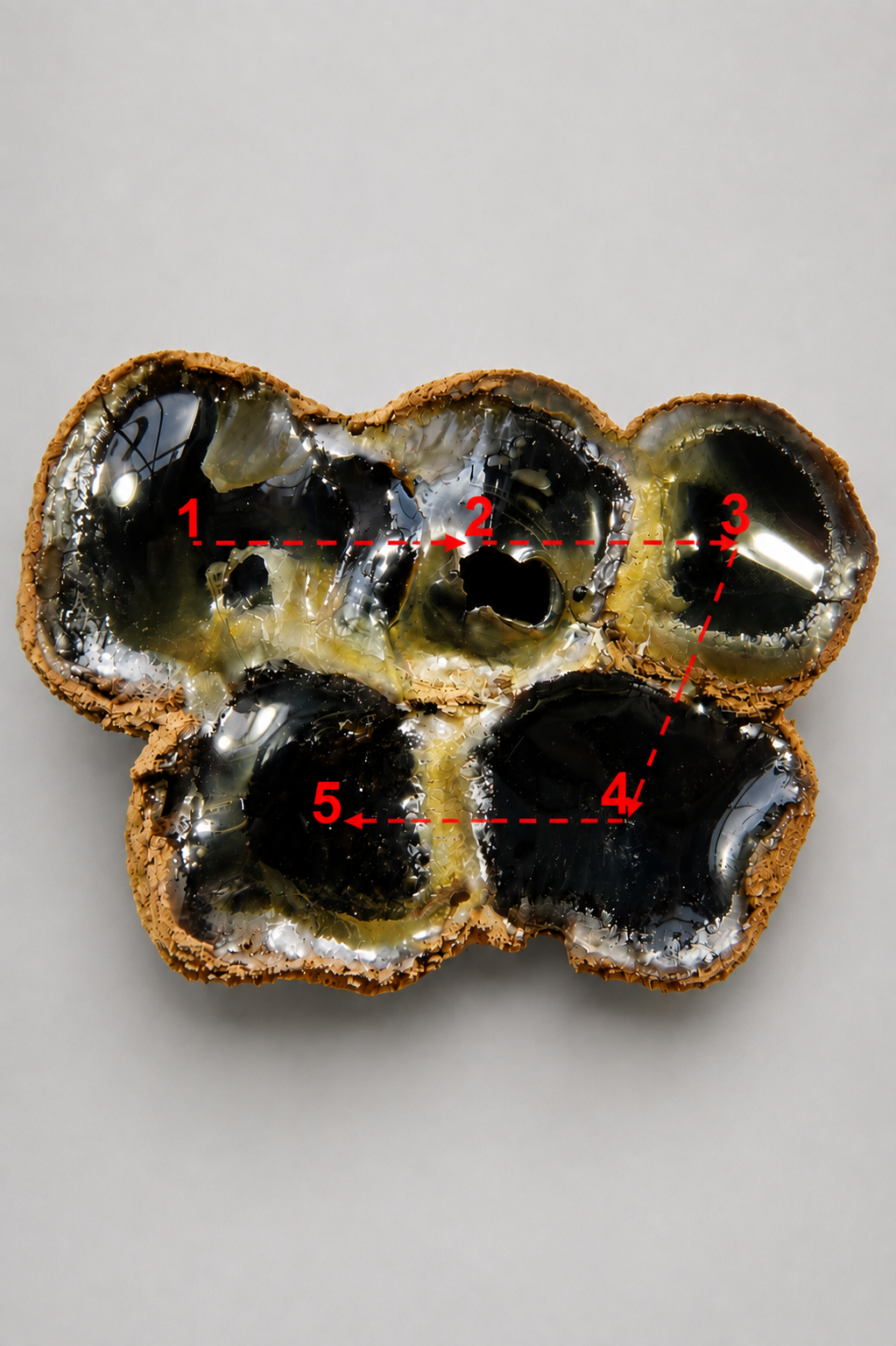
Basalt sample removed from the powder bed after selective melting with Concentrated Solar Energy (CSE). Five individual melting points were used to produce two parallel scanning tracks, demonstrating the ability to extend the process from isolated points toward controlled two-dimensional geometries.

08
Layer-by-Layer Solar Additive Manufacturing of Basalt
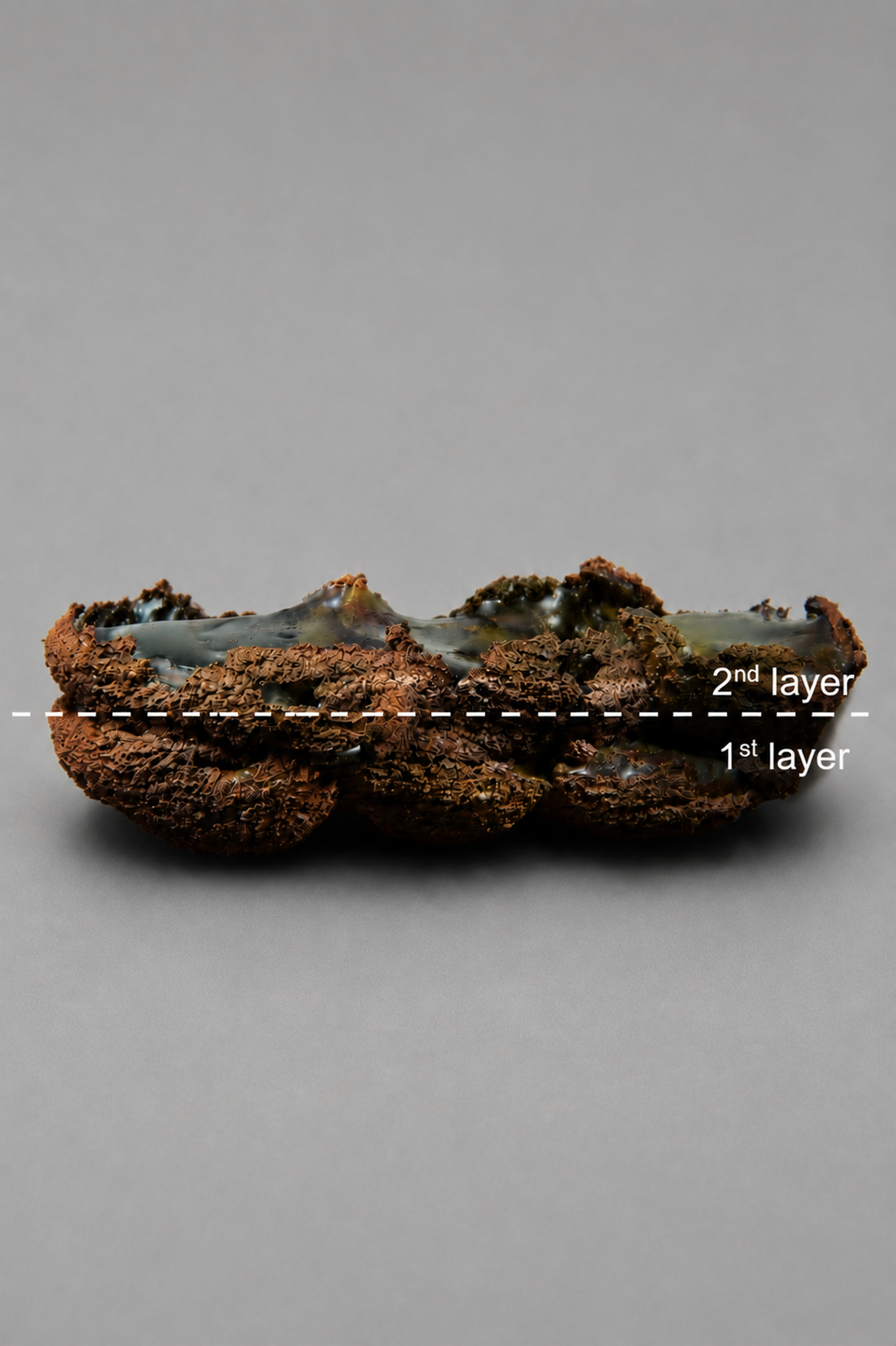
Basalt sample composed of two stacked layers, each produced through a three-point scanning track using Concentrated Solar Energy (CSE). Each track is selectively consolidated within a powder layer, while the deposition of a new powder layer enables material growth in the vertical direction. The stacked tracks demonstrate the layer-by-layer principle of solar powder-bed additive manufacturing.

09
Fixed-Spot Selective Melting of Anorthosite Using Concentrated Solar Energy
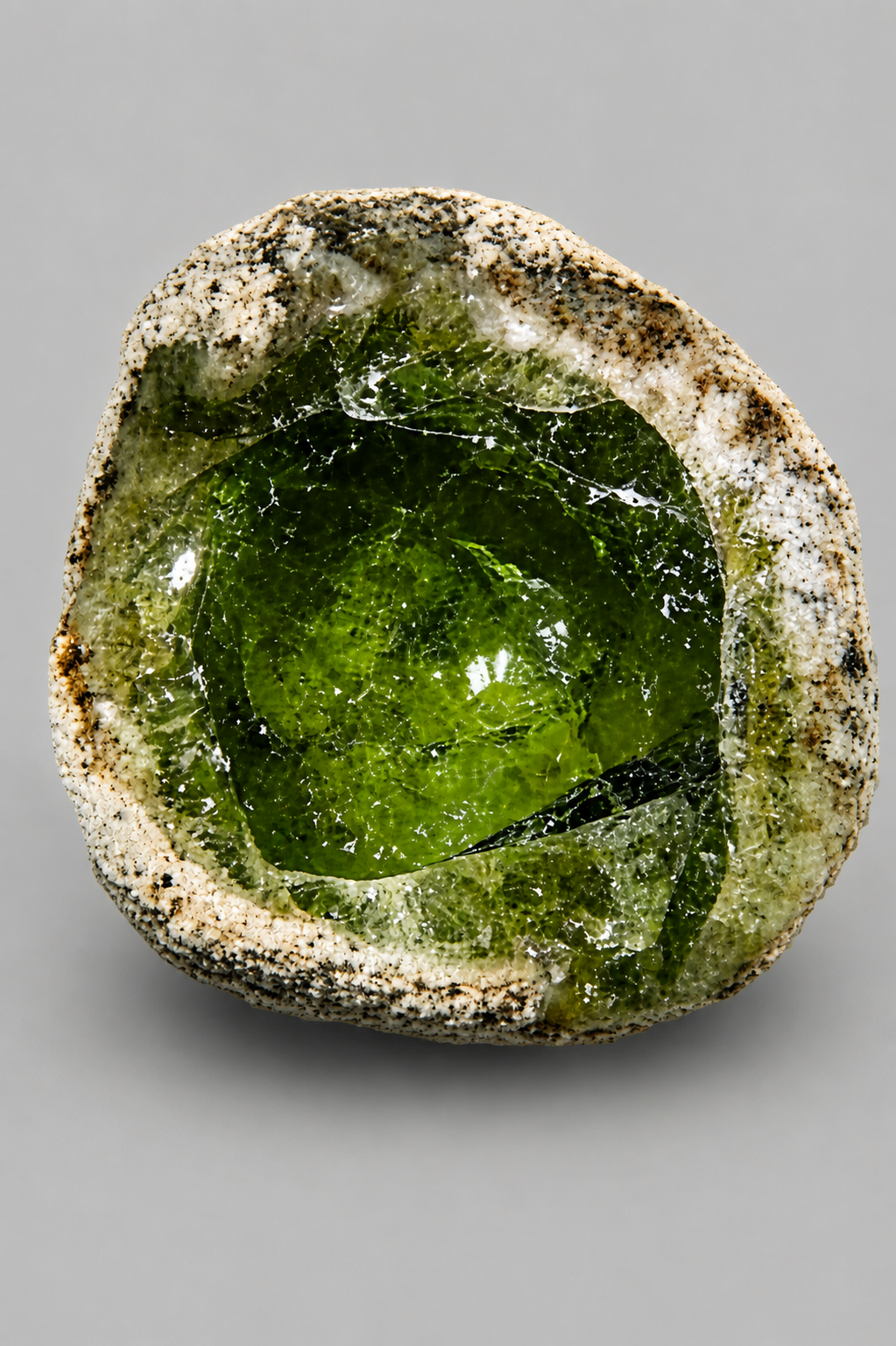
Anorthosite sample produced by fixed-spot selective melting using Concentrated Solar Energy (CSE). The sample shows a greenish amorphous region formed by rapid solidification of the melt, surrounded by partially sintered material. The higher transparency of the processed anorthosite reveals air bubbles trapped within the solidified material, together with some localized cracking.

10
Three-Point Selective Melting of Anorthosite Using Concentrated Solar Energy
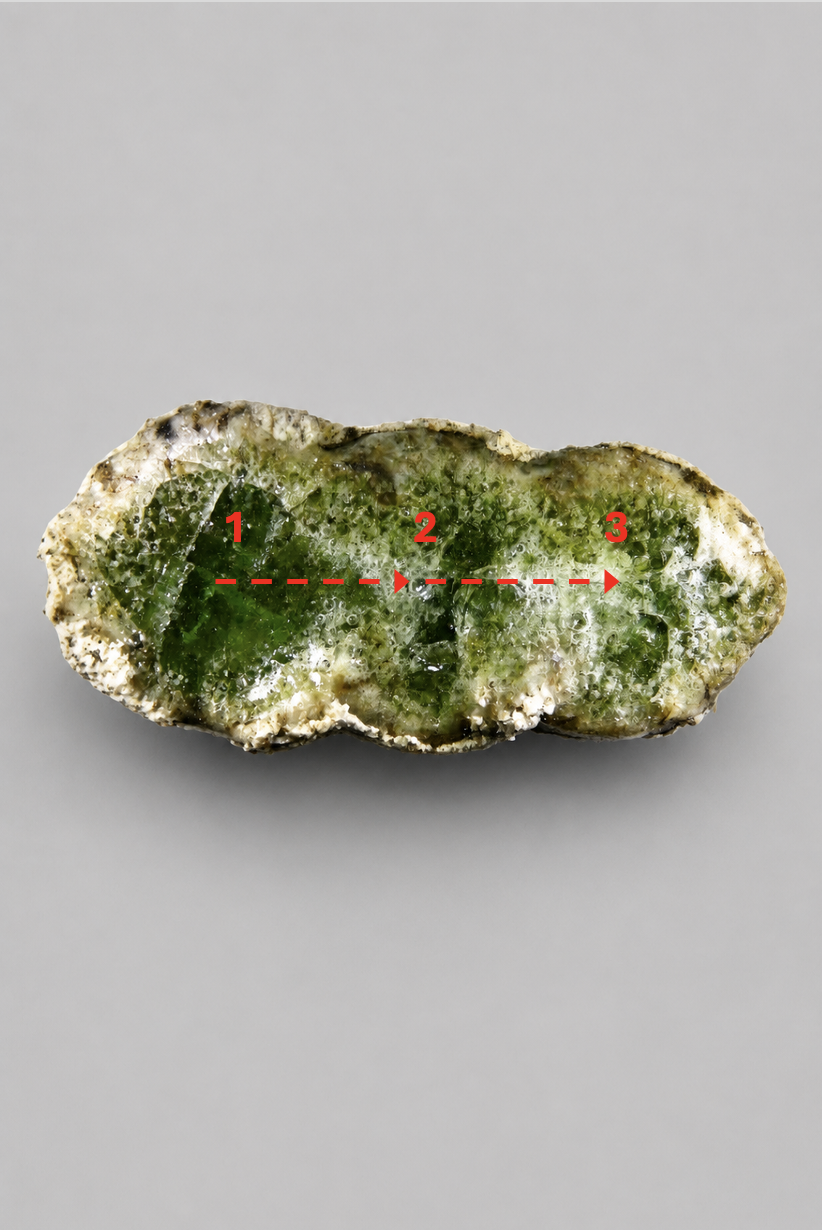
Anorthosite sample produced by selective melting of three adjacent points using Concentrated Solar Energy (CSE). The sample shows effective bonding between the three processed regions, with a greenish amorphous phase formed by rapid solidification surrounded by partially sintered material. The higher transparency of the processed anorthosite also reveals trapped air bubbles within the solidified material and some localized cracking.

11
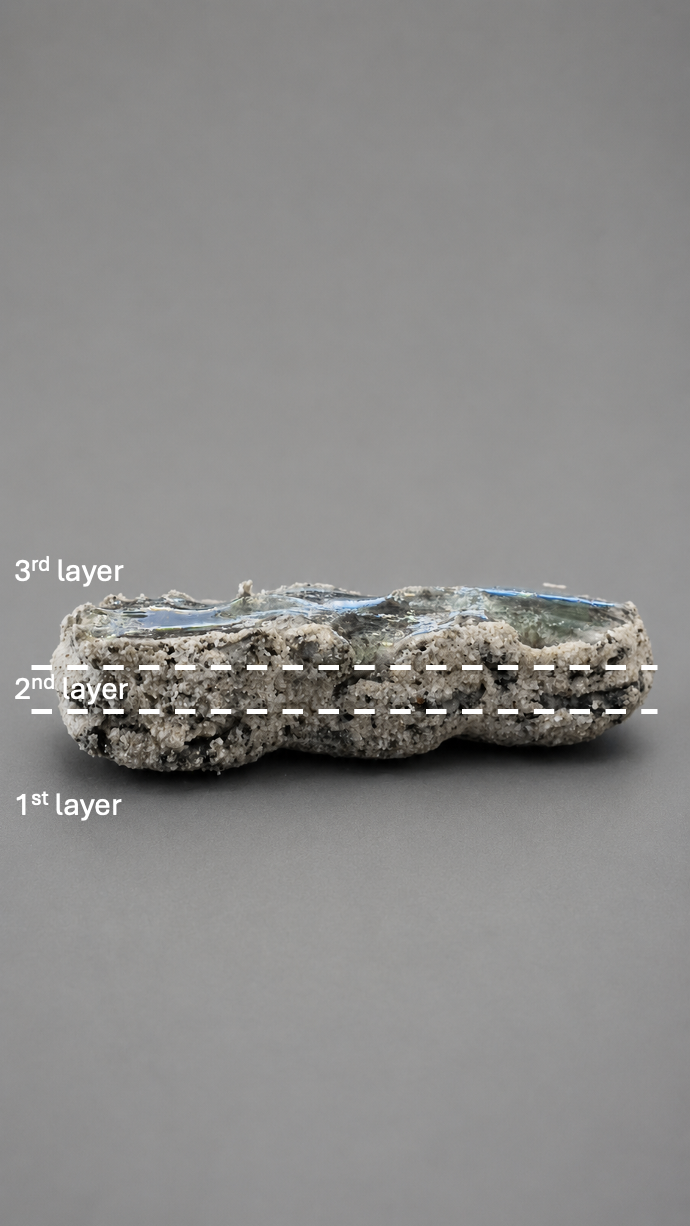
Three-Layer Solar Additive Manufacturing of Anorthosite
Anorthosite sample composed of three stacked layers, each selectively consolidated using Concentrated Solar Energy (CSE). The successive addition and processing of powder layers enables controlled material growth in the vertical direction, demonstrating the feasibility of layer-by-layer solar powder-bed additive manufacturing with anorthosite.

12
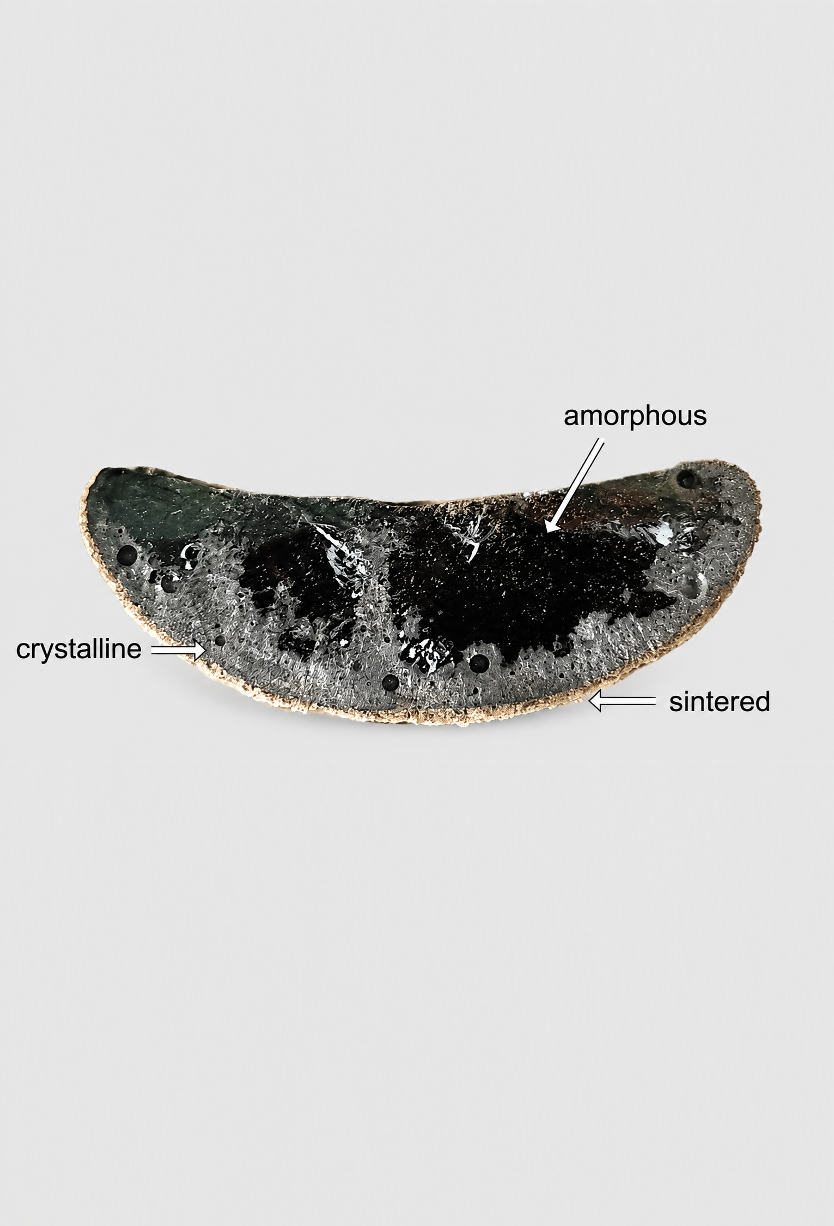
Cross-Section of Solar-Processed Lunar Regolith
Cross-sectional view of a lunar regolith sample processed using Concentrated Solar Energy (CSE). The microstructure clearly reveals three distinct regions: an amorphous zone formed by rapid solidification of the molten material, a crystalline region developed during solidification, and a partially sintered region where powder particles are consolidated without complete melting.
- Basalt powder bed during fixed-spot selective melting with Concentrated Solar Energy, showing the localized red-hot ceramic melt achieved within only a few minutes of solar exposure.
- Anorthosite powder bed during fixed-spot selective melting with Concentrated Solar Energy. Its light color and high reflectivity require higher solar power to produce the localized red-hot ceramic melt.
- Basalt powder layer after selective solar melting of three adjacent points, showing effective bonding between the melted regions with clean interfaces and no visible cracks.
- Three-point basalt sample removed from the powder bed, showing three identified and well-bonded melted points with no visible cracks and a clear transition between the amorphous melted region and the surrounding sintered material.
- Basalt sample removed from the powder bed after concentrated solar processing, showing five selectively melted points arranged in two parallel scanning tracks.
- Basalt sample composed of two stacked layers, each formed by a three-point scanning track using Concentrated Solar Energy, demonstrating vertical growth through layer-by-layer solar powder-bed additive manufacturing.
- Fixed-spot solar-processed anorthosite sample showing a greenish amorphous region surrounded by sintered material, with trapped air bubbles and localized cracks visible through the partially transparent material.
- Three-point solar-processed anorthosite sample showing bonded adjacent regions, a greenish amorphous phase surrounded by sintered material, and visible trapped air bubbles and localized cracks.
- Anorthosite sample composed of three stacked layers produced by selective solar processing, demonstrating vertical growth through layer-by-layer powder-bed additive manufacturing.
- Cross-section of a solar-processed lunar regolith sample showing clearly differentiated amorphous, crystalline, and sintered regions resulting from concentrated solar processing.
bottom of page