top of page
Solar Reactive Sintering of Cu–Al Intermetallic Multimaterials
This project investigates the synthesis of Cu–Al intermetallic materials through reactive sintering activated by Concentrated Solar Energy. The work explores monolithic, multilayer, and functionally graded configurations, controlling composition and architecture to tailor the resulting properties. These systems are developed for demanding applications requiring high hardness, corrosion resistance, and wear resistance, with particular interest in protective coatings and naval applications.
Project type
Programa Investigo — Young Researcher Fellowship funded by the European Union through NextGenerationEU
Date
2025
Location
Institute of Applied Research for the Aeronautical Industry (INAIA), University of Castilla-La Mancha (UCLM)

01
Solar Reactive Sintering of Cu–Al Intermetallic Multimaterials

01
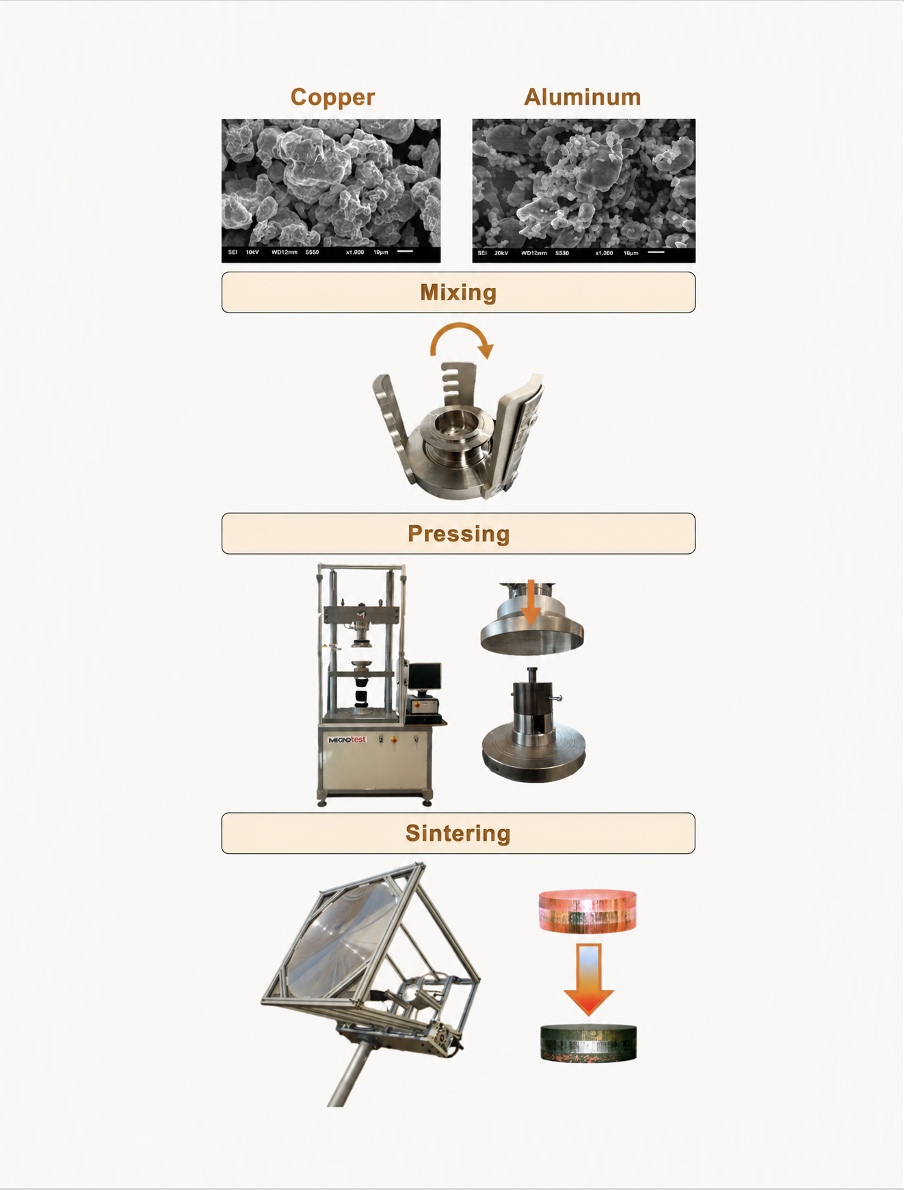
Manufacturing Process of Cu–Al Intermetallic Compounds
Manufacturing route for Cu–Al intermetallic materials, including powder mixing, compaction, and solar reactive sintering. Concentrated solar energy provides the high heating rates required to activate the exothermic reaction between copper and aluminum, enabling rapid synthesis and consolidation of the intermetallic material.

02
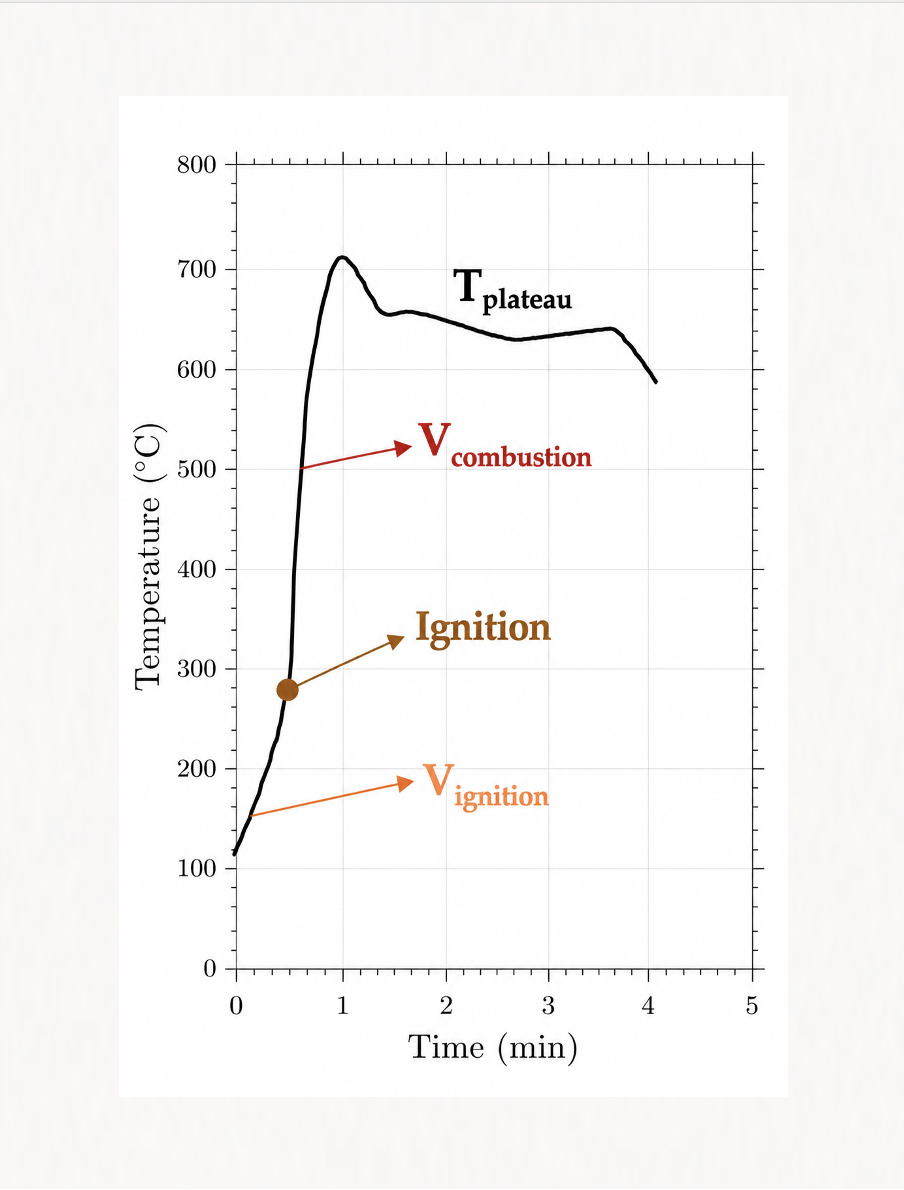
SHS Ignition and Combustion Front Propagation
Temperature–time profile showing the abrupt change in heating rate associated with SHS ignition and the subsequent propagation of the combustion front. The exothermic reaction releases additional heat, enabling rapid intermetallic synthesis and effective consolidation within minutes, leading to highly densified Cu–Al materials.

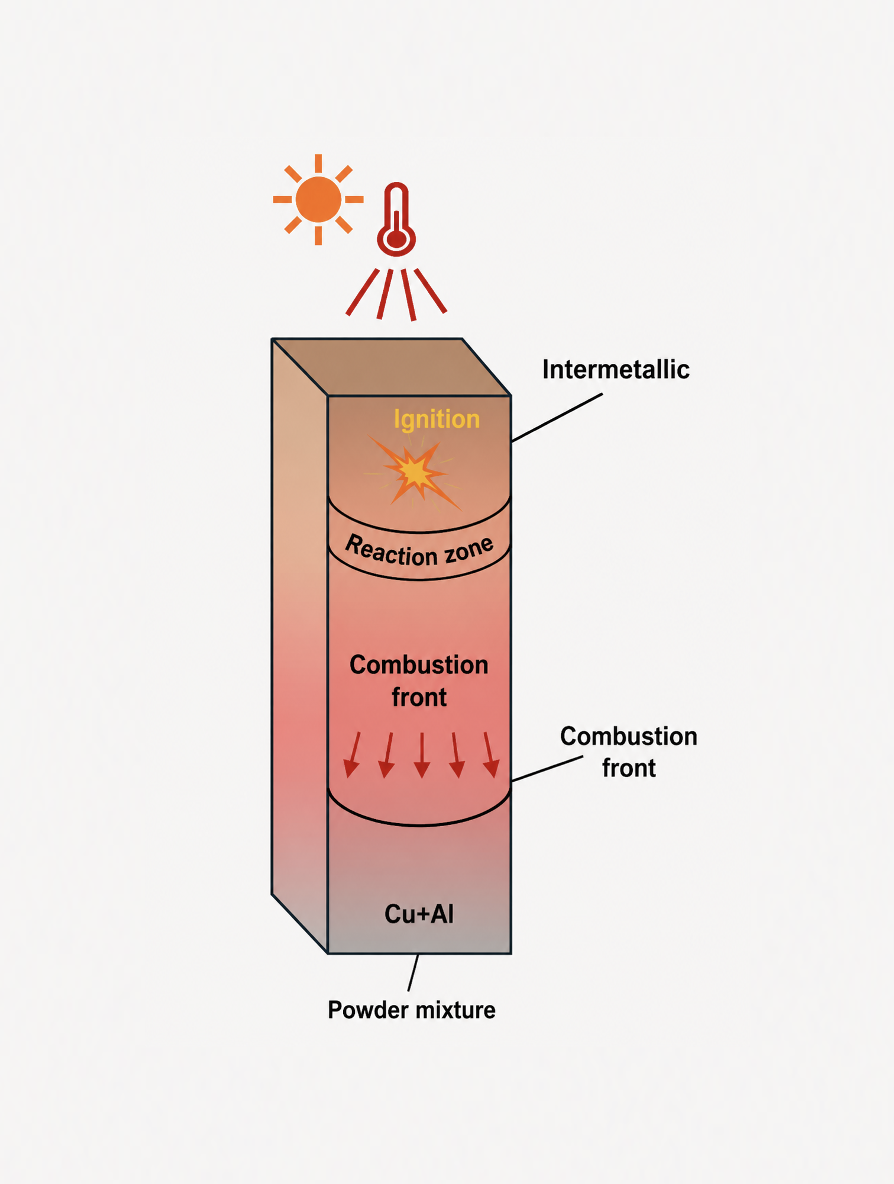
03
Combustion Front Propagation during Reactive Synthesis of Cu–Al Intermetallics
Schematic representation of SHS combustion front propagation through a Cu–Al powder compact. Once ignition occurs, the highly exothermic reaction propagates through the material, transforming the initial Cu–Al mixture into intermetallic phases while releasing the energy required to promote rapid synthesis and consolidation.

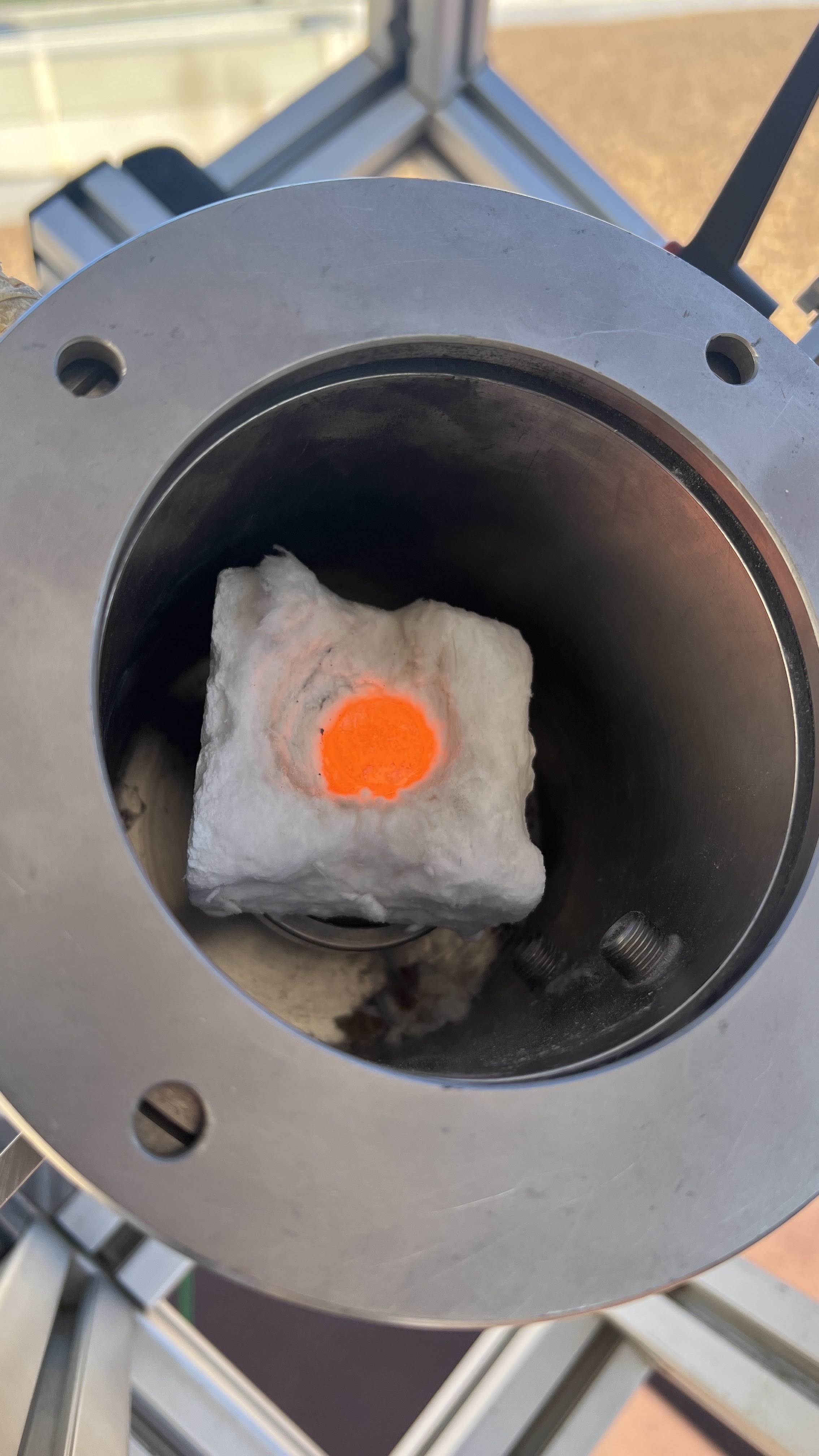
04
Cooling Stage after Solar Reactive Sintering of a Cu–Al Intermetallic Part
Cu–Al part during the cooling stage following solar-activated SHS reactive sintering. After the rapid propagation of the combustion front, the synthesized intermetallic material cools and stabilizes following its rapid consolidation.

05
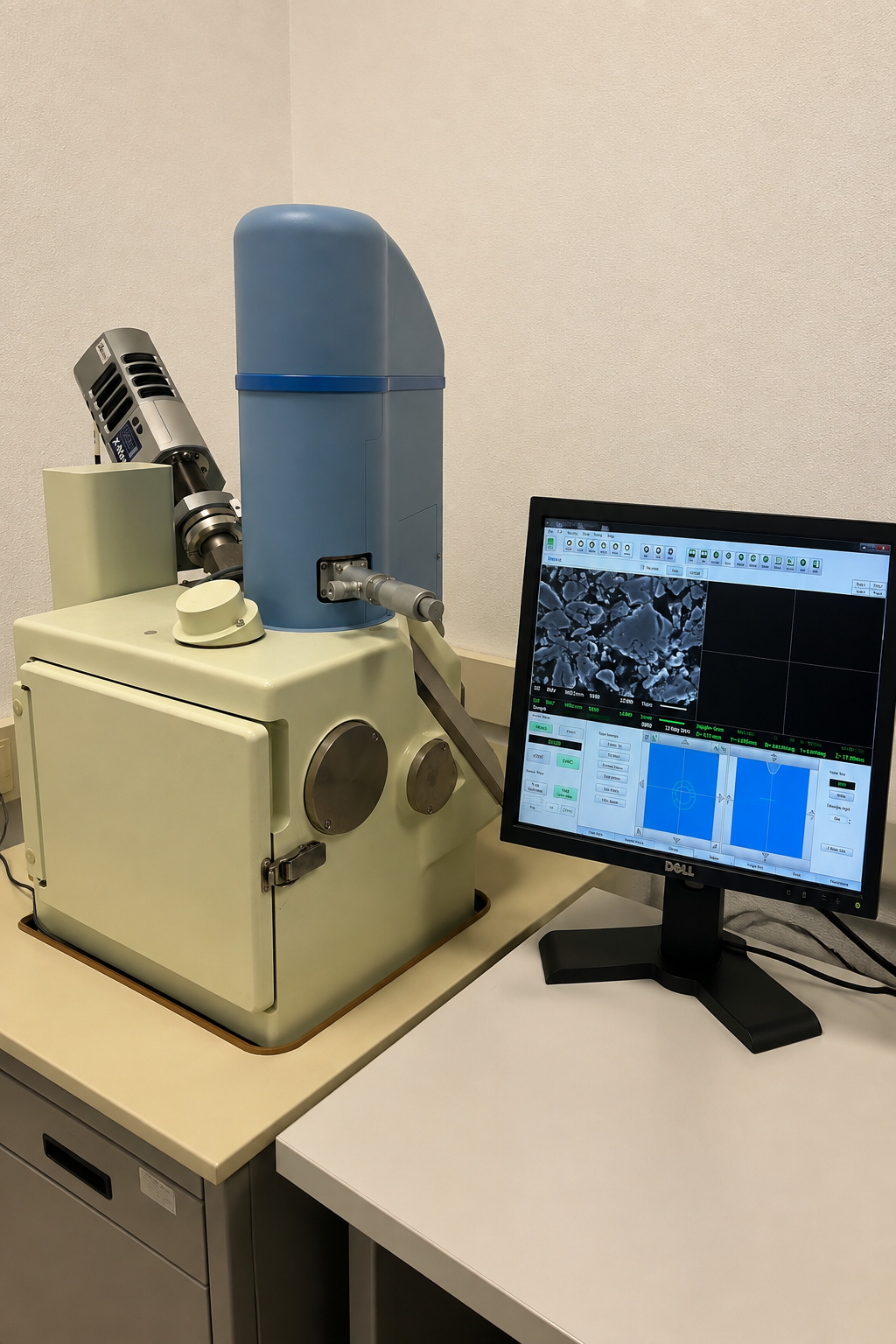
SEM Analysis of Cu–Al Intermetallic Phases
Scanning Electron Microscopy (SEM) characterization of the synthesized Cu–Al intermetallic materials, enabling detailed analysis of their microstructure, phase distribution, interfaces, and morphology after solar reactive sintering.

06
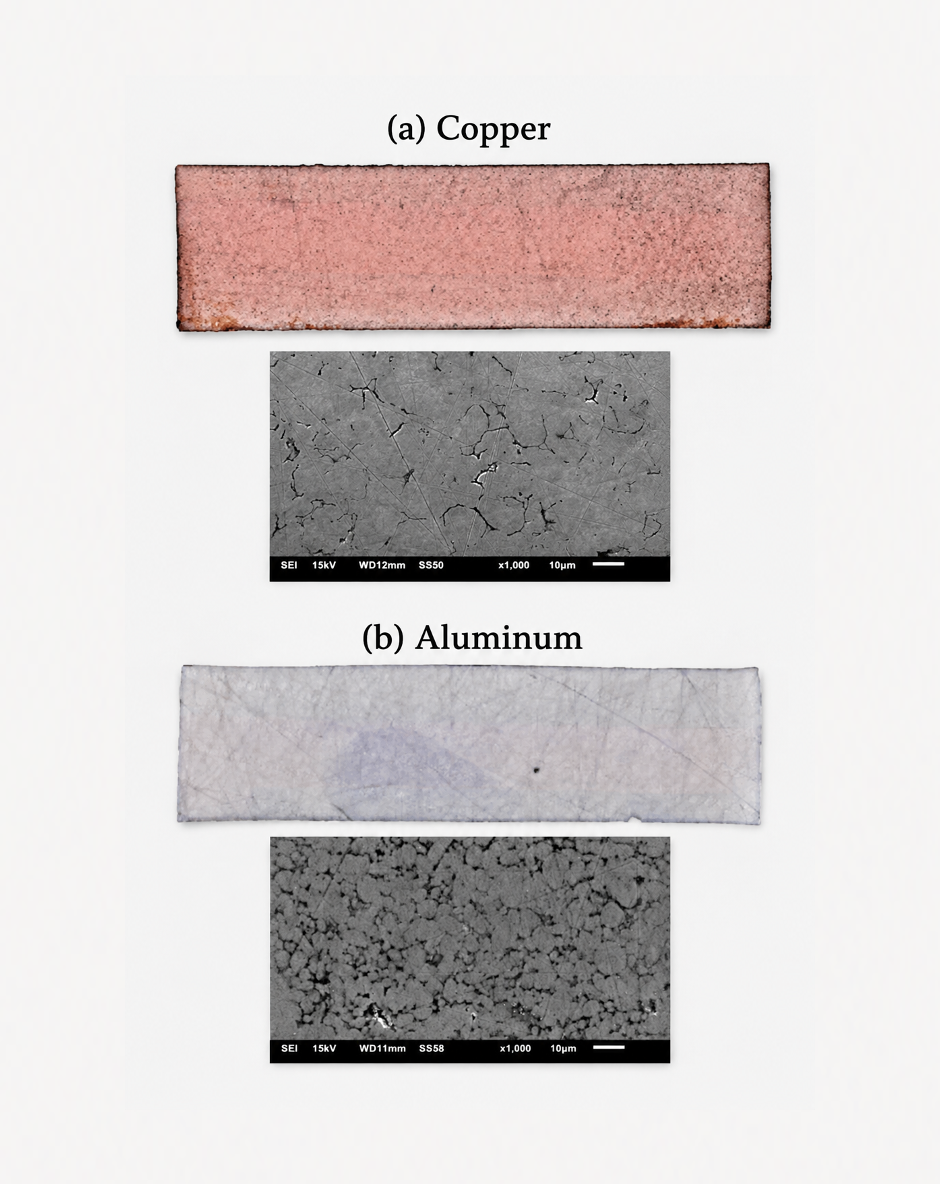
Solar Sintering of Pure Copper and Aluminum Reference Materials
Micrographs of pure copper and aluminum sintered using Concentrated Solar Energy (CSE) in processing times between 2 and 5 minutes. These reference materials demonstrate the high densification achievable through the high energy efficiency and rapid heating provided by solar processing.

07
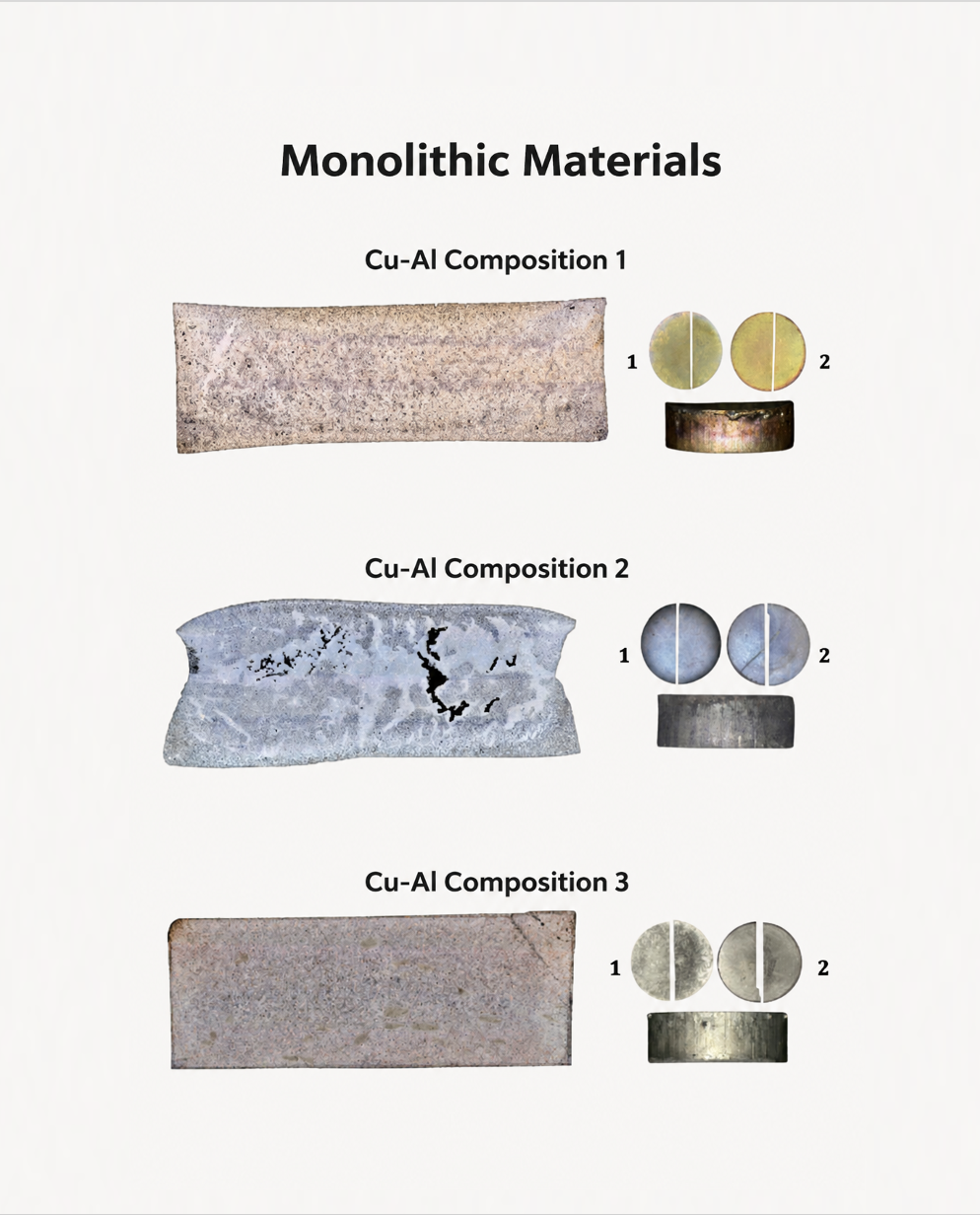
Composition-Controlled Formation of Cu–Al Intermetallic Phases
Micrographs of Cu–Al samples reactively sintered within 2–5 minutes using Concentrated Solar Energy. Different Cu–Al compositions promote the formation and distribution of distinct intermetallic phases, demonstrating the ability to tailor the microstructure and obtain high-hardness materials through compositional control.

08
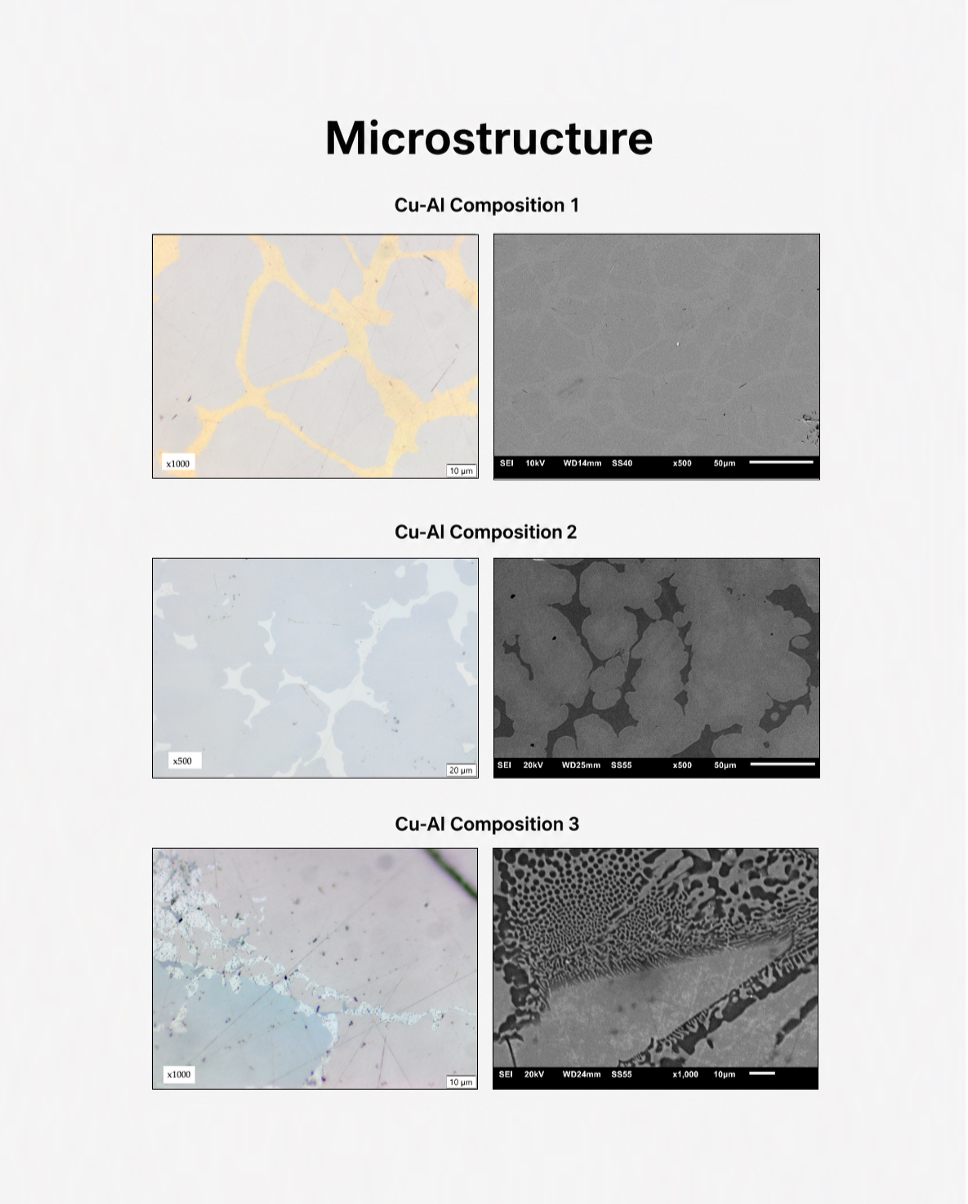
Microstructural Evolution of Cu–Al Intermetallic Phases
Micrographs showing different Cu–Al intermetallic phases, characterized by variations in color, morphology, and size. These microstructural differences arise from the availability of the elemental powders and changes in reaction exothermicity with aluminum content.

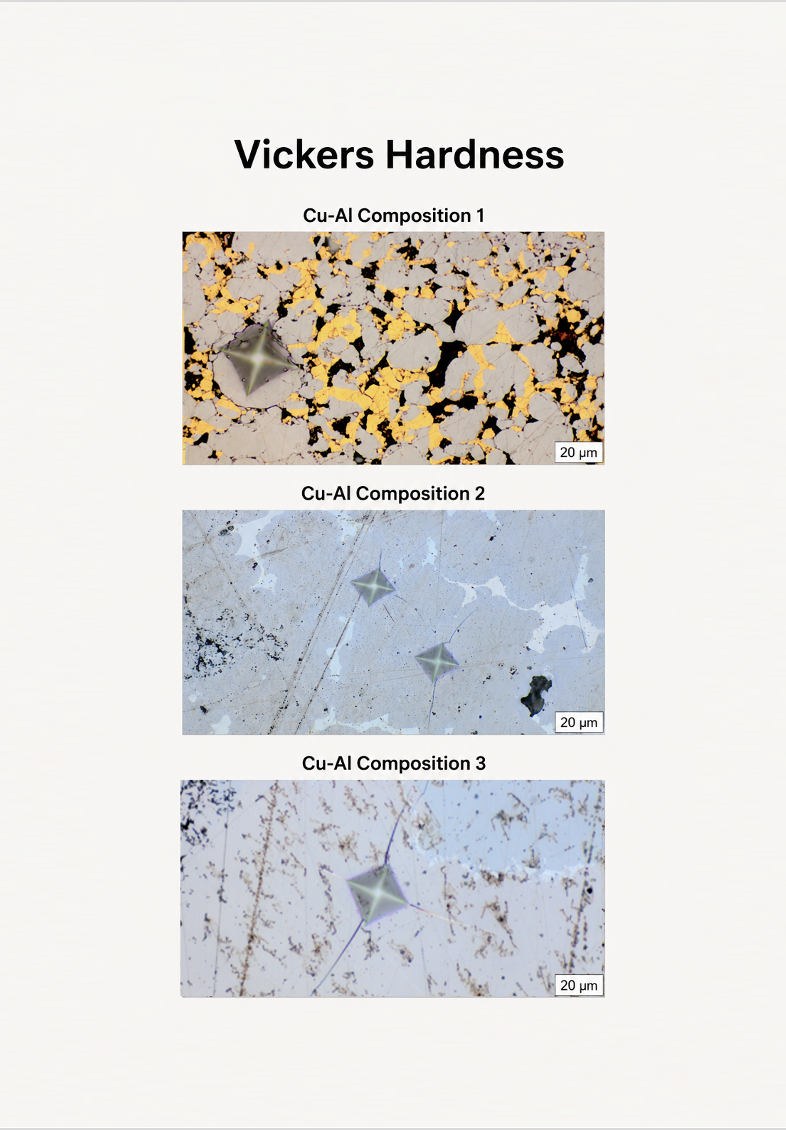
09
Vickers indentations of different Cu–Al intermetallic phases.
Vickers indentations performed on different Cu–Al intermetallic phases, revealing significant variations in local mechanical response and hardness values reaching up to 600 HV. Crack formation around the indentations also highlights the characteristic brittle behavior of these high-hardness intermetallic phases.

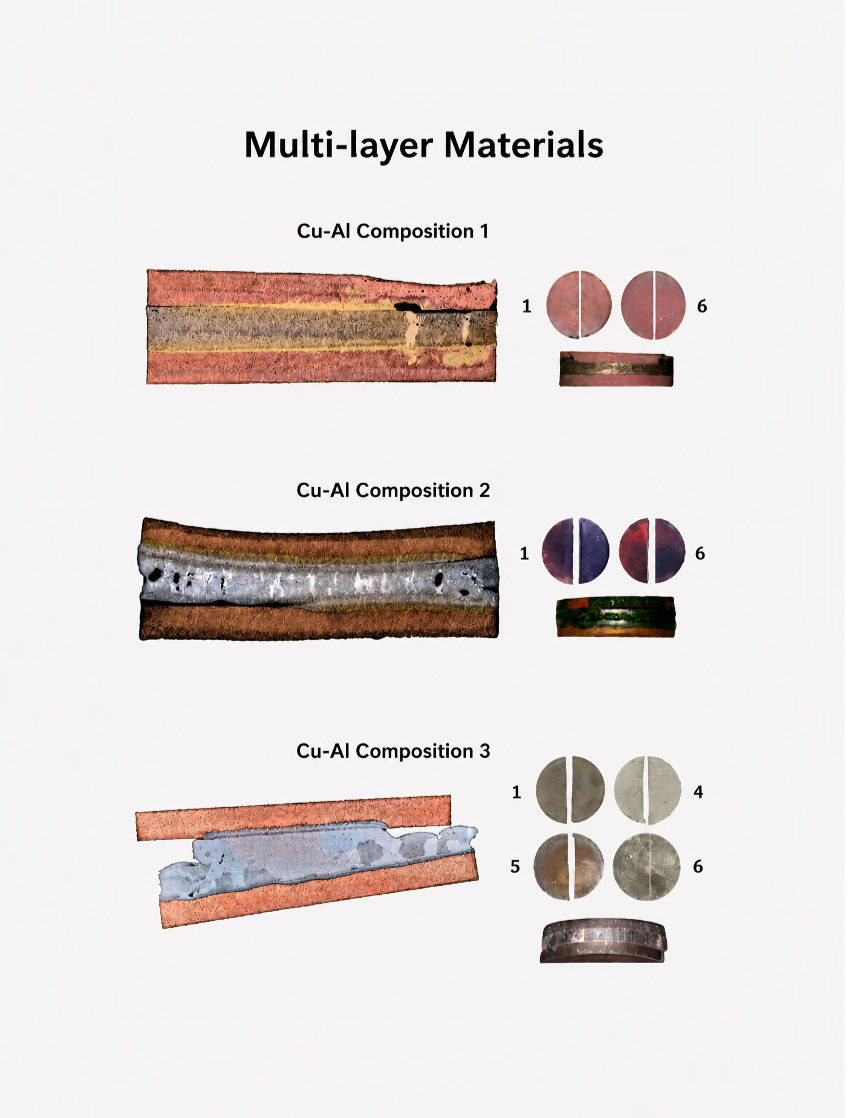
10
Microstructure and Interfaces of Cu–Al Intermetallic Multimaterials
Micrographs of multilayer Cu–Al samples reactively sintered to produce intermetallic-based multimaterials. The different compositions promote the formation of distinct intermetallic phases across the layers, while achieving high densification and, particularly, excellent interfacial bonding between adjacent materials.

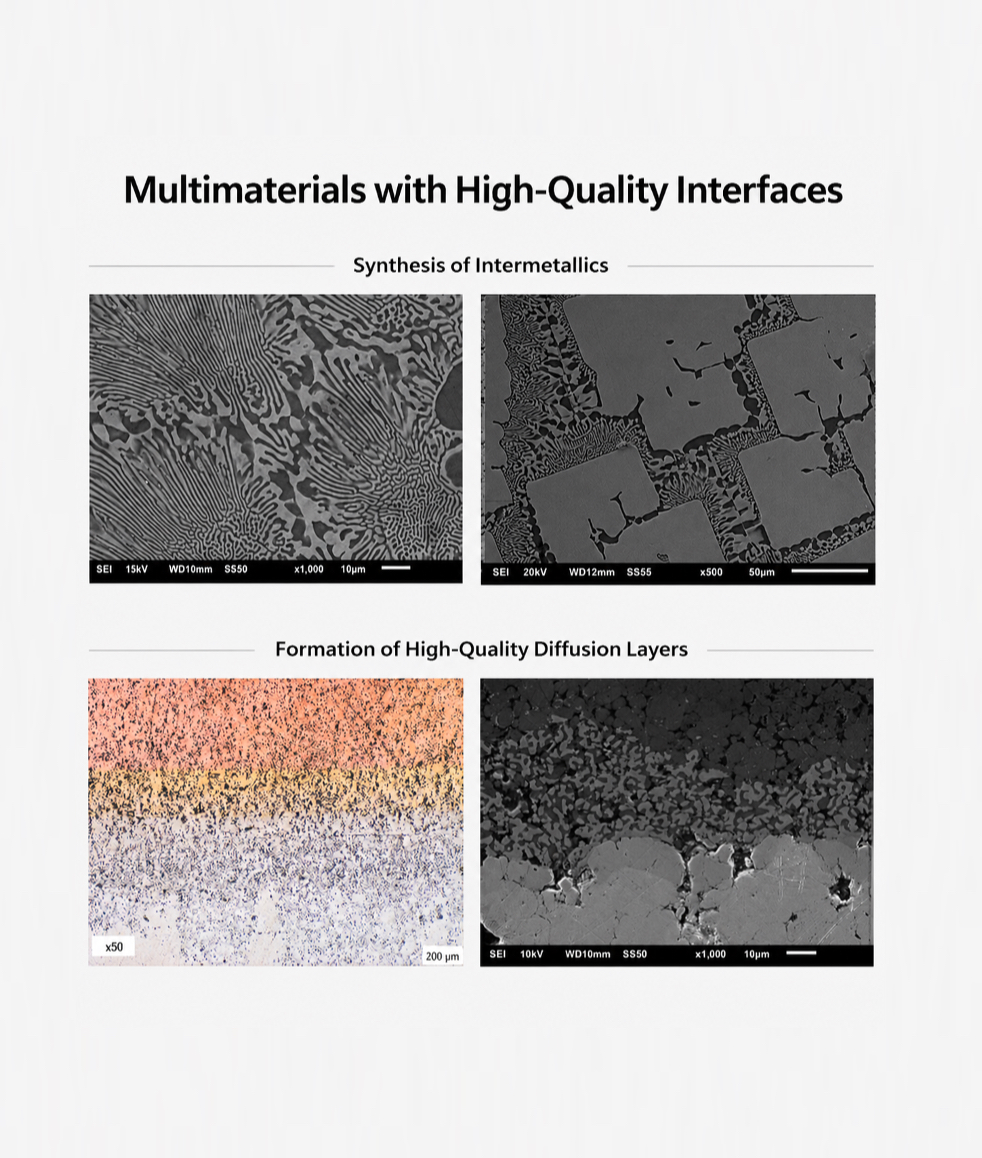
11
Intermetallic Phases and High-Quality Interfaces in Cu–Al Multimaterials
Micrographs showing variations in morphology, size, and stoichiometry of the intermetallic phases formed across different Cu–Al compositions. Particular attention is given to the formation of lamellar phases, which provide a favorable balance of properties within the multimaterial system. The interfaces exhibit excellent bonding and structural continuity, with no significant defects observed between adjacent layers.

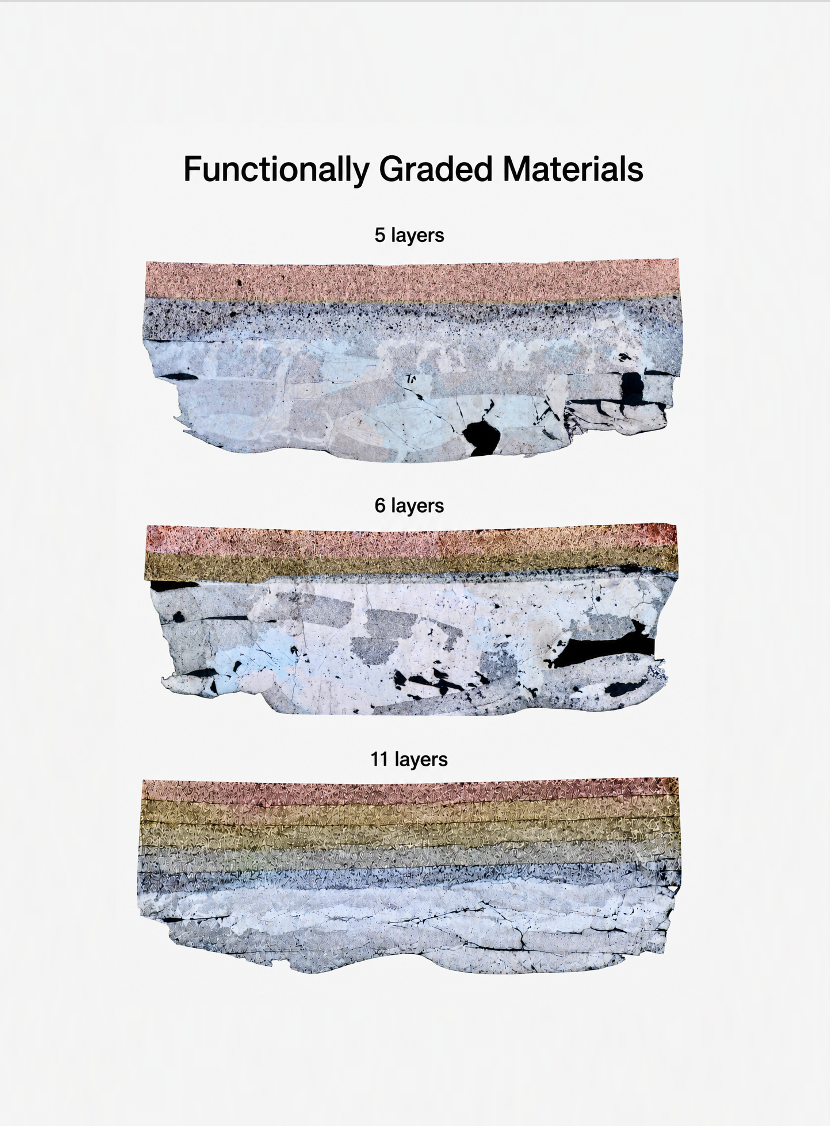
12
Functionally Graded Cu–Al Intermetallic Multimaterials
Micrographs of functionally graded Cu–Al materials with 5, 6, and 11 layers, showing excellent interlayer bonding and controlled evolution of the microstructure and intermetallic phases. The gradual compositional transition between adjacent layers improves thermomechanical compatibility while enabling local properties to be tailored to specific service conditions. This approach allows complex components to integrate different functional requirements with fewer discrete interfaces and improved overall performance.

13
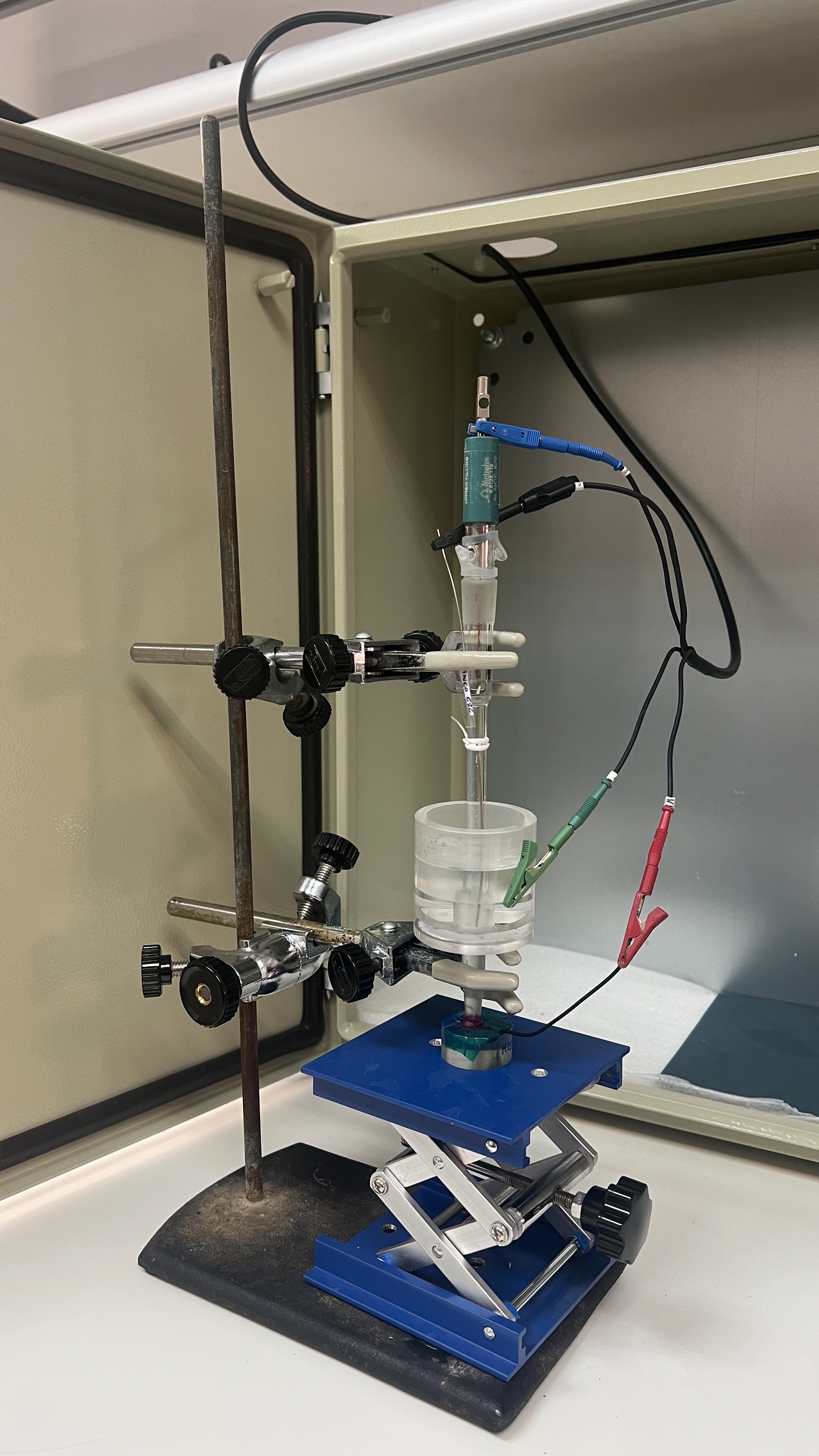
Electrochemical Corrosion Resistance Testing of Cu–Al Intermetallics
Electrochemical polarization tests performed to evaluate the corrosion resistance of Cu–Al intermetallic materials. The measurements enable comparison of the electrochemical behavior of different compositions and microstructures, assessing their potential for applications in aggressive environments.
- Cu–Al intermetallic manufacturing process showing powder mixing, compaction, and reactive sintering using concentrated solar energy.
- Temperature–time curve showing SHS ignition, the sharp increase in heating rate, and combustion-front propagation during rapid densification of Cu–Al intermetallic materials.
- Schematic of SHS combustion front propagation through a Cu–Al powder mixture during the reactive synthesis of intermetallic compounds.
- Cu–Al part cooling after solar reactive sintering and SHS synthesis of intermetallic phases.
- SEM equipment used for microstructural and phase analysis of Cu–Al intermetallic materials obtained by solar reactive sintering.
- Micrographs of pure copper and aluminum showing high densification after 2–5 minutes of sintering using Concentrated Solar Energy.
- Micrographs of Cu–Al samples with different compositions reactively sintered by Concentrated Solar Energy, showing composition-controlled formation of high-hardness intermetallic phases.
- Micrographs of Cu–Al intermetallic phases showing variations in color, morphology, and size associated with elemental powder availability and reaction exothermicity at different aluminum contents.
- Vickers indentations on different Cu–Al intermetallic phases showing variations in hardness and characteristic brittle cracking around the indentations.
- Micrographs of multilayer Cu–Al intermetallic multimaterials showing composition-dependent phases, high densification, and excellent bonding between adjacent layers.
- Micrographs of Cu–Al multimaterials showing lamellar intermetallic phases with different morphologies and stoichiometries, together with well-bonded, defect-free interfaces between layers.
- Micrographs of 5-, 6-, and 11-layer functionally graded Cu–Al materials showing controlled intermetallic phases, gradual microstructural transitions, and excellent bonding between adjacent layers.
- Electrochemical polarization testing setup used to evaluate the corrosion resistance of Cu–Al intermetallic materials.
bottom of page