top of page
Reactive Sintering and simultaneous Nitriding of Ti–Al Intermetallics for aerospace components
The application of Ti–Al intermetallics at extreme temperatures is constrained by their limited oxidation resistance above approximately 800 °C. To overcome this barrier, solar-driven reactive nitriding is integrated directly into the Ti–Al reactive synthesis, coupling SHS intermetallic formation with the in-situ formation of hard ceramic δ-TiN surface layers. These protective nitride layers enhance oxidation resistance toward 1000 °C, extending the operating temperature range and opening new opportunities for Ti–Al in demanding aerospace and space applications.
Project type
SOL-AM European RIS-Energy Project, Horizon 2020
Date
2025–2026
Location
PROMES-CNRS, Odeillo, France

01
Reactive Sintering and simultaneous Nitriding of Ti–Al Intermetallics for aerospace components

01
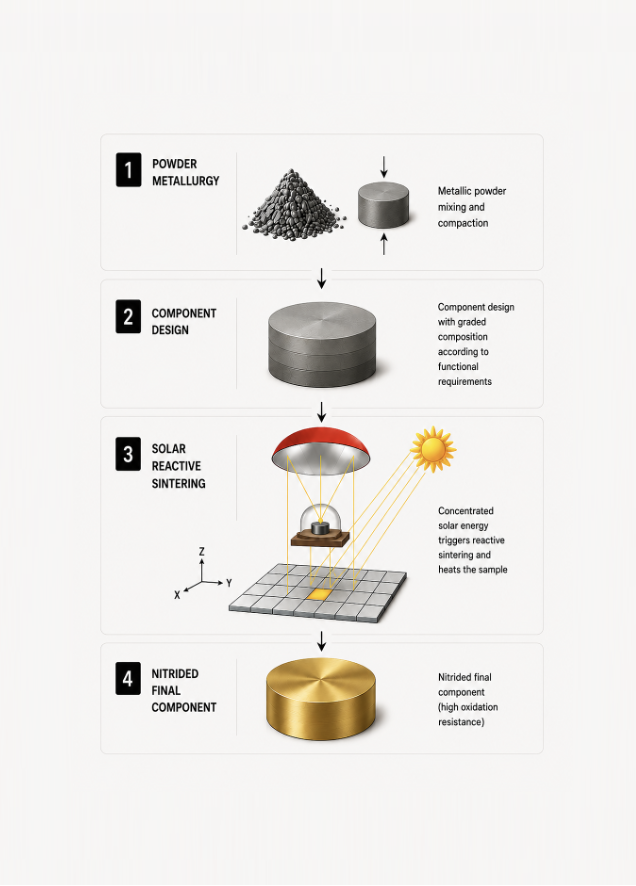
Processing route for Solar Reactive Sintering and Nitriding of Ti–Al Intermetallics
Schematic representation of the main processing stages for the fabrication of nitrided Ti–Al intermetallic components using concentrated solar energy (CSE). The process comprises elemental powder mixing, compaction to obtain the green component, solar reactive sintering with simultaneous SHS-assisted nitriding, and the production of a dense nitrided intermetallic component. The combination of reactive synthesis and nitriding enables rapid consolidation while promoting the formation of Ti–Al intermetallic phases and a protective nitride layer with enhanced hardness and oxidation resistance.

02
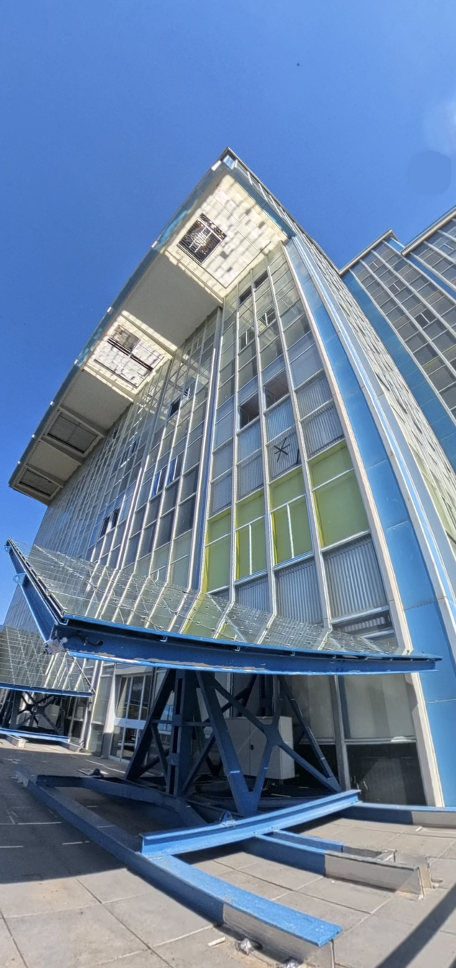
Solar Radiation Delivery to the Parabolic Concentrator
View of the solar furnace heliostat reflecting incoming sunlight toward the shutter system located upstream of the parabolic concentrator. The heliostat continuously tracks the Sun and redirects the solar radiation along the optical axis, while the shutter controls the amount of radiation entering the concentrator before it is focused onto the sample.

03
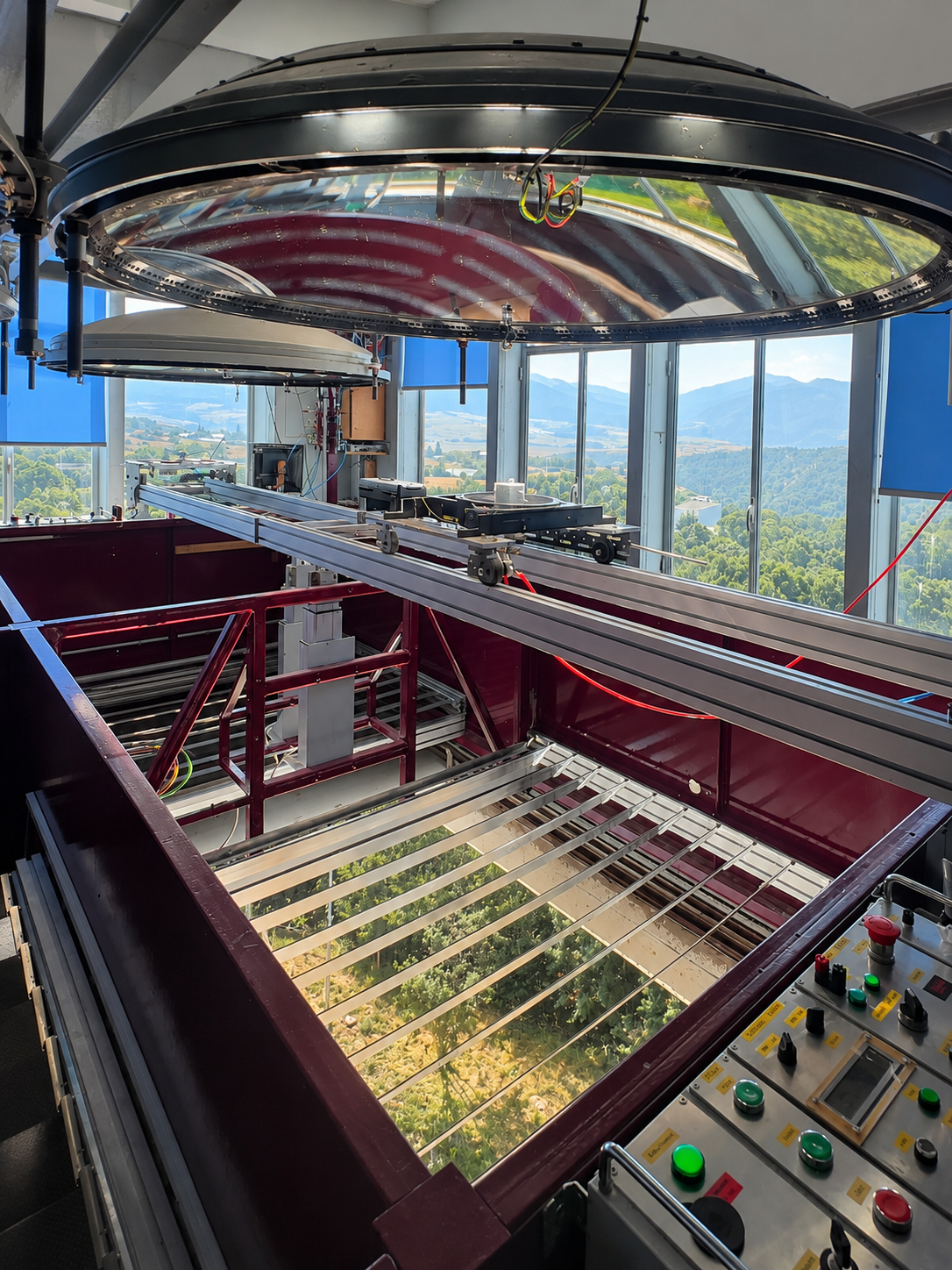
Parabolic Solar Concentrator and Reaction Chamber
View of the Odeillo's concentrated solar energy facility showing the shutter system, parabolic concentrator, and reaction chamber used for solar reactive sintering and nitriding. The shutter regulates the incoming solar radiation before it reaches the parabolic concentrator, which focuses the energy onto the reaction chamber where the Ti–Al samples are processed under controlled atmosphere.

04
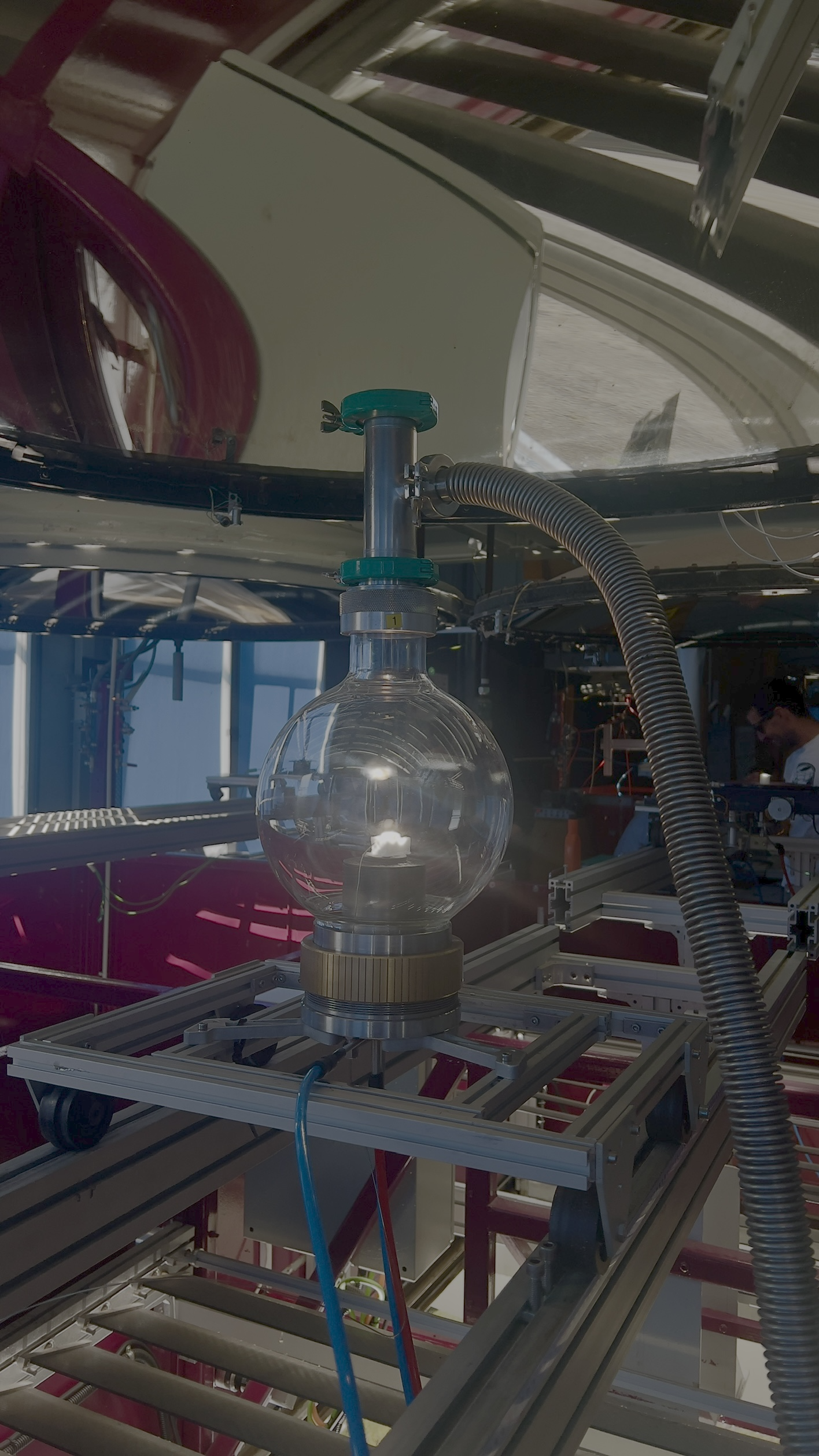
Concentrated Solar Irradiation during Reactive Processing
View of the reaction chamber during a solar processing experiment, showing the highly concentrated solar radiation focused directly onto the sample. The intense and localized energy flux enables extremely rapid heating, providing the conditions required to activate reactive sintering and SHS-assisted nitriding of Ti–Al intermetallic materials.

05
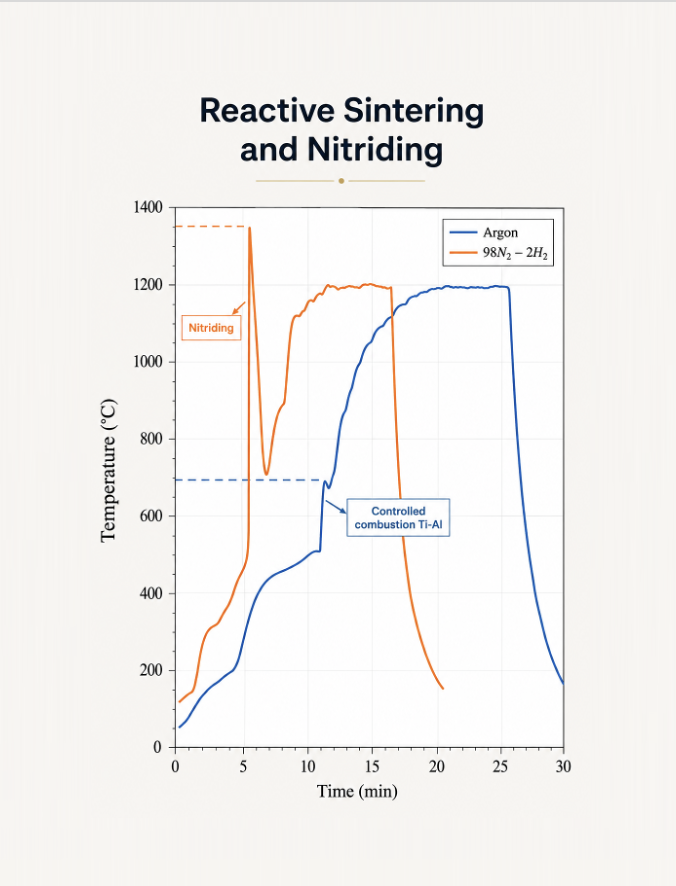
SHS peak of Ti–Al Reactive Sintering and Simultaneous Nitriding
Comparison of heating profiles during Ti–Al reactive synthesis with and without simultaneous nitriding. The nitriding process produces a markedly more exothermic response, with an energy release approximately one order of magnitude higher than that associated with intermetallic formation. Ti–Al synthesis provides a volumetric energy contribution throughout the material, while nitriding introduces an additional surface energy contribution. Their combination promotes rapid consolidation while simultaneously enabling surface functionalization through nitride formation.
06
Rapid Combustion Front Propagation during Ti–Al Reactive Synthesis and Nitriding
Video showing the rapid propagation of the self-sustaining combustion front throughout the Ti–Al material during reactive synthesis and nitriding. Once ignited, the highly exothermic reactions propagate through the sample within seconds, enabling the rapid formation of intermetallic and nitride compounds while providing additional energy for material consolidation.

07
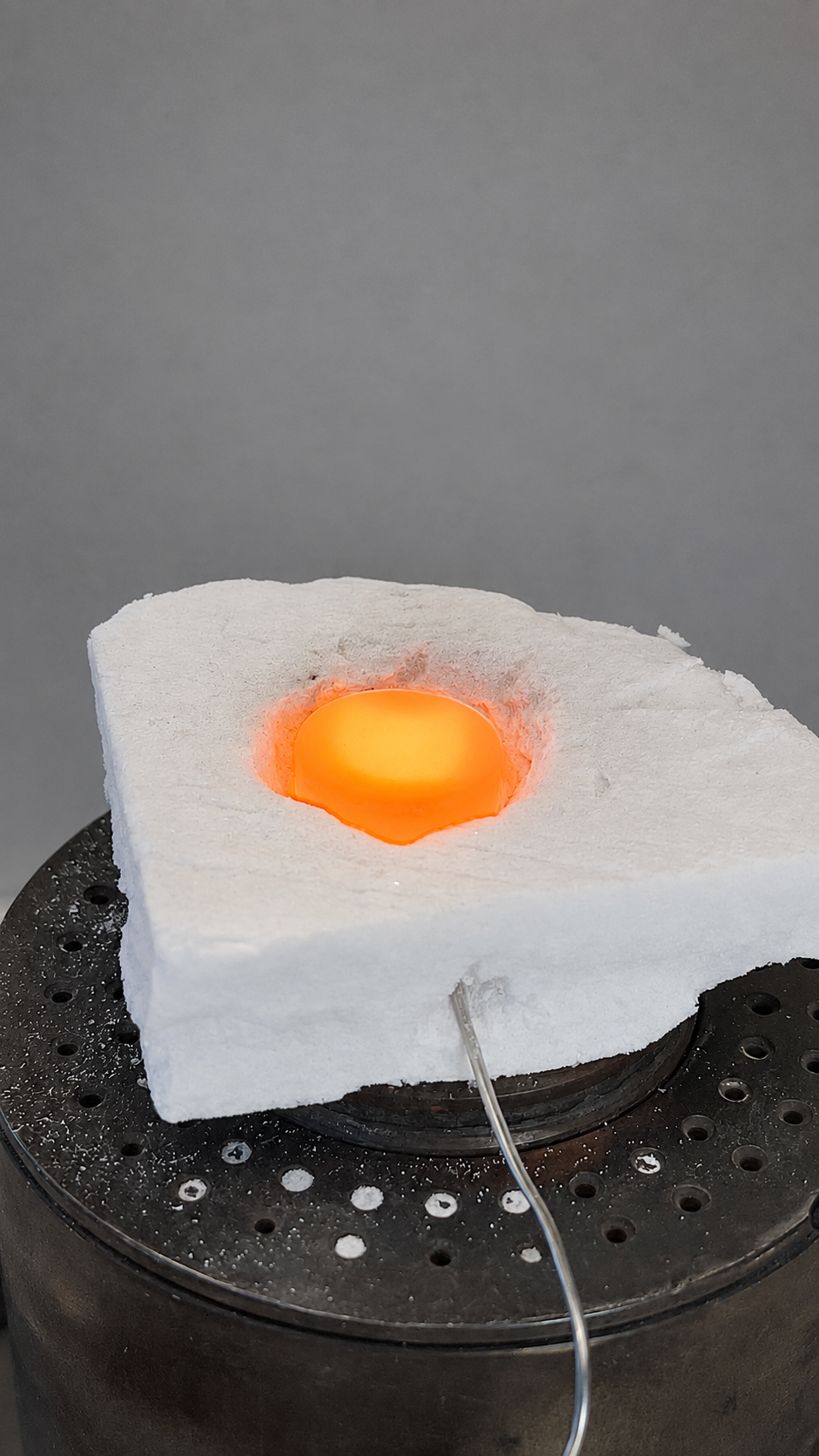
Cooling after Solar Reactive Sintering and Nitriding
Nitrided Ti–Al sample during the cooling stage following solar reactive sintering and nitriding. The intense red glow reflects the extreme temperatures reached during the process, exceeding 1200 °C, as a result of the concentrated solar energy input combined with the highly exothermic reactions involved in intermetallic synthesis and nitriding.

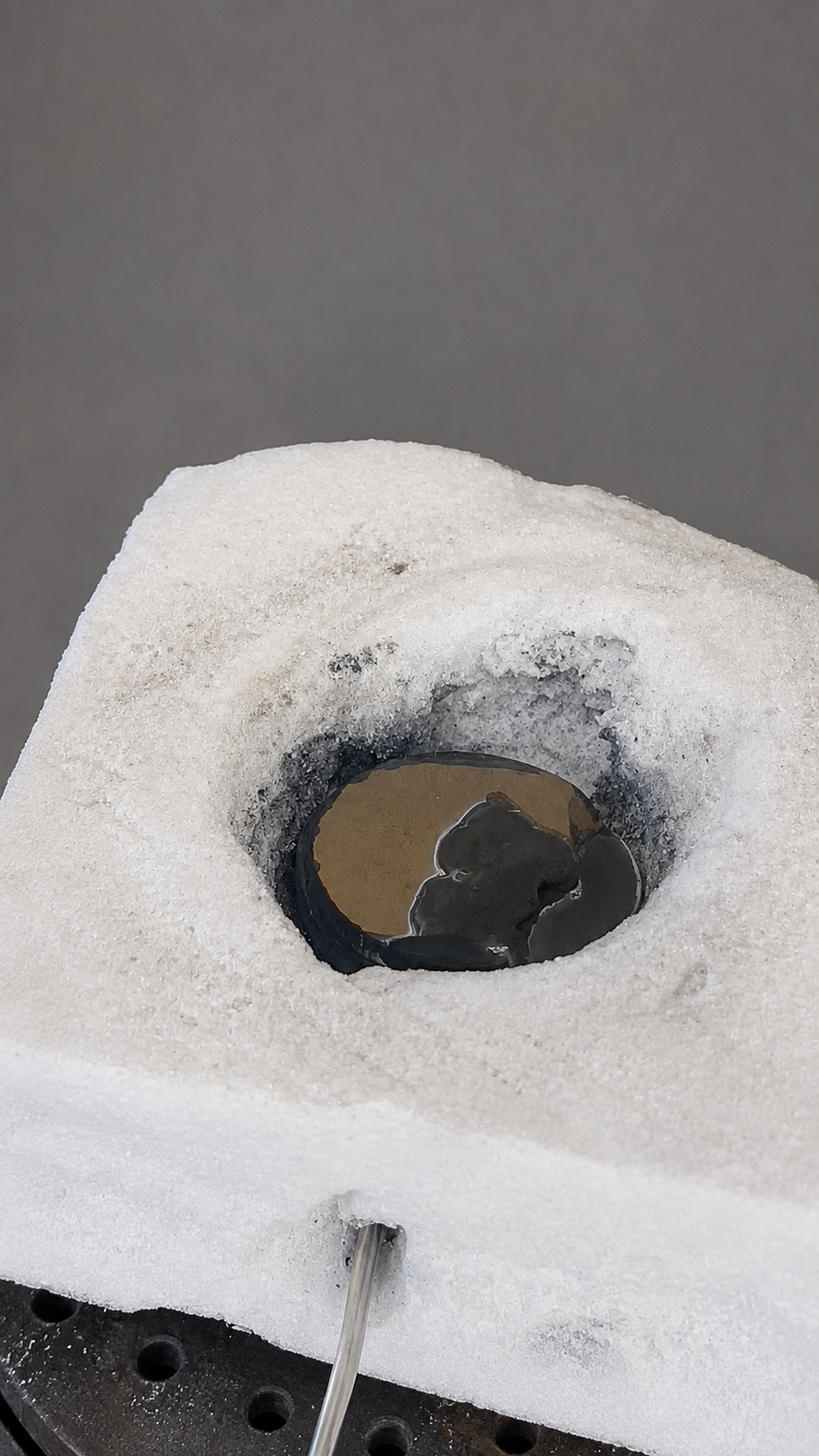
08
Nitrided Functionally Graded Ti–Al Intermetallic after Solar Processing
Functionally graded Ti–Al sample after simultaneous solar reactive sintering and nitriding. Following cooling, the characteristic golden surface indicates the formation of titanium nitride (TiN), while the darker regions are associated with the formation of Ti–Al oxynitrides. The surface transformation demonstrates the ability to combine intermetallic synthesis, consolidation, and surface functionalization within a single processing stage.

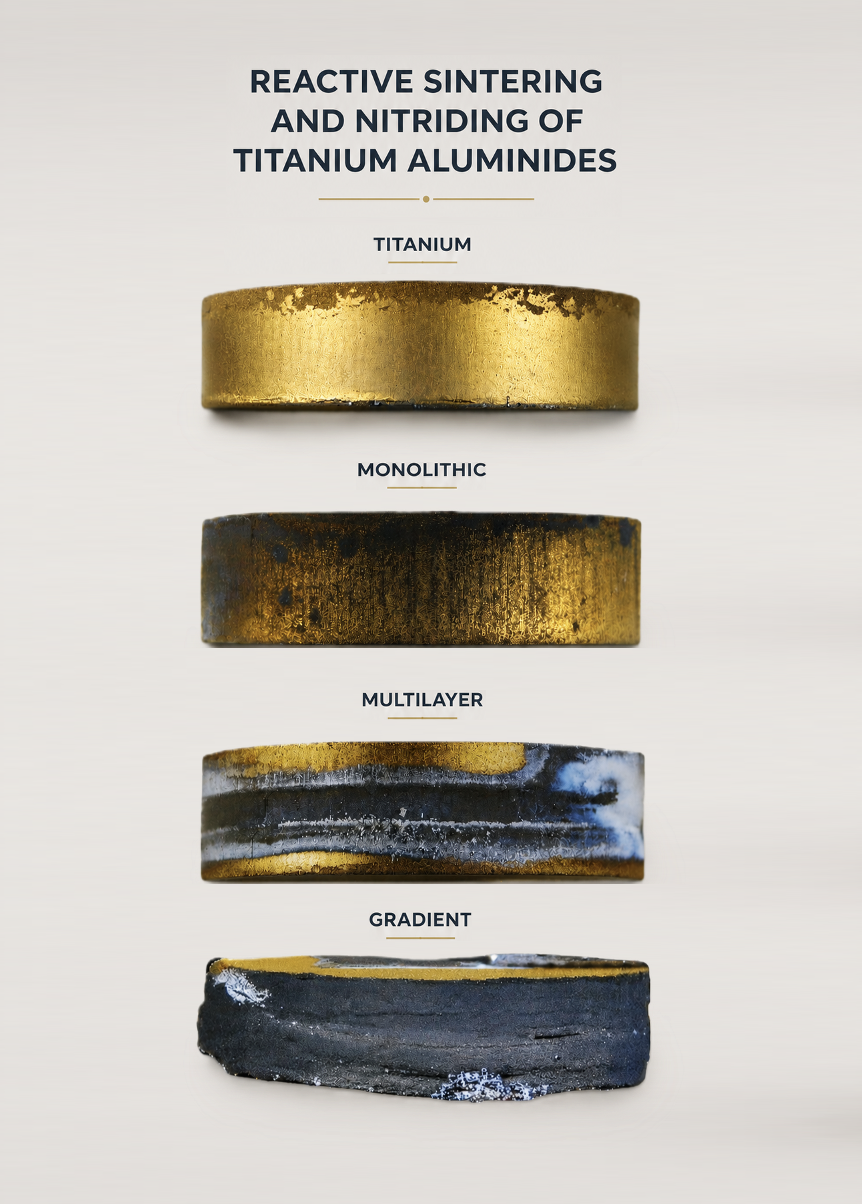
09
Reactive Sintering and Nitriding of Monolithic, Multilayer and Functionally Graded Ti–Al Systems
Comparison of pure titanium, monolithic Ti–Al, multilayer Ti–Al with external titanium layers, and functionally graded configurations ranging from pure Ti to Al-rich compositions. Solar reactive processing enables high densification and preservation of the component geometry while promoting Ti-Al intermetallics and titanium nitride formation. Increasing aluminum content favors the formation of Ti–Al oxynitrides, whereas external titanium layers provide a suitable substrate for TiN growth. The functionally graded architecture enables composition, microstructure, and local mechanical response to be tailored across the component while maintaining a functionalized nitride-based surface.

10
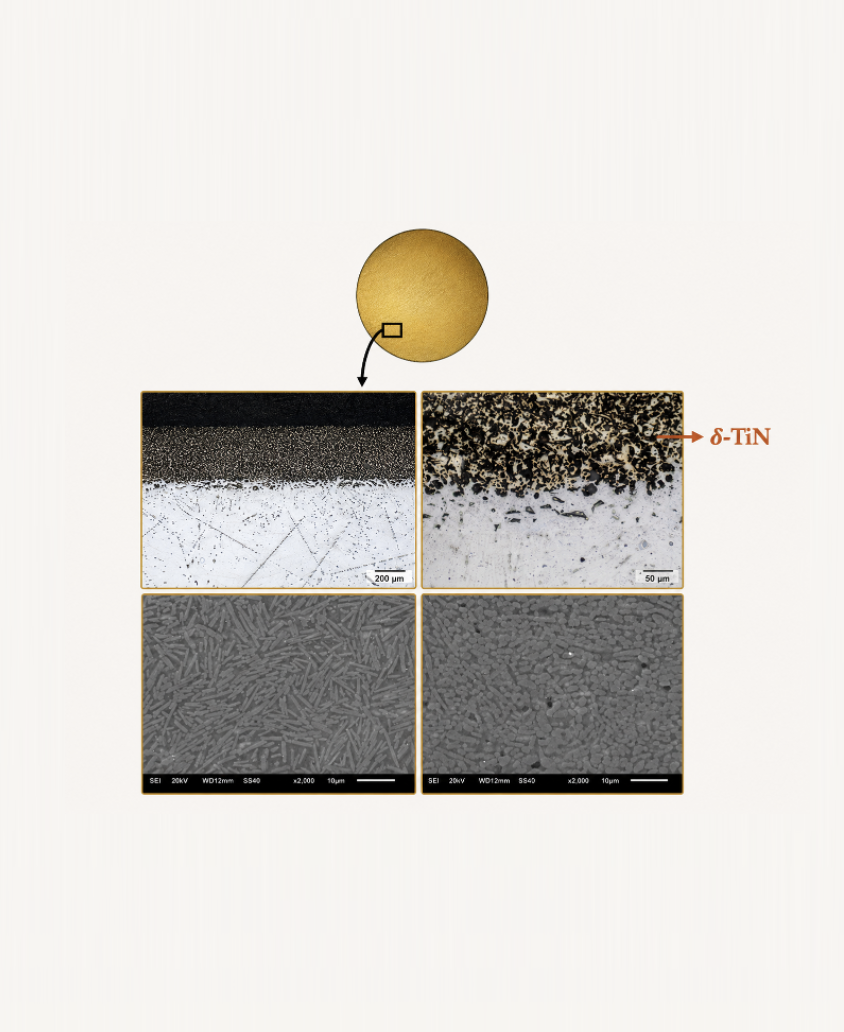
Surface Nitriding and Densification of Ti–Al Intermetallics
View of the nitrided Ti–Al surface combined with micrographs revealing the resulting microstructure. The material exhibits high densification after reactive processing, together with the formation of a continuous nitride-rich surface layer that acts as a protective barrier and enhances the surface performance of the intermetallic material.
- Processing route for Ti–Al intermetallics by concentrated solar energy, showing powder mixing, compaction, solar reactive sintering with simultaneous SHS nitriding, and the final dense nitrided intermetallic component.
- Heliostat reflecting and directing solar radiation toward the shutter system positioned before the parabolic concentrator of the solar furnace.
- Solar furnace setup showing the shutter, parabolic concentrator, and controlled-atmosphere reaction chamber used for concentrated solar reactive sintering and nitriding of Ti–Al intermetallics.
- Reaction chamber during a solar reactive sintering and nitriding experiment, showing concentrated solar radiation focused onto the Ti–Al sample.
- Comparison of Ti–Al reactive sintering and simultaneous reactive sintering–nitriding heating curves, showing the significantly higher exothermic response produced by nitriding and the combined volumetric and surface energy contributions.
- Red-hot nitrided Ti–Al sample cooling after solar reactive sintering and nitriding at temperatures exceeding 1200 °C.
- Nitrided functionally graded Ti–Al sample after solar reactive processing, showing golden TiN regions and dark Ti–Al oxynitride regions on the surface.
- Pure titanium, monolithic, multilayer, and functionally graded Ti–Al samples after reactive sintering and nitriding, showing high densification, preserved geometry, Ti–Al intermetallic and TiN formation, and an increasing tendency toward Ti–Al oxynitride formation with increasing aluminum content.
- View of a nitrided Ti–Al intermetallic sample and micrographs showing high densification and the formation of a protective nitride-rich layer on the surface.
bottom of page