top of page
Solar Reactive Synthesis of Ti–Al Intermetallics for High-Temperature Aerospace Applications
Ti–Al intermetallics are promising materials for high-temperature aerospace and space applications, combining thermal stability and oxidation resistance with significantly lower density than conventional superalloys. This project develops monolithic, multilayer, and functionally graded Ti–Al systems through reactive sintering at the PROMES-CNRS solar furnace in Odeillo. Highly concentrated solar radiation provides the rapid heating rates and high temperatures required to activate exothermic SHS reactions, enabling fast, energy-efficient, and sustainable synthesis and consolidation. Beyond turbine and aircraft engine components, these materials are also explored for space thermal protection systems, with potential to replace conventional ablative materials in reusable launch vehicles and enable more durable, lightweight, and reusable high-temperature structures.
Project type
SOL-AM European RIS-Energy Project, Horizon 2020
Date
2025–2026
Location
PROMES-CNRS, Odeillo, France

01
Solar Reactive Synthesis of Ti–Al Intermetallics for High-Temperature Aerospace Applications

01
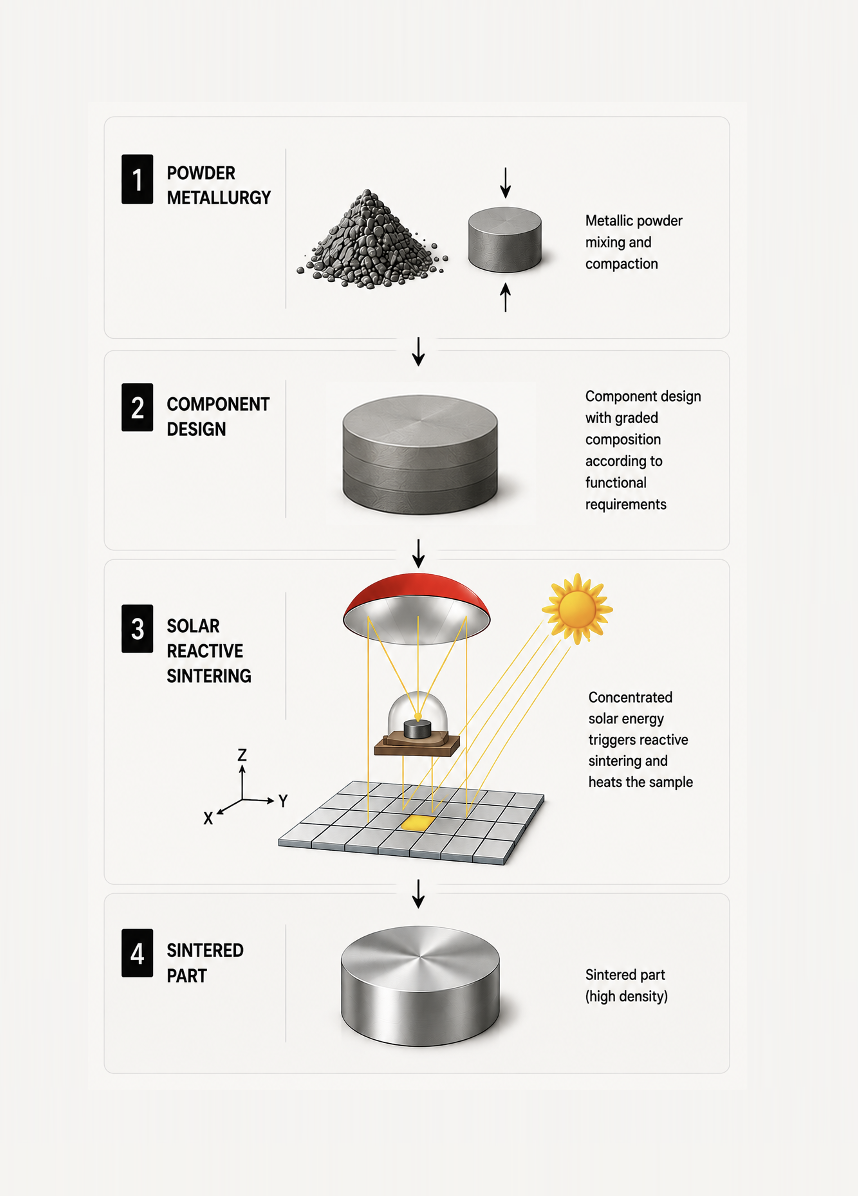
Powder Metallurgy and Solar Reactive Sintering of Ti–Al Intermetallics
Manufacturing route for Ti–Al intermetallic materials combining powder metallurgy and solar reactive sintering. The process includes elemental powder mixing, configuration and composition design, compaction, and exposure to Concentrated Solar Energy (CSE). Rapid solar heating activates a self-sustaining exothermic reaction that drives intermetallic synthesis and enables efficient consolidation within minutes, achieving high densification. Ti₃Al provides high hardness and strength, whereas γ-TiAl offers greater ductility, fracture toughness, and oxidation resistance, enabling the design of multimaterial and functionally graded systems with locally tailored properties.

02
Reactive Sintering of Ti–Al High-Flux Solar Processing at the Odeillo Solar Furnace
Solar reactive sintering of Ti–Al using a 2 m diameter parabolic concentrator at the Odeillo Solar Furnace. The system concentrates solar radiation onto a focal spot of approximately 20 mm, delivering up to 1500 W of power. This high solar flux provides the intense and localized energy input required for rapid processing of Ti–Al intermetallic materials.

03
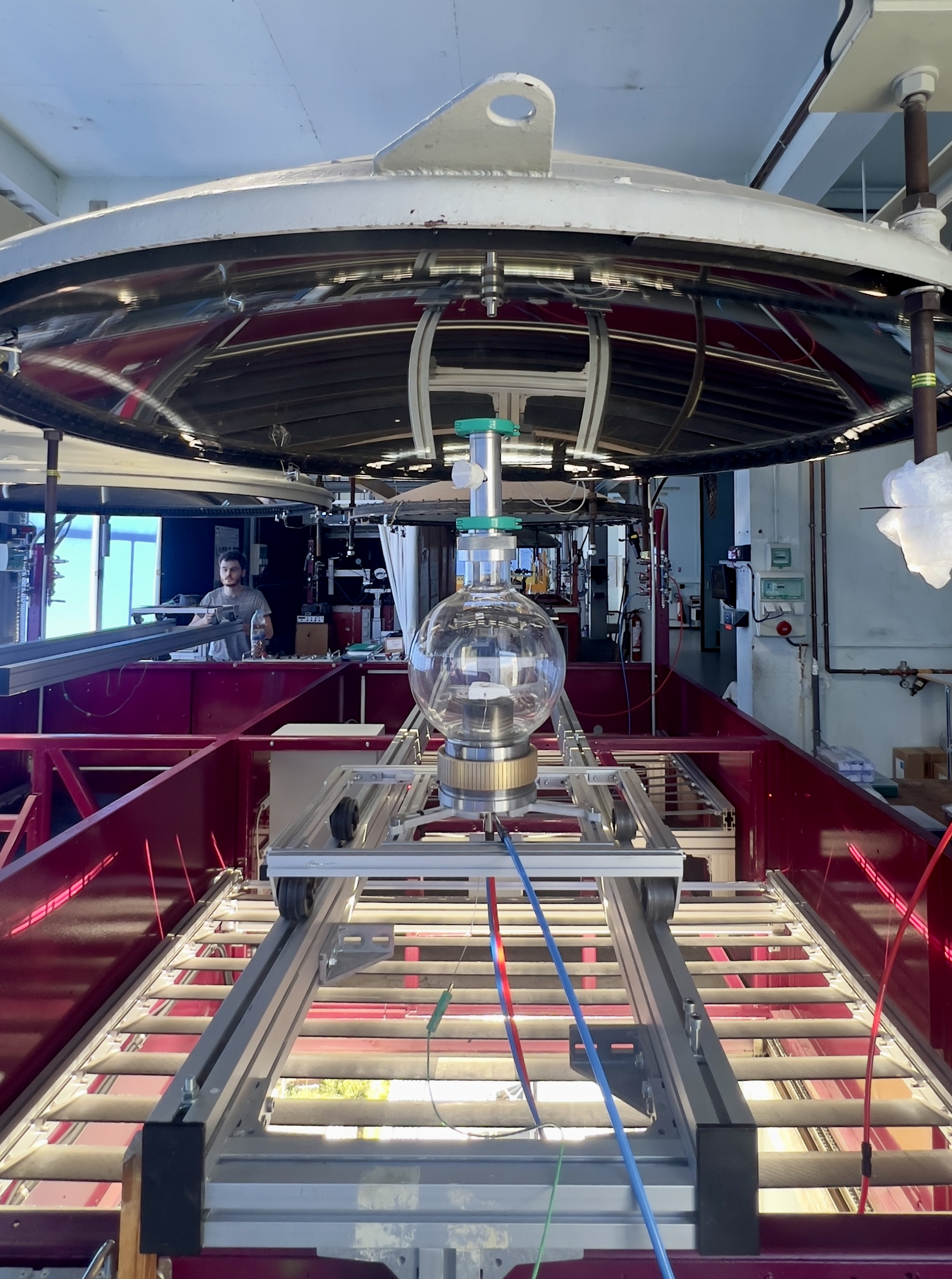
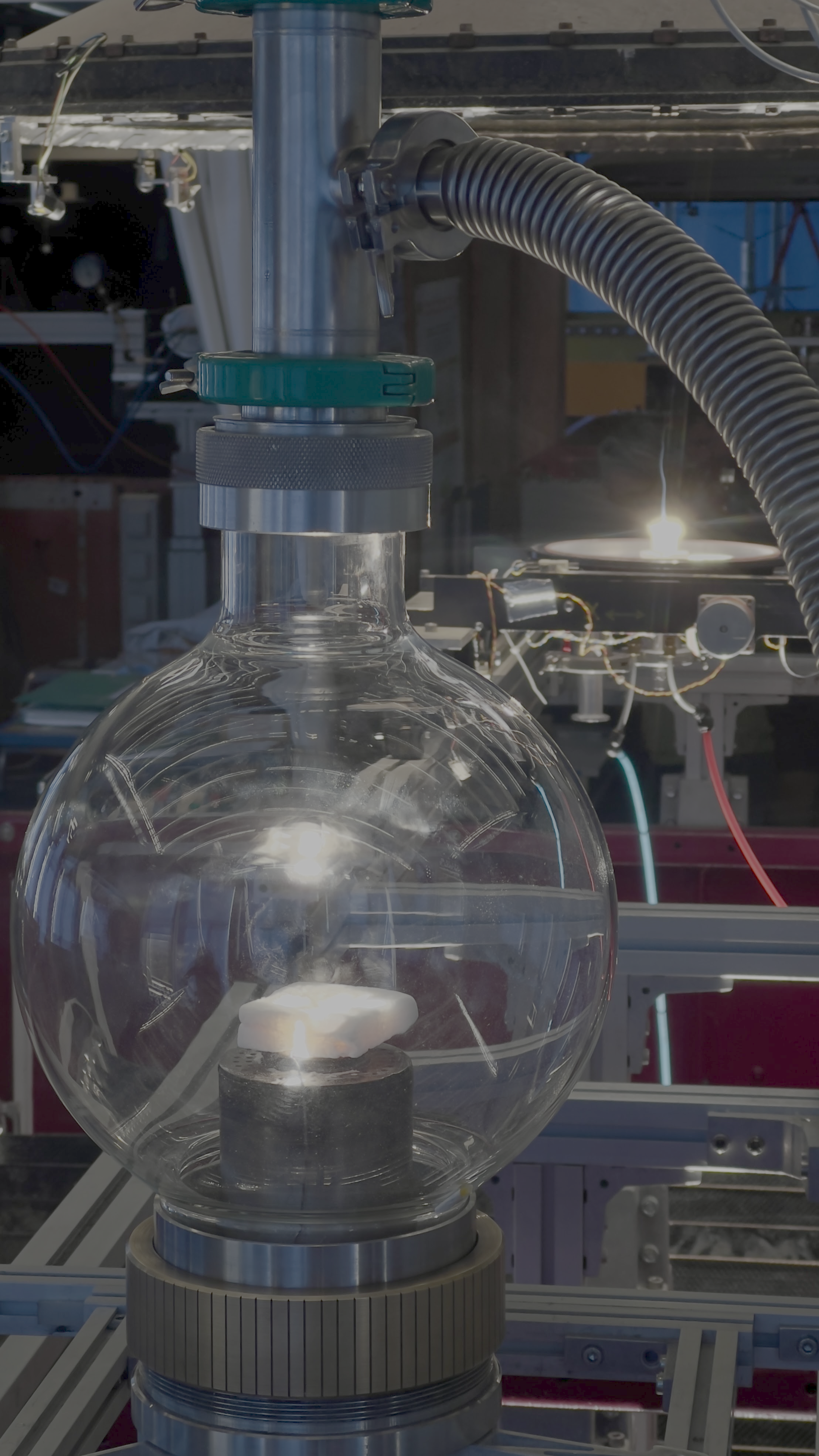
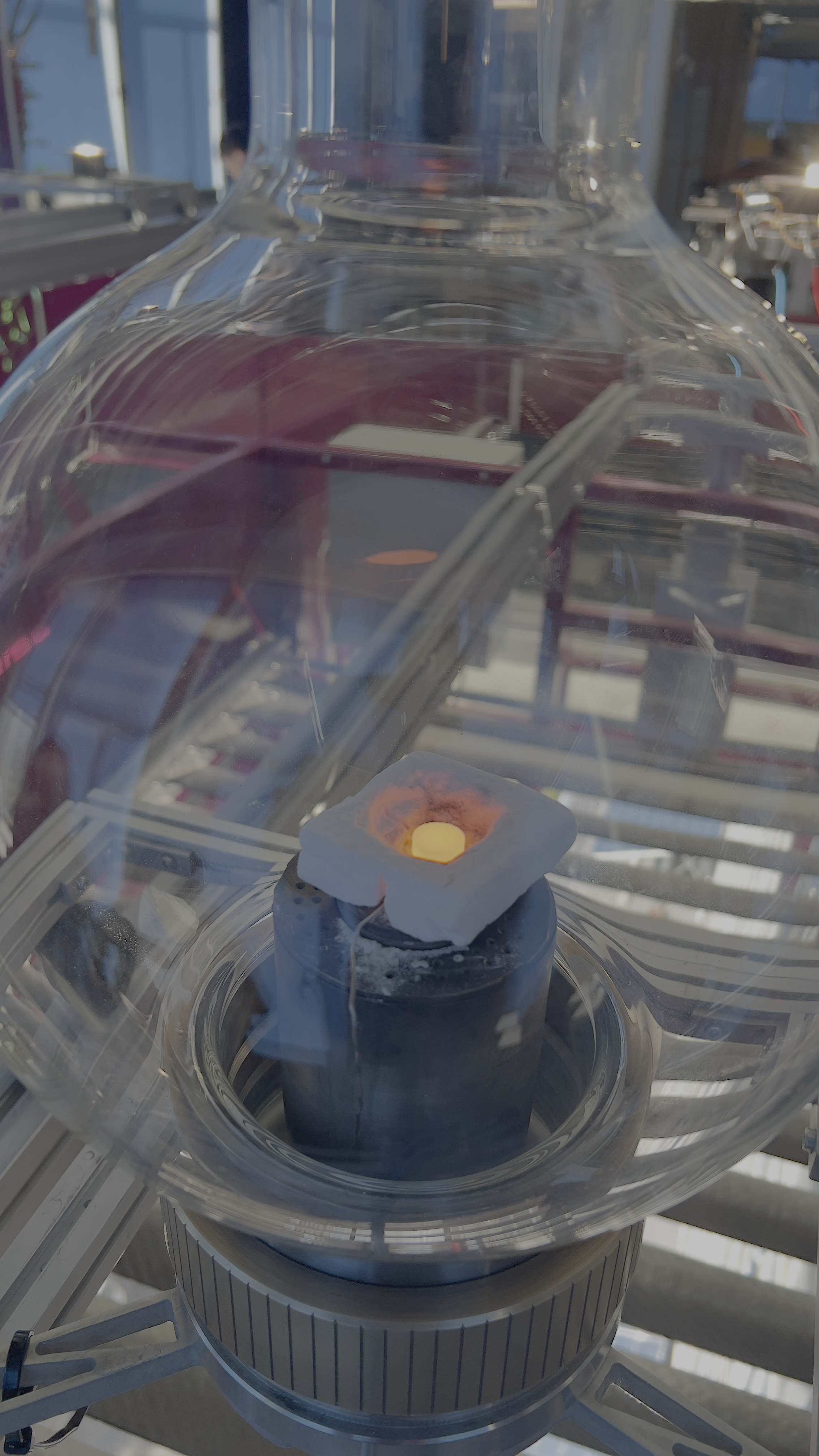
Reaction Chamber Used for the Reactive Synthesis of Ti–Al Intermetallics
Reaction chamber at the Odeillo Solar Furnace during the solar activation of SHS reactions for Ti–Al intermetallic synthesis. The chamber enables processing under a controlled atmosphere, preventing undesirable reactions with the environment while maintaining the high solar energy input required for rapid reactive synthesis and consolidation.

04
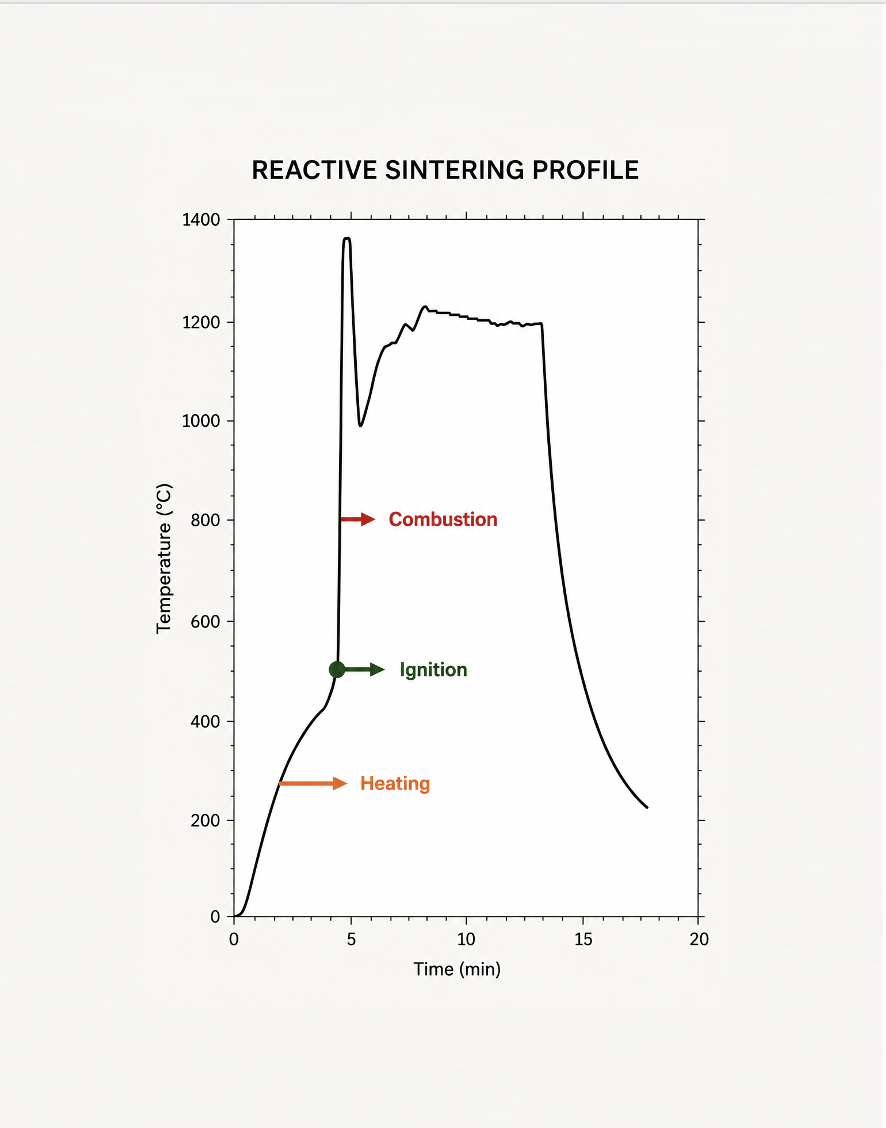
SHS Ignition and Combustion Rate during Ti–Al Reactive Sintering
Temperature profile showing the abrupt increase in heating rate once the Ti–Al system reaches its ignition temperature. SHS activation triggers a self-propagating combustion front that travels through the material, synthesizing Ti–Al intermetallic phases while generating an additional internal energy source. Heating rates of up to 2000 °C/min promote diffusion and accelerate densification, enabling rapid and energy-efficient consolidation.
05
Instantaneous SHS Combustion Front Propagation in Ti–Al Intermetallics Reactive Synthesis
Video capturing the ignition of the Ti–Al SHS reaction and the nearly instantaneous propagation of the combustion front through the material. The self-sustaining exothermic reaction rapidly transforms the elemental Ti–Al mixture into intermetallic phases while releasing the energy required to promote synthesis and consolidation.

06
High-Temperature Cooling after Ti–Al Solar Reactive Sintering
Ti–Al sample glowing red during the cooling stage after solar reactive sintering, reflecting the extreme temperatures reached during SHS activation, exceeding 1200 °C.

07
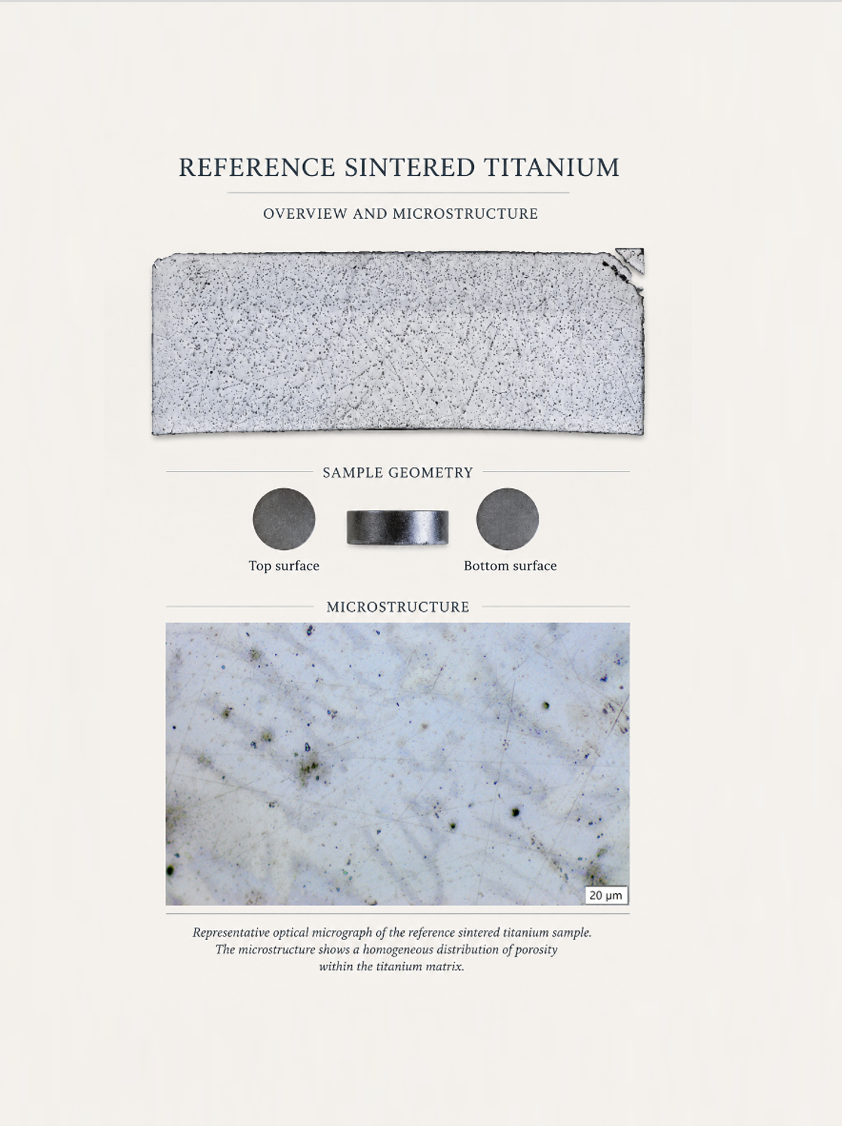
Solar Sintering of Pure Titanium Used as Reference Material
Micrographs of pure titanium used as a reference material and sintered in only 5 minutes using Concentrated Solar Energy (CSE). The resulting microstructure shows high densification, low defect content, and a characteristic dendritic morphology, demonstrating the effectiveness of high-flux solar processing for the rapid consolidation of metallic materials.

08
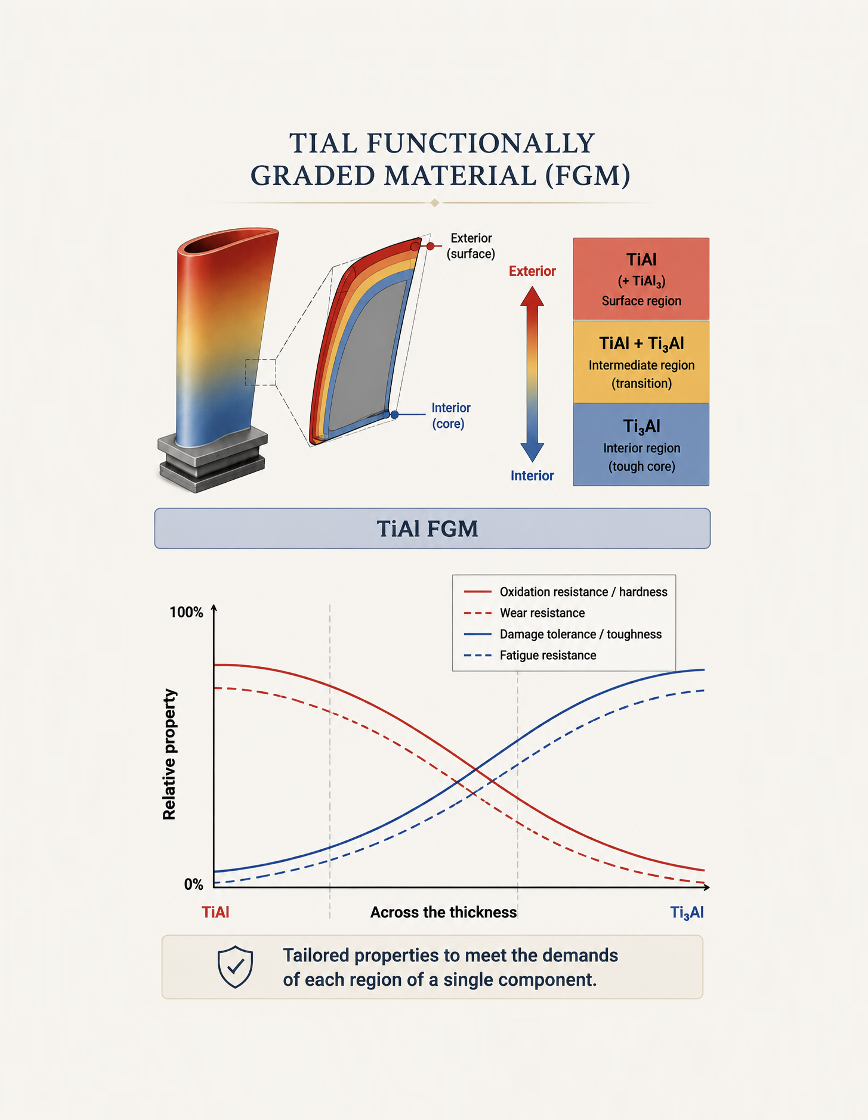
Functionally Graded Ti–Al Intermetallics for Aerospace Components
Schematic illustrating the potential of Ti–Al Functionally Graded Materials (FGMs) for advanced aerospace components. Local control of composition and microstructure enables the preferential formation of TiAl or Ti₃Al phases, tailoring material properties across the component according to specific service conditions. This approach combines the high hardness and high-temperature performance of TiAl with the greater damage tolerance of Ti₃Al, enabling optimized thermomechanical response within a single component.

09
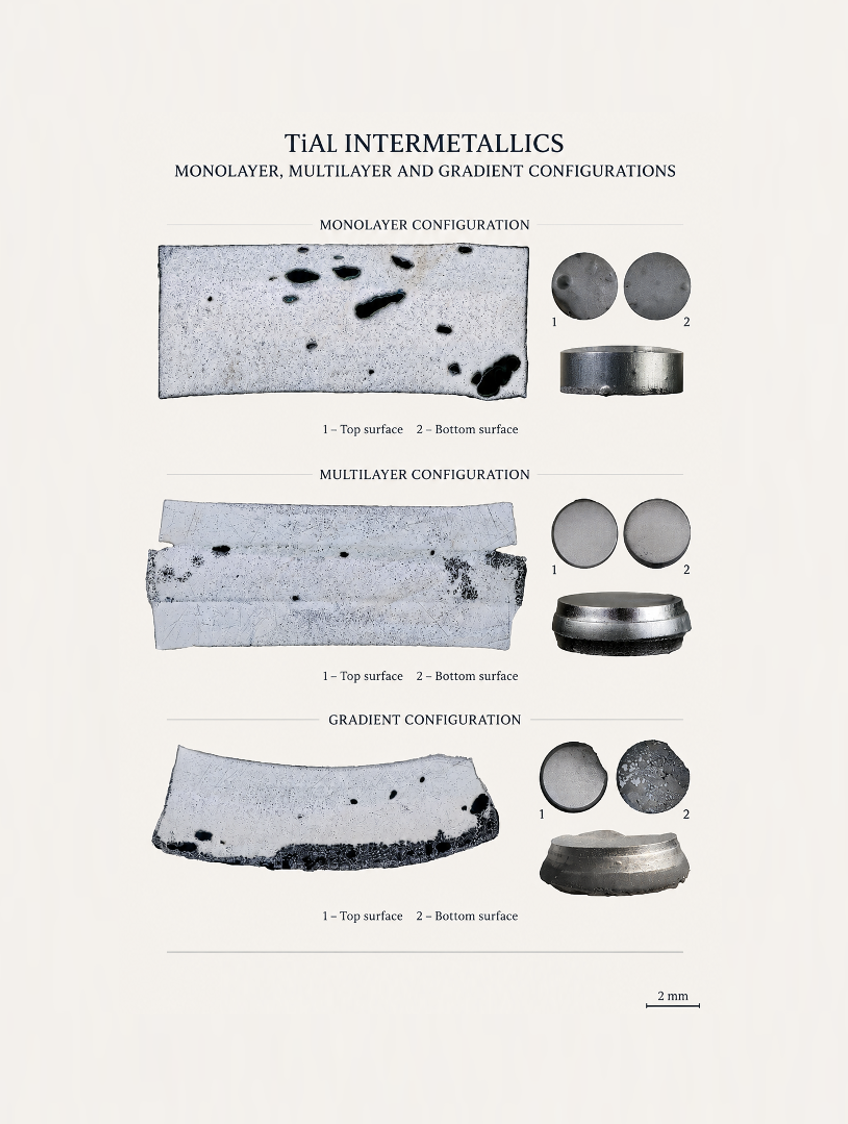
Monolithic, Multilayer and Functionally Graded Ti–Al Intermetallics
Monolithic, multilayer, and functionally graded Ti–Al intermetallic systems produced by reactive sintering using Concentrated Solar Energy in only 5 minutes. The samples exhibit high densification and excellent bonding between adjacent layers. Residual porosity characteristic of powder metallurgy processing remains visible, together with some larger pores in Al-rich regions, where the higher reaction exothermicity leads to greater local energy release during SHS synthesis.

10
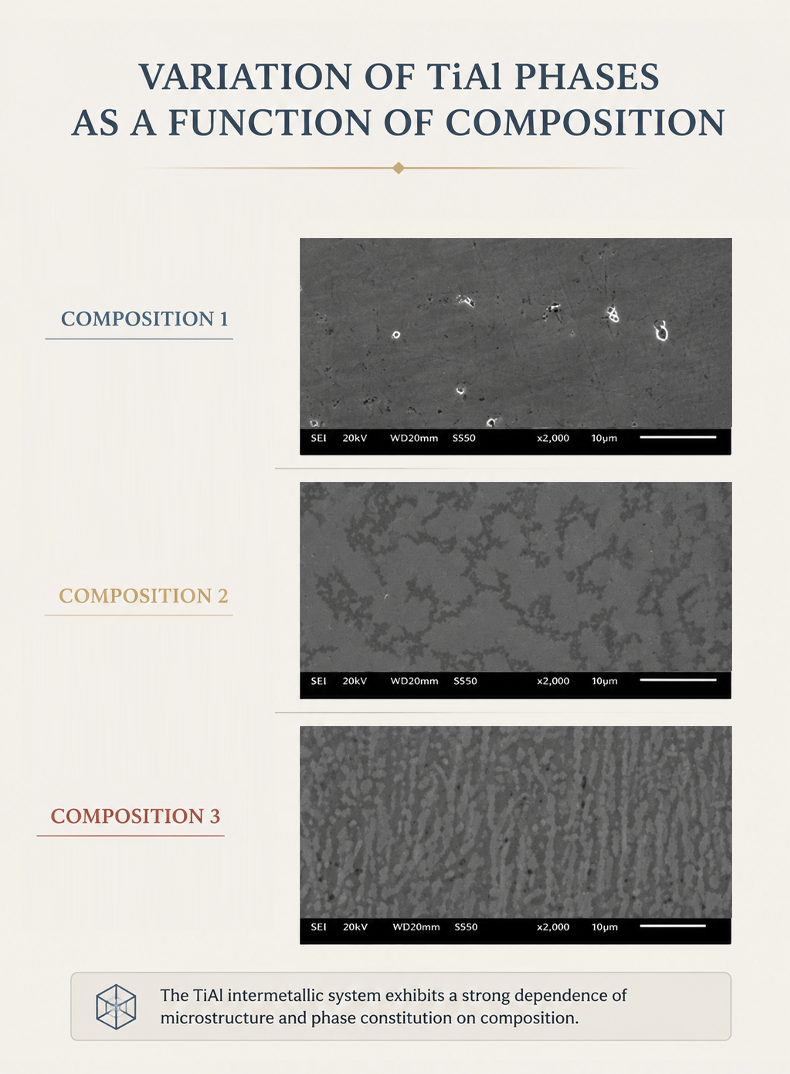
Composition-Driven Evolution of Ti–Al Intermetallic Phases
Micrographs showing the evolution of intermetallic phases as a function of the Ti–Al composition. Controlling the Ti/Al ratio enables the formation of different Ti–Al intermetallic phases with distinct morphologies, distributions, and microstructural features, providing a route to tailor the local properties of monolithic, multilayer, and functionally graded materials.
- Manufacturing process of Ti–Al intermetallics showing powder mixing, composition and configuration design, compaction, and solar reactive sintering to produce high-density TiAl and Ti₃Al materials within minutes.
- Ti–Al sample processed at the Odeillo Solar Furnace using a 2 m parabolic concentrator focusing up to 1500 W of solar power onto a 20 mm focal spot.
- Reaction chamber at the Odeillo Solar Furnace used for the SHS activation and reactive synthesis of Ti–Al intermetallic materials.
- Temperature profile of Ti–Al solar reactive sintering showing SHS ignition and combustion-front propagation, with heating rates reaching 2000 °C/min and promoting rapid intermetallic synthesis and densification.
- Red-hot Ti–Al sample cooling after solar reactive sintering and SHS synthesis at temperatures above 1200 °C.
- Micrographs of pure titanium sintered by Concentrated Solar Energy in 5 minutes, showing high densification, low defect content, and a dendritic microstructure.
- Schematic of a Ti–Al functionally graded aerospace component showing local control of TiAl and Ti₃Al phases to tailor mechanical and high-temperature performance to different service conditions.
- Monolithic, multilayer, and functionally graded Ti–Al intermetallic samples reactively sintered with Concentrated Solar Energy in 5 minutes, showing high densification, excellent interlayer bonding, and characteristic residual porosity.
- Micrographs showing the evolution of Ti–Al intermetallic phases with composition and the resulting changes in phase morphology and distribution.
bottom of page